
Key Takeaways
- VR motion sickness is the biggest barrier to customer satisfaction and repeat play in VR arcades.
- The root cause is a mismatch between visual input and physical sensation.
- Advanced systems solve this with 360° motion, vertical lift, and 4D wind effects working together.
- A fully synchronized system creates a smooth immersive flight experience instead of discomfort.
- Choosing the right hardware and integrated solution is critical for long-term business success.
Why Motion Sickness Is the #1 Problem in VR Arcades
If you operate—or plan to open—a VR arcade, you already know one thing:
A great experience keeps customers coming back.
A bad one makes them leave immediately.
And nothing ruins a VR experience faster than motion sickness.
Even the most visually impressive simulator will fail if users feel:
- Dizzy
- Disoriented
- Uncomfortable
In a commercial environment, this directly impacts:
- Customer retention
- Session duration
- Revenue per machine
The Real Cause of VR Motion Sickness
Sensory Conflict Explained
Your brain constantly compares two systems:
- What your eyes see (visual system)
- What your body feels (vestibular system)
When these signals don’t match, your brain reacts negatively.
What Happens in Low-End VR Systems
| Situation | Visual Signal | Physical Feedback | Result |
|---|---|---|---|
| Basic VR headset | Fast motion | No movement | Dizziness |
| Motion-only system | Movement | No airflow | Partial discomfort |
| Fully synchronized system | Motion + wind + visuals | Matching signals | Smooth experience |
The key to solving motion sickness is simple:
Make the body feel what the eyes see.
How Modern VR Systems Eliminate Motion Sickness
If you want to eliminate VR motion sickness in a commercial setting, the solution is not a single feature—it’s perfect synchronization.
When visuals, motion, and environmental feedback (like wind) match in real time, the brain accepts the experience as natural.
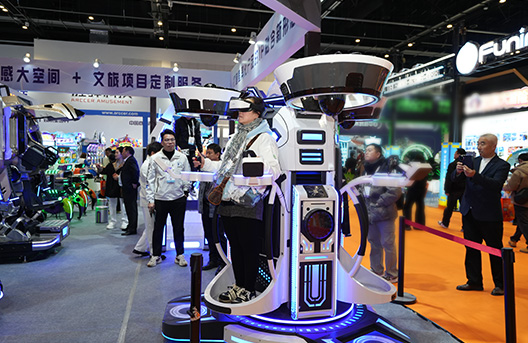
Modern VR flight simulators achieve this through:
- 360° motion platforms
- Vertical lift systems
- 4D wind effects
- Low-latency VR headsets
Together, these technologies transform discomfort into a smooth immersive flight experience.
360° Motion Platform: Eliminating Delay and Disorientation
Why Smooth Motion Matters
Many traditional VR systems suffer from:
- Limited rotation angles
- Sudden stops
- Mechanical delay
These create small inconsistencies that the brain immediately detects.
What a Professional Motion Platform Does
A high-precision system delivers:
- 360° continuous rotation
- No dead angles
- Real-time response to movement
Result for the Player
- No abrupt motion breaks
- Better orientation
- Reduced dizziness
Smooth motion is the foundation of immersion.
Vertical Motion (620mm Lift): Creating Real Physical Feedback
Why Vertical Movement Is Critical
True flight is not just horizontal—it includes:
- Climbing
- Diving
- Sudden drops
A system with 620mm vertical lift allows players to feel:
- Upward force
- Gravity shifts
- Controlled weightlessness
How This Reduces Motion Sickness
When vertical motion matches what players see:
- The brain expects the sensation
- The body confirms it
No sensory conflict → no discomfort
4D Wind Effect: The Missing Piece of Realism
What Is a 4D Wind System?
A 4D wind system generates airflow that changes based on:
- Speed
- Direction
- Movement intensity
Real-Time Wind Synchronization
Examples:
- Fast descent → stronger airflow
- Ascending motion → upward air pressure
- High-speed turns → directional wind
Why Wind Matters So Much
The skin plays a major role in perception.
When airflow matches motion:
- The brain receives additional confirmation
- The experience feels natural
- Motion sickness is significantly reduced
This is one of the most overlooked—but most powerful—solutions.
Hardware Optimization: Why DPVR E3S Matters
The Role of the Headset
Even with perfect motion, poor visual performance can cause issues.
Key Factors That Affect Comfort
- Latency (delay between movement and display)
- Tracking accuracy
- Frame rate stability
Why DPVR E3S Is a Strong Choice
- Low latency → reduces lag
- Stable tracking → prevents drift
- Designed for commercial VR environments
Result:Visuals stay aligned with motion, reducing sensory mismatch.
The Complete Anti-Sickness System
Why Integration Is the Real Solution
Motion sickness cannot be solved by one feature alone.
It requires a system where everything works together.
Full-System Comparison
| Component | Function | Impact |
|---|---|---|
| 360° Motion Platform | Physical movement | Aligns body sensation |
| 620mm Vertical Lift | Gravity simulation | Adds realism |
| 4D Wind Effect | Environmental feedback | Reduces mismatch |
| DPVR E3S Headset | Visual accuracy | Eliminates delay |
| Integrated Software | Synchronization | Ensures consistency |
When these elements are combined:
The experience becomes natural, stable, and immersive.
Why This Matters for Your VR Arcade Business
For operators, reducing motion sickness means:
- Longer play sessions
- Higher customer satisfaction
- More repeat visits
- Better online reviews
In simple terms:
Better comfort = better business performance
Final Insight: Synchronization Is the Key to Success
The biggest mistake many buyers make is focusing on individual features.
But what really matters is:
How well the system works together
What You Should Look For
- Motion + wind + visuals working in sync
- Low-latency hardware
- Stable, commercial-grade design
Because in VR: If it feels real, it sells.
Next Step: See the Technology in Action
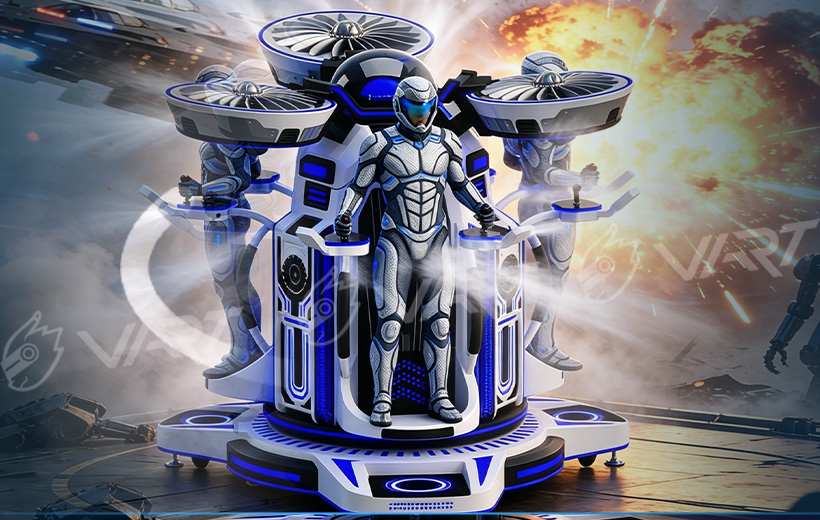
Want to see how all these technologies come together in a real commercial system? Explore the 3-seat VR flying simulator and get a quote
FAQ
What causes VR motion sickness?
It is caused by a mismatch between what users see and what their body feels.
Can VR motion sickness be eliminated?
It can be significantly reduced with synchronized motion, wind effects, and low-latency systems.
Does wind really reduce motion sickness?
Yes. It provides additional sensory feedback that helps the brain align perception.
Why is 360° motion important?
It ensures continuous movement without interruptions, reducing sensory conflict.
What headset is best for VR arcades?
Commercial headsets like DPVR E3S are preferred due to low latency and stable tracking.
Post time: May-08-2026