
Key Takeaways
- The 3-seat VR flying simulator significantly increases revenue per square meter compared to single-seat machines.
- Semi-self-service operation reduces labor costs and simplifies management.
- Integrated multi-payment systems (QR, card, coin) improve transaction efficiency and revenue tracking.
- High attraction power leads to strong foot traffic and repeat play, key drivers of profitability.
- With proper placement and pricing, operators can achieve a fast ROI cycle compared to traditional arcade equipment.
Can a VR Flying Simulator Really Make Money? Here’s the Short Answer
If you’re evaluating a VR arcade business investment, the key question is simple:
Will this machine generate consistent profit?
The answer depends on three factors:
- Revenue per session
- Player throughput
- Operating cost
The 3-seat VR flying simulator is specifically designed to optimize all three..
By combining multi-player capacity, high visual attraction, and efficient operation, it delivers one of the strongest ROI profiles in the VR arcade industry.
In practical terms: Fewer machines, higher revenue, faster payback.
Understanding ROI in a VR Arcade Business
Before diving into this specific machine, let’s break down how ROI works in a VR arcade.
Core Revenue Formula
Your daily revenue is driven by:
- Ticket price per session
- Number of sessions per hour
- Number of players per session
- Operating hours
Simplified:
Revenue = Price × Players × Sessions × Hours
Why Most VR Arcades Struggle
Many operators make the same mistake:
- Choosing low-cost machines
- Prioritizing quantity over performance
This leads to:
- Low attraction
- Low repeat play
- Poor revenue per machine
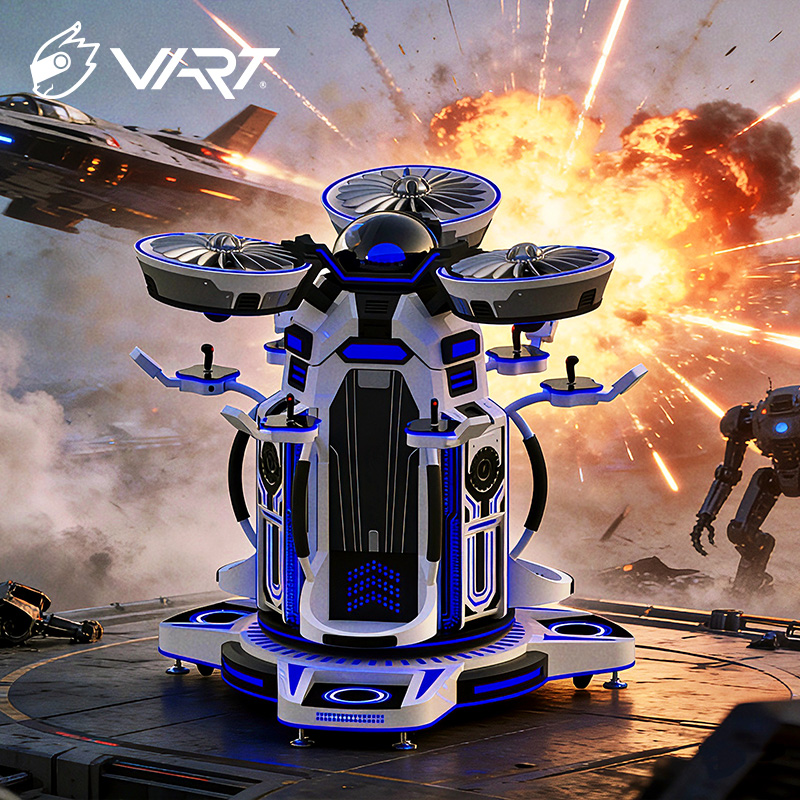
3-Seat Design: Why It Dramatically Improves Revenue
More Players Per Cycle = Higher Income
A single-seat simulator:
- 1 player per session
A 3-seat VR flying simulator:
- 3 players per session
That’s up to 3x revenue potential per cycle.
Revenue Comparison Example
| Machine Type | Players per Session | Revenue Potential |
|---|---|---|
| Single-seat VR | 1 | Base level |
| Double-seat VR | 2 | Medium |
| 3-seat VR Flying Simulator | 3 | High |
Higher Space Efficiency
Instead of installing multiple small machines:
You use one high-performance unit that:
- Attracts more players
- Generates more income
- Saves space
Semi-Self-Service Mode: Cutting Labor Costs
Labor is one of the biggest hidden costs in arcade operations.
This machine solves it with:
Simplified Operation
- User-friendly interface
- Automated system flow
- Minimal supervision required
Result:
- One staff member can manage multiple machines
- Reduced training requirements
Cost Impact
| Factor | Traditional Setup | Semi-Self-Service |
|---|---|---|
| Staff Needed | Multiple | Minimal |
| Training Cost | High | Low |
| Operation Complexity | Medium | Low |
| Labor Cost | High | Reduced |
Over time, this significantly improves net profit margin.
Integrated Payment System: Faster Transactions, Better Revenue Tracking
Multi-Payment Compatibility
The system supports:
- QR payments (e.g., mobile pay)
- Card payments
- Coin operation
Why This Matters for Business
- Reduces friction → more purchases
- Supports different customer groups
- Improves transaction speed
Revenue Tracking Advantage
Operators can:
- Monitor sales in real time
- Track peak hours
- Optimize pricing strategies
This is essential for scaling a VR arcade business.
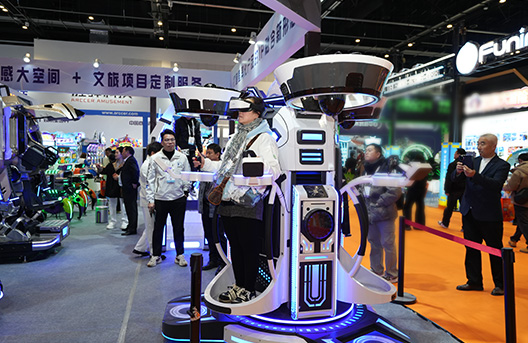
High Attraction = High Conversion = High Profit
One major advantage of this simulator is its visual and experiential impact.
Built-In Marketing Effect
- Sci-fi design
- LED lighting system
- Dynamic motion visibility
These features:
- Attract walk-in customers
- Increase conversion rate
- Reduce marketing cost
The “Crowd Effect”
When one group plays:
Others gather and watch
This creates:
- Social proof
- Increased demand
- Queue formation
Which directly increases revenue.
Repeat Play: The Hidden Profit Driver
Why Players Come Back
The simulator offers:
- Multi-sensory immersion
- Competitive gameplay
- High excitement level
Motion + 4D Effects = Retention
Features like:
- 360° rotation
- Vertical motion (weightlessness)
- Wind effect system
Create experiences that feel:
- New
- Intense
- Worth repeating
Payback Cycle: How Fast Can You Recover Investment?
While exact ROI depends on:
- Location
- Pricing
- Traffic
The general trend for high-performance VR machines is:
This leads to faster payback compared to low-end equipment—before making a final decision, read our VR flight simulator buying guide.
Typical ROI Drivers
- High player throughput
- Premium pricing capability
- Low labor cost
- Strong repeat usage
Well-positioned venues often achieve:
- Stable daily income
- Predictable cash flow
- Accelerated investment recovery
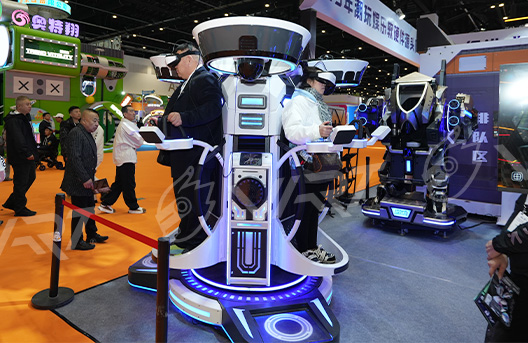
Smart Investment Strategy for 2026
If you’re planning a VR arcade, the strategy is clear:
Old Model
- Many low-cost machines
- Low attraction
- Slow ROI
New Model
- Fewer, high-impact machines
- Strong attraction
- Faster ROI
The 3-seat VR flying simulator fits perfectly into this new-generation arcade model.
Before making a final decision, you may want to understand the key details buyers often overlook: Read: Top 10 Questions to Ask Before Buying a VR Flight Simulator
FAQ
Is a VR flying simulator profitable?
Yes. Due to high attraction and multi-player capability, it generates strong revenue per session and high repeat usage.
How does a 3-seat simulator improve ROI?
It increases the number of players per session, boosting revenue without increasing operating time.
What are the main costs in a VR arcade business?
Key costs include equipment, rent, labor, and maintenance. Systems with semi-automated operation reduce ongoing expenses.
Why is revenue tracking important?
It helps operators understand performance, optimize pricing, and improve overall profitability.
Is this suitable for new investors?
Yes. Its ease of operation and strong earning potential make it suitable for both beginners and experienced operators.
Post time: May-01-2026