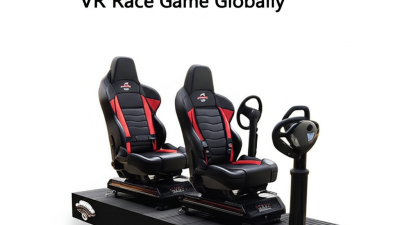
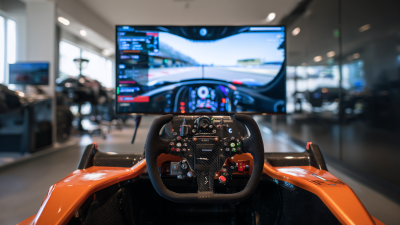
Picking out a 9D VR racing simulator isn’t just about chasing the biggest screens or the fastest motion platforms. For buyers around the world, it’s really about finding equipment that performs reliably, feels authentic, and stays easy to maintain after setup. Sure, a simulator might look amazing in a showroom, but the real test comes after thousands of steering turns, repeated braking, and everyday usage by customers.
David Kaemmer, who’s well-known in the racing simulation world and co-founded iRacing, shares a good rule of thumb: “The car needs to feel right before the spectacle impresses you.” That idea runs through this overview of the Top 9D VR Racing Simulator Manufacturers that global buyers should consider. We compare these companies based on practical things like how accurate the motions are, the stability of VR visuals, the feel and feedback of the steering force, how tough the cockpit is, support for software updates, and how easy it is to get replacement parts—because yeah, those details really matter.
Some brands shine when it comes to immersive effects, while others offer better engineering or better support after you buy. Honestly, no one’s perfect in every area. Before making a choice, it’s smart to look into their testing records, what’s involved in installation, warranty policies, and whether there’s local tech support available. Sometimes, a shiny demo can hide tricky maintenance stuff.
And don’t forget about the total costs involved. Things like shipping, customs, space at your venue, electrical needs, staff training, and ongoing software updates can throw off your initial budget. Small details that you overlook at first can end up costing a lot later on, so keep that in mind.
This guide is mainly for entertainment centers, training facilities, expos, and commercial operators hunting for trustworthy international suppliers. It’s not just about picking the highest-spec machine—more importantly, it’s about asking yourself which manufacturer can actually deliver a convincing driving experience, keep everything running smoothly, and provide reliable support in your local market. That’s the real goal.
A 9D VR racing simulator combines a headset with a moving seat and added sensory effects. The “9D” label has no single technical standard, so buyers should check what each system actually includes. Motion platforms may tilt, pitch, or roll to suggest cornering and braking. Seat transducers add low-frequency vibration, while fans can create a sense of speed. These cues work best when they match the on-screen action. A delayed jolt can feel confusing rather than immersive.
The hardware should feel convincing without overwhelming the driver. A sharp vibration through the seat might signal a curb, while a steady forward tilt can suggest hard braking. Some systems add scent or other effects, but these are optional features, not proof of better simulation. Ask manufacturers how they calibrate motion, reduce unwanted shaking, and support different rider sizes. Try a timed session if possible. Comfort is easy to overlook. Excessive motion can cause fatigue, especially during longer play. I would not judge a simulator by the number of effects alone; timing and consistency matter more.
Tips: Request a demonstration with varied turns and braking. Check emergency stops, seat adjustment, service access, and replacement-part availability. Keep it measurable: compare motion response, noise, and comfort across sessions.
“9D” is a marketing term, not a standardized technical specification. Motion platforms are more objectively described by their degrees of freedom (DOF): 2-DOF and 3-DOF systems provide selected movement axes, while 6-DOF systems can provide movement across three translational and three rotational axes. Vibration and other sensory effects are separate from motion-platform DOF.
The chart shows the number of motion axes in each platform class, not a performance rating. Axis configurations vary by system.
Top 9D VR Racing Simulator Manufacturers for Global Buyers
How 3-DOF and 6-DOF Platforms Shape Racing Simulator Motion
The term “9D” is usually a commercial label, not an international motion standard. Buyers should inspect the real platform specifications. A 3-DOF system commonly controls pitch, roll, and yaw. It can reproduce cornering weight transfer, braking tilt, and rapid direction changes. These effects feel sharp in a compact cockpit. They also cost less and require simpler maintenance.
A 6-DOF platform adds surge, sway, and heave. The seat can move forward, sideways, and vertically. This creates stronger sensations during acceleration, curb strikes, elevation changes, and heavy braking. However, more movement does not always mean better realism. Excessive heave can feel artificial, especially when the visual scene has limited detail. Latency matters too. A small delay between wheel input and platform motion can break immersion quickly.
PwC’s Seeing is Believing report estimated that immersive technology could contribute 1.5 trillion US dollars to global GDP by 2030. That forecast supports continued investment in professional simulation. Yet, market enthusiasm should not replace testing. Procurement teams should measure update frequency, actuator response, payload capacity, emergency stops, and noise levels. A 2023 report from Grand View Research also identified strong growth in virtual reality hardware demand. Still, reported market growth does not prove every simulator performs well. Buyers should test wet-road scenarios, tire loss, and repeated curb impacts before approving a purchase. Some specifications look impressive. They may still disappoint in a real training room.
Compare nine common simulator platform configurations rather than company rankings. “9D” is a marketing term, not a standardized motion specification; check the actual axes, motion limits, control system, safety provisions, and service scope before purchasing.
| Platform configuration | Degrees of freedom | Typical motion axes | Motion characteristics | Best suited to | Buyer evaluation points |
|---|---|---|---|---|---|
| Compact seat mover | 2-DOF | Pitch and roll | Tilts the seat to suggest braking, acceleration, and cornering forces; does not reproduce sustained real-world acceleration. | Home setups, entry-level training, and space-limited entertainment venues | Check seat and driver weight limits, movement noise, frame rigidity, and compatibility with the simulator software. |
| Three-axis seat platform | 3-DOF | Commonly pitch, roll, and heave; configurations vary | Adds vertical movement to the tilt cues of a seat mover. The exact axes depend on the mechanical design. | Compact commercial attractions and enthusiast systems needing additional movement cues | Confirm which three axes are active, the platform travel, emergency stop access, and whether the motion profile can be tuned. |
| Three-axis cockpit platform | 3-DOF | Typically pitch, roll, and heave | Moves the cockpit structure rather than only the seat, which can provide more integrated movement cues but requires more floor space. | Dedicated racing bays and multi-user entertainment installations | Review footprint, anchoring requirements, cockpit compatibility, maintenance access, and safe clearance around moving parts. |
| Linear-actuator motion platform | 3-DOF or 6-DOF | Depends on actuator count and geometry; may provide pitch, roll, heave, surge, sway, and yaw | Actuator layout determines available axes, travel, and response. A larger actuator count alone does not guarantee better motion fidelity. | Custom installations where motion range and cockpit integration are key requirements | Request a defined axis diagram, loaded travel and speed data, duty-cycle limits, and documented safety interlocks. |
| Six-axis parallel platform | 6-DOF | Surge, sway, heave, roll, pitch, and yaw | Can combine translation and rotation within its mechanical workspace; actual range and acceleration are limited by design and payload. | High-end commercial attractions, research, and professional simulation | Compare payload-rated performance, usable workspace, actuator service life, noise, and motion-controller integration. |
| Compact six-axis platform | 6-DOF | Surge, sway, heave, roll, pitch, and yaw | Provides six-axis movement in a relatively compact installation; compact designs may have more limited travel than larger systems. | Premium venues with restricted floor area | Check motion limits with the full cockpit and driver load, ventilation needs, access for maintenance, and local power requirements. |
| Hydraulic motion platform | 3-DOF or 6-DOF | Architecture-dependent; may support rotational and translational axes | Uses hydraulic actuation. Performance, noise, upkeep, and installation needs depend on the hydraulic system and platform design. | Installations designed for intensive operation and supported by appropriate maintenance resources | Assess fluid containment, inspection and replacement schedules, noise control, service access, and operating costs. |
| Electric servo motion platform | 3-DOF or 6-DOF | Architecture-dependent; may support pitch, roll, heave, surge, sway, and yaw | Uses electrically driven actuators. Response, movement range, and operating noise vary by motor, transmission, and load. | Commercial venues seeking configurable motion with an electric drive system | Verify rated payload, peak versus continuous performance, thermal limits, power supply, and access to replacement components. |
| Modular multi-cockpit platform system | 3-DOF or 6-DOF per bay | Determined by each bay’s platform design | Allows multiple racing stations to share venue infrastructure; the motion capability is set by the installed platform at each station. | Family entertainment centers, arcades, and multi-station attractions | Review throughput, reset time, operator controls, shared-system failure handling, staff training, and availability of local support. |
Buyer note: DOF indicates independent motion axes, not a guaranteed level of realism. Compare manufacturer-provided specifications under stated payload conditions, and verify that the motion system complies with applicable local safety requirements.
For global buyers, VR performance should be tested before comparing simulator features. A 90 Hz refresh rate displays a new frame every 11.1 milliseconds. This helps reduce visible flicker during fast cornering and close overtakes. It does not guarantee a comfortable experience.
Motion-to-photon latency matters more. This measures the time between head movement and the updated image reaching the eyes. Reliable systems should target latency below 20 milliseconds, with lower results preferred. However, manufacturers may measure it differently. Ask for test conditions, hardware settings, and repeated results. A specification without methodology is incomplete.
Real-world checks reveal more. During evaluation, watch a virtual dashboard while turning the head quickly. Delayed scenery, image drag, or sudden blur can expose weak synchronization. Motion platforms also need accurate timing with the headset and steering feedback. Small timing errors feel obvious.
Test it twice.
Global purchasers should request calibration records, maintenance procedures, and regional technical support. A stable 90 Hz output may fall during complex scenes if the computer lacks graphics headroom. Thermal throttling can create an inconsistent session after several hours. That detail is easy to miss. My practical view is cautious: latency figures are useful, but comfort depends on the complete system, not one impressive number.
Global buyers can compare nine manufacturer groups by product type, target market, and engineering strength. Motion-platform specialists focus on hydraulic or electric systems, while VR-integrators combine headsets, tracking, software, and racing seats. Arcade-focused producers offer compact units for malls and family entertainment centers. Professional training suppliers usually serve racing schools, research facilities, and motorsport teams.
European manufacturers often emphasize realistic force feedback and durable chassis design. Asian suppliers commonly provide flexible customization and competitive production capacity. North American companies frequently develop commercial software ecosystems and service networks. Some groups specialize in single-seat simulators; others build multi-screen or multi-user installations. Their technical strengths may include low-latency tracking, accurate steering torque, modular cockpits, or synchronized motion cues. Market fit matters more than impressive specifications.
Tips
Request measured latency, motion range, warranty terms, replacement-part availability, and software update policies. Test the simulator with a familiar racing title. Check noise levels in a real venue. Ask for installation references.
A reliable evaluation should include safety documentation, operator training, and total ownership cost. In practice, the most expensive system is not always the most convincing. Some motion systems feel dramatic but reduce driving precision. Others look modest yet reproduce braking and cornering accurately. This is where buyers must reflect. A short demonstration can hide maintenance problems, limited content, or uncomfortable seating. Independent testing and written performance data remain essential before signing a global purchasing agreement.
When comparing 9D VR racing simulators, check how each manufacturer defines field of view. A wider view can make turns feel more immersive, but the number alone does not tell the whole story. Ask whether the stated angle is horizontal, vertical, or diagonal, and whether it describes the headset or display system. Test the simulator with the intended headset if possible. Small differences in fit and image alignment can affect comfort during longer sessions.
Seat capacity should match your operating plan, not just your available floor space. A single-seat unit may suit timed play, while multiple seats can support group visits. Confirm whether seats run independently and how riders enter and exit. Then measure the full footprint, including motion clearance, access paths, and room for staff. A compact base can still need extra space when the platform moves. Spec sheets sometimes leave this part vague.
Tips: Measure the room before requesting a quote. Include doorways, power access, and queue space. Ask for a layout drawing with operating clearance marked. Compare usable field of view, capacity, and total installed area together. A tidy spec sheet is helpful, but it may not reflect your actual venue.
Before comparing a 9D VR racing simulator manufacturer, request safety documents for the exact system configuration, not just a generic product sheet. Check electrical protection, emergency-stop access, restraint design, motion-platform limits, and any required floor anchoring. Ask which recognized standards the equipment has been tested against, then confirm they apply to your venue and region. Paperwork matters.
A site survey should record doorway width, ceiling clearance, floor capacity, ventilation, and power supply. Request layout drawings that show operator access, cable routes, and clear space around moving seats. Before handover, the installer should test restraints, emergency stops, tracking, and motion limits. Keep a commissioning record. Details matter.
For after-sales support, confirm warranty coverage, response hours, remote diagnostics, and replacement-part availability in writing. Ask how software updates are tested and who trains staff to restart or isolate a malfunctioning unit. Try a support scenario before purchase: report a simulated fault and note the response time. No checklist catches every problem, and buyers may underestimate downtime between busy sessions. Include a realistic service allowance in your operating plan.
It is a commercial label, not a single technical standard. Check the actual motion and sensory features.
It commonly controls pitch, roll, and yaw. These movements can suggest braking, cornering, and quick direction changes.
It adds forward, sideways, and vertical movement. This can make acceleration, curb strikes, and elevation changes feel stronger.
No. Excessive movement can feel artificial, especially with limited visual detail. More is not always better.
Seat transducers can create low-frequency vibration, such as a jolt over a curb. Fans can suggest speed. Timing matters.
Try varied turns, hard braking, wet-road scenes, and repeated curb impacts. Compare comfort, noise, and motion response.
Check emergency stops, seat adjustment, service access, and replacement-part availability. Ask how motion is calibrated.
Yes. A small delay after steering input can break immersion. I might overlook it in a short test, so longer sessions help.
A 9d Vr Racing Simulator combines a virtual driving environment with responsive motion, seat vibration, and sensory effects to create a more immersive racing experience. Its movement depends largely on the platform design: 3-DOF systems provide motion along three axes, while 6-DOF platforms can reproduce a broader range of movement. For comfortable, convincing VR, buyers should also consider display refresh rates, ideally around 90 Hz, and low motion-to-photon latency, which helps keep visual response aligned with movement.
When comparing manufacturers and simulator configurations, assess field of view, seating capacity, physical footprint, and the technical capabilities best suited to the intended venue. A global purchasing checklist should also cover safety features, site requirements, installation planning, staff training, warranty terms, and access to after-sales support. Reviewing these factors together helps buyers select a system that fits their space, audience, and operating needs.