0%

China’s top 10 manufacturers of 9D VR racing simulators are really catching the eye of entertainment centers, racetracks, malls, and even training venues. Their setups typically blend motion platforms, sweeping panoramic screens, steering feedback, racing software, and environmental effects. A session might include a six-axis seat, a curved display, engine vibrations, wind blowing, and sudden braking puffs. All of these little details can make the virtual driving experience feel surprisingly real and physical — like you're really in the driver’s seat.

In this guide, I look at different manufacturers based on practical factors: how well their products are engineered, how accurate the motion is, reliability of their software, safety design, customization options, after-sales support, and their experience with exporting. Installation needs are also important—things like how much space you’ll need and power capacity. Keep in mind, a simulator that looks stunning in a showroom doesn’t always perform the same way in a busy venue. It's a smart move to ask for demo videos, technical specs, warranty info, and maintenance details before you commit.

Each of the companies I mention has its own strengths—some make compact arcade units, while others offer larger, more professional racing systems for serious venues. But, just because a manufacturer’s name is among the 'top,' doesn’t mean they’re perfect. Sometimes, they might not share much public info, or regional support might be inconsistent, and reviews could be limited. That’s something to watch out for. Be sure to verify certifications, ask about operator training, spare parts availability, and how they handle software updates directly with the supplier. And don’t forget to check local rules and insurance requirements before installing.

Honestly, seeing is believing—real experience often uncovers things that glossy brochures can’t show. A really good 9D VR racing simulator should deliver smooth, repeatable motion, sharp visuals, responsive controls, and reasonable operating costs. It should also be straightforward to reset between sessions. This overview is just a helpful starting point—making a final decision definitely calls for personal testing because, at the end of the day, nothing beats trying it out yourself.

China Top 10 9D VR Racing Simulator Manufacturers

What Defines a 9D VR Racing Simulator?

A 9D VR racing simulator is not defined by a number alone. “9D” has no universally accepted engineering standard. It usually describes a combined experience involving immersive visuals, vehicle motion, vibration, wind, sound, and other environmental effects. The label is flexible. That weakness matters.

A credible simulator should synchronize every effect with the virtual track. When a car brakes, the seat should pitch forward, the steering wheel should resist, and the chassis should vibrate briefly. Delayed motion can cause discomfort. Practical testing should measure frame stability, motion latency, field of view, and headset tracking accuracy. Operators should also inspect seat restraints, emergency stops, ventilation, and cleaning procedures.

Market data explains the investment behind these systems. Grand View Research estimated the global virtual reality market at about 59.96 billion dollars in 2022, with strong growth projected through 2030. PwC’s Seeing Is Believing report projected that virtual and augmented reality could contribute 1.5 trillion dollars to the global economy by 2030. These figures describe the wider XR market, not racing simulators specifically. That distinction is important.

In real use, quality depends more on synchronization than spectacle. A powerful motion platform cannot repair poor calibration. Clear menus help. Short sessions help more. Manufacturers should publish measurable specifications instead of relying on the 9D label. Independent demonstrations remain valuable, although one test session cannot reveal long-term maintenance costs or motion sickness risks.

How 9D VR Racing Simulators Deliver Immersive Motion

China Top 10 9D VR Racing Simulator Manufacturers

How 9D VR Racing Simulators Deliver Immersive Motion

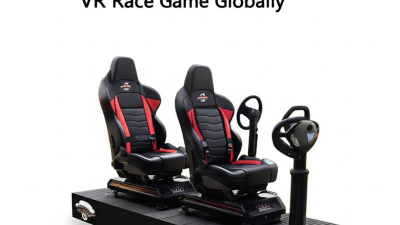
A 9D VR racing simulator links a headset, moving platform, steering system, pedals, and sensory effects. The platform tilts during cornering and drops slightly under braking. Small vibrations can suggest kerbs, engine rumble, or tire loss. Wind nozzles add speed cues near the driver’s face. The effect feels physical, not merely visual.

Grand View Research valued the global virtual reality market at approximately USD 59.96 billion in 2022. Its report projects a 27.5% compound annual growth rate from 2023 to 2030. PwC’s Seeing Is Believing analysis also estimated that VR and AR could contribute USD 1.5 trillion to the global economy by 2030. These figures support stronger investment in immersive training and entertainment equipment.

Good motion design depends on timing, not excessive movement. A 2024 racing simulator should match visual acceleration with platform response within milliseconds. Calibration matters. Too much tilt can cause discomfort, especially during repeated sessions. The “9D” label is not technically standardized, so buyers should inspect motion axes, latency, safety controls, and maintenance records. In practice, some systems promise more dimensions than they convincingly deliver. Realistic force feedback often matters more than dramatic movement.

China Top 10 9D VR Racing Simulator Manufacturers - How 9D VR Racing Simulators Deliver Immersive Motion

No. Manufacturer Evaluation Dimension Typical Commercial Specification Immersive Motion Contribution Recommended Verification Method
1 Motion Degrees of Freedom Six-axis platforms commonly combine pitch, roll, yaw, heave, surge and sway; additional effects may be produced through seat, belt, wind or vibration modules. Coordinates vehicle movement with visual and audio signals to reproduce braking, cornering, acceleration and road elevation changes. Confirm the actual actuators and independently controlled axes instead of relying only on the “9D” label, which is not an industry-standard measurement.
2 Actuator Response Professional electric or electromechanical systems generally target fast response with closed-loop position feedback; exact response time depends on load, stroke and control settings. Fast actuation reduces the delay between an in-game event and the physical sensation felt by the driver. Run repeated launch, braking and curb-impact tests while recording command-to-motion latency and repeatability.
3 Travel and Tilt Range Commercial motion rigs use limited linear travel and angular tilt to create acceleration cues; the usable range varies by platform architecture and safety limits. Controlled pitch and roll communicate weight transfer without requiring the simulator to reproduce the vehicle’s full physical displacement. Request measured stroke and angular range under the intended passenger load, not unloaded laboratory values.
4 Motion Cueing Algorithm Common systems use telemetry-driven filtering, acceleration scaling, washout logic and configurable gain settings. The algorithm converts game telemetry into believable cues while preventing excessive platform movement and actuator saturation. Evaluate smoothness, false motion, return-to-center behavior and synchronization across several racing titles.
5 VR Display and Tracking Current commercial headsets typically provide stereoscopic rendering, inside-out or external tracking, and a wide field of view; resolution and refresh rate vary by headset. Stable head tracking and high-refresh rendering help maintain visual immersion during rapid vehicle movement. Check tracking stability, image persistence, refresh-rate consistency and motion-to-photon latency during aggressive driving.
6 Steering and Pedal Force Feedback Racing configurations may use belt-driven or direct-drive steering systems, load-cell or hydraulic-style pedals, and adjustable resistance. Force feedback links tire grip, steering load, road texture and loss of traction to the driver’s hands and feet. Test steering detail, pedal consistency, emergency stop behavior and calibration retention after repeated sessions.
7 Additional Sensory Modules Optional modules may include seat vibration, tactile transducers, dynamic seat belts, wind simulation, g-force pressure and pedal vibration. High-frequency and localized effects complement the slower movement of the main platform and improve the perception of speed and impact. Check whether each effect is independently adjustable and correctly synchronized with telemetry events.
8 Load Capacity and Structural Design Capacity should cover the complete user, seat, steering, display and accessory assembly, with an appropriate engineering safety margin. A rigid frame transfers motion accurately and minimizes unwanted flex, vibration and noise. Verify rated payload, center-of-mass limits, frame deflection, fastener quality and long-duration fatigue performance.
9 Software and Game Compatibility Compatibility depends on telemetry support, plug-ins, middleware, simulator APIs, PC hardware and the selected VR platform. Broad compatibility allows the same motion profile to be used across racing, training and arcade simulation applications. Request a current compatibility list and test installation, profile switching, firmware updates and offline recovery procedures.
10 Safety, Maintenance and Serviceability Important features include emergency-stop controls, mechanical limits, cable management, protective covers, accessible service parts and documented maintenance procedures. Reliable safety systems enable strong motion effects while protecting users, operators and equipment. Inspect emergency-stop response, pinch-point protection, electrical compliance documents, spare-parts availability and technical support coverage.

Note: “9D VR” is a commercial marketing term rather than a globally standardized technical classification. Actual performance should be confirmed through measured specifications, demonstrations and safety documentation. The table presents manufacturer-neutral evaluation criteria and typical commercial practices without identifying individual companies or brands.

Key Technologies Used by Chinese VR Racing Manufacturers

China Top 10 9D VR Racing Simulator Manufacturers

Chinese VR racing manufacturers increasingly combine motion engineering, immersive software, and real-time data processing. Their 9D systems often use six-axis motion platforms, vibration modules, seat movement, steering resistance, and airflow effects. Electric actuators create fast pitch, roll, yaw, heave, surge, and sway responses. The remaining effects usually come from coordinated tactile and environmental devices.

Low-latency communication is essential. Motion controllers read vehicle telemetry and convert braking, cornering, and collisions into physical cues. Advanced cueing algorithms reduce unnecessary movement and improve comfort during long sessions.

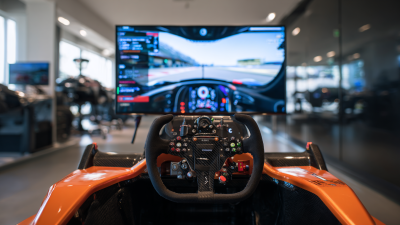
High-resolution headsets provide wide visual fields, while infrared tracking keeps the virtual cockpit aligned with the driver’s head. Some systems also use load-cell pedals and force-feedback wheels for more realistic control.

Details matter greatly. Chinese factories commonly test actuator repeatability, frame strength, emergency stops, and software recovery before delivery. Calibration tools help technicians adjust motion intensity for different users and vehicle types. However, not every impressive specification guarantees a better experience. Excessive movement can cause nausea, and strong vibration may hide poor visual synchronization. A slight delay between steering and motion remains noticeable. Reliable manufacturers therefore refine hardware through repeated track testing, not only showroom demonstrations. Their technical documentation, maintenance training, and replacement-part planning also influence long-term performance. The industry is advancing quickly, but practical comfort still deserves more attention.

China’s Top 10 9D VR Racing Simulator Manufacturers

China’s Top 10 9D VR Racing Simulator Manufacturers

China’s 9D VR racing simulator sector combines motion platforms, panoramic visuals, steering feedback, and synchronized effects. The “9D” label has no universal engineering standard, so buyers should inspect specifications rather than trust marketing language. Grand View Research valued the global virtual reality market at approximately USD 59.96 billion in 2022 and projected a 27.5% compound annual growth rate through 2030. This expansion supports continued investment in commercial racing attractions.

The leading ten Chinese manufacturers should be assessed through measurable performance. Key indicators include platform response time, steering force accuracy, headset resolution, emergency-stop access, and daily operating endurance. A practical test should run repeated races for several hours. Watch the seat frame, cable routing, and cooling fans. Small faults become expensive during busy weekends. Reports from the International Association of Amusement Parks and Attractions also emphasize staff training, documented inspections, and controlled ride procedures for immersive attractions.

Manufacturing depth matters. Strong suppliers usually provide motion calibration, software updates, spare actuators, installation guidance, and multilingual technical support. They should also disclose electrical certifications for the target market. This is where comparisons become imperfect. Public rankings rarely reveal failure rates, software stability, or after-sales response times. Buyers should request factory videos, maintenance records, and a live demonstration before signing. Fancy graphics are not enough. A realistic product evaluation must measure comfort, queue capacity, noise, cleaning access, and the cost of replacing high-wear components.

China Top 10 9D VR Racing Simulator Manufacturers

This chart presents practical industry benchmark dimensions commonly used when evaluating 9D VR racing simulators in China, including motion capability, VR refresh rate, panoramic viewing range, platform payload, and typical system footprint. The figures describe equipment-level specifications rather than individual company or brand performance.

Main Product Types and Customization Options

China’s top 10 9D VR racing simulator manufacturers generally serve three product groups: single-seat arcade units, modular cockpit systems, and multi-player commercial platforms. Some models use 3DOF or 6DOF motion, while “9D” often describes added effects rather than a universal engineering standard. That distinction matters. Buyers should inspect motion range, latency, load limits, and maintenance records.

Grand View Research valued the global virtual reality market at USD 59.96 billion in 2022 and projected a 27.5% CAGR from 2023 to 2030. This growth supports demand for more adaptable racing attractions. Custom options can include curved displays, head-mounted VR, direct-drive steering, hydraulic or electric actuators, and adjustable pedal spacing. Wind, vibration, lighting, and scent modules can increase immersion. Sometimes, less is better.

Commercial buyers can request custom seat dimensions, cabinet colors, multilingual interfaces, branded game themes, queue-management software, and coin or card payment systems. Training centers may prefer realistic force feedback and replaceable components. Family venues often need compact footprints and simplified controls. Accessibility should be discussed early, including transfer space and alternative control layouts.

A practical factory evaluation should include a live test. Check frame stability, emergency stops, cable protection, and software update procedures. Request energy consumption data, warranty terms, and spare-parts availability. A flashy simulator may still produce motion sickness or repetitive gameplay. Reports from Mordor Intelligence and other market analysts show strong simulation growth, but published forecasts vary widely. Treat projections as planning references, not guarantees.

How to Compare Quality, Price, Safety, and Support

China Top 10 9D VR Racing Simulator Manufacturers: How to Compare Quality, Price, Safety, and Support

A serious comparison starts with measurable details, not showroom lighting. Grand View Research reports that the global virtual reality market may grow at over 25% annually through 2030. That growth increases supplier choices, but specifications can remain unclear. Request frame materials, motor ratings, display refresh rates, warranty limits, and tested motion loads. A rigid steel frame should resist visible movement during braking. The steering wheel should return smoothly, without grinding or delayed feedback. Small faults matter.

Price needs a wider calculation. Compare the complete installation cost, including software licenses, shipping, training, maintenance, and replacement parts. A cheaper simulator may become expensive after repeated sensor failures. Fortune Business Insights identifies hardware, software, and services as major parts of the simulator economy. Ask for service response times in writing. Confirm whether technicians can diagnose faults remotely. Better support is often less visible than a large screen.

Safety deserves direct testing. Check emergency-stop access from the driver’s seat, cable protection, seat-belt anchoring, ventilation, and motion limits. ISO 12100 principles emphasize risk assessment and protective design for machinery. Operators should receive clear shutdown procedures. I once focused too heavily on motion intensity; that was a poor comparison. Stronger movement does not automatically create a better racing experience. Test ten minutes of continuous driving, inspect loose bolts, and record heat, noise, and latency. The method is imperfect, but measurable evidence is more reliable than confident sales language.

Virtual Reality Racing Ride: Why the VR Motorcycle Simulator Redefines Immersive Entertainment

Virtual reality racing is transforming entertainment by turning spectators into active participants. A modern VR motorcycle simulator combines a realistic riding position, responsive motion, and immersive visual effects to create the sensation of speeding through challenging tracks. Instead of simply watching a race, players lean, steer, and react as if they were inside the action, making every turn and acceleration feel more exciting.

Designed with a fashionable, futuristic appearance, this 9D VR racing machine can attract attention in entertainment centers, arcades, shopping malls, and family amusement venues. It includes 12 VR racing games, offering different environments, routes, and challenges for repeated play. The motorcycle moves up to 20 centimeters forward and backward, while its 20-centimeter left-and-right movement responds to the on-screen racing experience. These coordinated motions enhance balance, speed perception, and realism without requiring advanced riding skills.

With its compact interactive format and easy-to-understand gameplay, the simulator is suitable for both first-time users and experienced players. Riders can enjoy fast-paced competition, explore varied virtual worlds, and feel the thrill of motorcycle racing in a controlled indoor environment. Its combination of physical movement, immersive graphics, and stylish design creates a memorable entertainment experience for individual players and groups.

FAQS

What does “9D” mean in a VR racing simulator?

“9D” has no universal engineering standard. It usually combines motion, vibration, airflow, lighting, and other effects. Inspect the actual specifications instead of trusting the label.

Which motion technologies are commonly used?

Many systems use six-axis platforms with electric actuators. They simulate pitch, roll, yaw, heave, surge, and sway. Seat movement and vibration add physical feedback.

How is realistic driving control created?

Load-cell pedals measure braking pressure accurately. Force-feedback steering reproduces resistance during turns and collisions. Telemetry converts vehicle data into synchronized movement.

What should buyers test during a factory demonstration?

Run repeated races, not one short showroom session. Check steering delay, motion smoothness, frame stability, cooling fans, and cable routing. Small faults become costly during busy weekends.

Can excessive motion cause discomfort?

Yes. Strong movement may cause nausea or fatigue. A slight delay between steering and motion can feel obvious. Sometimes, less is better.

Which customization options are available?

Buyers can request different seats, pedal spacing, displays, headsets, and control layouts. Other options include airflow, lighting, vibration, multilingual interfaces, and queue software. Accessibility needs should be discussed early.

What safety and maintenance features matter most?

Look for accessible emergency stops and protected cables. Ask about software recovery, inspection routines, spare actuators, and replacement parts. Maintenance training matters too.

How can commercial venues judge long-term value?

Measure comfort, queue capacity, noise, cleaning access, energy use, and operating endurance. Request warranty details and maintenance records. I would not rely on graphics alone.

Conclusion

A 9d Vr Racing Simulator combines virtual reality visuals with a motion platform, steering system, pedals, sound, and physical feedback to create an engaging racing experience. By synchronizing vehicle movement, acceleration, braking, turning, vibration, and on-screen action, it helps users feel more connected to the virtual track. Chinese manufacturers have developed a wide range of solutions using VR headsets, motion-control systems, hydraulic or electric actuators, real-time software, and interactive racing environments. These technologies support applications in entertainment centers, training facilities, exhibitions, and private venues.

This guide reviews China’s top 10 9D VR racing simulator manufacturers from a practical purchasing perspective, without focusing on brand promotion. It explains common product types, including single-seat, multi-seat, arcade, and customized configurations, while highlighting options for software, platform motion, cockpit design, display systems, and venue integration. Buyers should compare realism, durability, safety features, maintenance requirements, pricing, customization capability, delivery reliability, technical support, and after-sales service before selecting the most suitable solution.

Blog Tags:

Amelia

Amelia

Amelia is a dynamic marketing professional at VART VR, one of the pioneers in VR simulator manufacturing based in Guangzhou. With a deep understanding of the virtual reality industry and a passion for innovation, Amelia plays a pivotal role in promoting the company's cutting-edge products and......
Previous What Is a VR Racing Arcade Machine?