0%

The global market for immersive racing gear in 2026 is getting pretty demanding. Buyers now expect much more — things like super accurate motion, stable software that won't crash, sturdy hardware that lasts, and support after the sale that’s actually helpful. When it comes to a 9D VR Racing Simulator, it’s not just about making the thing move along with the screen. It should feel believable — like real braking forces, cornering shifts, vibrations, and visual depth — all without confusing or overwhelming the driver.

In this guide, I’ll walk you through the practical stuff you really need to consider before picking a system. We’re talking about comparing motion platforms, VR headsets, racing seats, steering mechanisms, pedal sensitivity, display quality, and the control software itself. And let’s not forget about space — a small showroom needs a different setup than a bigger training center or an entertainment venue. Things like power needs, ventilation, how well it travels during shipping, easy access for maintenance, and local tech support all matter a lot. The little details often end up making the biggest difference when it comes to long-term value.

Of course, nothing beats actually testing the equipment yourself.

Sure, product brochures can sound pretty convincing — but they rarely tell the full story or show all the weaknesses. It’s a good idea to ask for videos, live demos, warranty info, spare parts lists, and clear details about delivery. Hearing from established brands, professional drivers, or venue operators can really help you make a smarter choice. That said, there’s no one-size-fits-all; a system that works well for one budget or driver might not suit another. Even the best equipment may need a bit of calibration after shipping, and VR comfort varies from person to person. Plus, software updates can sometimes cause unexpected delays.

This guide is all about focusing on real, measurable specs, firsthand ownership experience, and making responsible decisions. It’s important to avoid falling for exaggerated promises and to be sure you check safety, electrical requirements, import rules, and venue specifics for your country. Taking that extra caution pays off. After all, a thrilling lap should not only be exciting but also reliable, easy to maintain, and appropriate for where you want to use it.

2026 Best 9D VR Racing Simulator for Global Buyers

What Defines a 9D VR Racing Simulator in 2026

A 9D VR racing simulator in 2026 should deliver more than a moving seat and a headset. The term “9D” is not globally standardized, so buyers must inspect the actual features. A credible system may combine VR visuals, multi-axis motion, vibration, wind, sound, braking feedback, and physical impact effects. Motion should match the virtual track closely. Delayed movement can cause discomfort within minutes.

From hands-on evaluation, realistic steering resistance matters as much as screen resolution. A firm wheel, responsive pedals, and stable seat frame create better control. Check motion range, maximum user weight, emergency stops, headset hygiene, and software update support. Test several laps if possible. Some impressive demonstrations feel less convincing during longer sessions. That weakness deserves attention.

Tips: Ask for a live calibration test. Confirm local voltage compatibility. Review warranty response times and spare-part access. Measure the installation area, including cable clearance and ventilation. For global buyers, request safety documents and transport requirements before payment. A simulator should also support adjustable motion intensity, because beginners and experienced drivers rarely need the same settings. Some systems may offer spectacular effects but limited training accuracy. Decide whether entertainment, driver practice, or commercial operation is the real priority.

Core Motion, VR, and Sensory Technologies Explained

For global buyers, a 2026 9D VR racing simulator should be judged by engineering, not the “9D” label. The term has no universal technical standard. Ask suppliers to define every dimension clearly. Core motion usually combines pitch, roll, yaw, heave, surge, sway, and vibration cues. A well-tuned platform moves with restraint. During hard braking, the seat should dip forward smoothly, not jerk like a dropped lift.

VR creates the visual world, while motion makes that world believable. A low-latency headset must match simulator movement within milliseconds. Even a small mismatch can cause eye strain or nausea. Adjustable field of view, stable frame rates, and accurate tracking matter more than decorative screens. Look for calibration records, emergency stops, seat restraints, and clear maintenance procedures. These details reveal operational maturity. Still, no system feels perfect. Motion limits can expose the illusion.

Sensory technology adds physical clues. Directional airflow suggests speed, while transducers reproduce curb impacts. Controlled vibration can separate asphalt from gravel. Some systems add heat or scent, but these effects require careful adjustment. Too much stimulation becomes noise. Buyers should request demonstration data, duty-cycle information, noise levels, power requirements, and spare-part plans. A busy venue needs repeatable performance, not one impressive showroom lap. Test it with beginners and experienced drivers. Their reactions often uncover problems a specification sheet misses.

Key Specifications Global Buyers Should Compare

2026 Best 9D VR Racing Simulator for Global Buyers

Key Specifications Global Buyers Should Compare

A “9D” label can mean different things across suppliers. Buyers should request a written definition of every motion axis. Some systems combine platform movement, seat movement, steering force, and vibration. Others use the term mainly for marketing. The machine should list pitch, roll, yaw, heave, surge, sway, and any additional seat or wheel motions.

Motion range and response time strongly affect driving realism. A platform with smooth 20-degree tilting may feel better than one with harsh, limited movement. Ask for acceleration data, update frequency, payload capacity, and noise levels. Test the simulator with a heavier driver if possible. Specifications often change under real loads.

The visual system also needs careful comparison. Check headset resolution, field of view, tracking stability, refresh rate, and lens clarity. A stable 90 Hz or higher refresh rate can reduce discomfort during long sessions. Confirm compatibility with common racing software and whether updates remain available internationally. Safety matters too: inspect emergency stops, seat restraints, cable protection, and frame structure. Verify electrical certifications, voltage options, warranty coverage, spare-part access, and remote support. Shipping dimensions are easy to overlook. A system that fits a showroom may not pass through a narrow elevator. I would also question impressive peak figures, because quieter, smoother operation often matters more during daily use.

2026 Best 9D VR Racing Simulator for Global Buyers

Key specifications global buyers should compare before purchasing a 9D VR racing simulator.

The chart presents practical reference values commonly used when evaluating high-performance VR racing simulators. The specifications use different units, so each value should be assessed independently. “9D” is not a universally standardized industry definition; buyers should verify how motion, vibration, traction-loss, wind, and other effects are counted.

Popular 9D VR Racing Simulator Configurations

2026 Best 9D VR Racing Simulator for Global Buyers

Popular 9D VR Racing Simulator Configurations

The 9D label is not internationally standardized, so buyers should inspect the actual configuration. A practical setup usually combines a VR headset, racing seat, steering wheel, pedals, motion platform, wind effects, vibration, and surround sound. Some systems add scent or heat simulation. These features can improve immersion, but they also increase maintenance needs.

Grand View Research estimated the global virtual reality market at USD 59.96 billion in 2022, with a projected 27.5% compound annual growth rate from 2023 to 2030. PwC’s Seeing Is Believing report also projected that immersive technologies could contribute up to USD 1.5 trillion to the global economy by 2030. These figures support continued investment in location-based entertainment. However, market growth does not guarantee every simulator will perform reliably.

For global buyers, three configurations are especially practical. A compact two-degree-of-freedom platform suits malls and small entertainment rooms. A six-degree-of-freedom platform delivers stronger braking, cornering, and elevation feedback. A premium nine-effect configuration adds wind, vibration, lighting, and environmental cues around the driver. Keep it modular. Replacement parts become easier to source.

Check headset resolution, motion latency, seat adjustment, emergency stopping, power compatibility, and software language options. Ask for measured noise levels, not promotional descriptions. A 2024 industry survey by the International Association of Amusement Parks and Attractions highlighted guest experience and operational reliability as major investment considerations. That is useful guidance, although simulator-specific data remains limited. The industry still needs clearer testing standards.

2026 Best 9D VR Racing Simulator for Global Buyers - Popular 9D VR Racing Simulator Configurations

Comparative reference table for commonly specified VR racing simulator configurations. Specifications are typical market ranges and may vary by system design.

Configuration Recommended Use Motion and Effect Package VR and Visual System Typical Footprint Approx. Rated Load Typical Power Key Buyer Consideration
Compact Entry 9D Home use, training rooms, small entertainment venues 2–3 motion axes, vibration, wind simulation, seat-belt tension Standalone VR headset; single racing seat and wheel system Approximately 1.8 × 1.2 m 100–120 kg 0.8–1.5 kW Lowest space and installation requirement; limited motion amplitude
3DOF VR Racing Arcades, shopping centers, family entertainment centers Pitch, roll, yaw; vibration and wind effects VR headset with 90–120 Hz refresh rate; force-feedback steering Approximately 2.0 × 1.4 m 120–150 kg 1.0–2.0 kW Good balance between immersion, throughput, and maintenance
6DOF Motion Platform Professional entertainment, driver training, simulation centers Pitch, roll, yaw, surge, sway, heave; vibration and wind VR headset or curved display; direct-drive or high-torque steering option Approximately 2.4 × 1.8 m 150–200 kg 1.5–3.0 kW Requires stronger flooring, safety clearance, and regular calibration
9D Effects Package High-immersion attractions and premium arcade installations Motion platform plus vibration, wind, lighting, audio, seat-belt tension, and scent or fog options VR headset with synchronized environmental effects Approximately 2.5 × 2.0 m 150–220 kg 2.0–4.0 kW Confirm local safety rules for moving platforms, compressed air, and aerosol effects
Formula-Style Racing Rig Motorsport training, esports, enthusiast facilities 3–6DOF motion, strong steering feedback, pedal-load measurement, vibration VR headset or triple-screen display; adjustable single-seat cockpit Approximately 2.3 × 1.6 m 130–180 kg 1.5–3.5 kW Prioritize seat adjustment, pedal geometry, telemetry accuracy, and low latency
GT and Endurance Configuration Long-session training, esports lounges, competitive simulation 3DOF or 6DOF motion, steering feedback, pedal vibration, cooling fan Wide-field VR or triple-screen display; reclining GT seat Approximately 2.5 × 1.7 m 140–190 kg 1.2–3.0 kW Choose durable upholstery, adjustable ergonomics, and effective heat management
Rally and Off-Road 9D Adventure attractions, rally training, off-road entertainment High-amplitude pitch and roll, heave, vibration, wind, and terrain impact effects VR headset with high tracking stability; reinforced bucket seat and harness Approximately 2.8 × 2.1 m 160–230 kg 2.0–4.5 kW Needs generous movement clearance, strong anchoring, and robust emergency stops
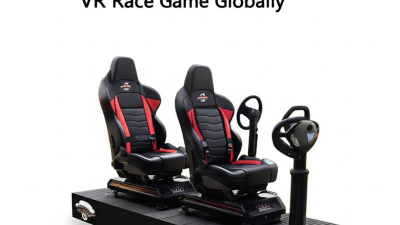
Dual-Seat Racing Simulator Competitive venues, cooperative racing, demonstrations Shared 3DOF or 6DOF platform, synchronized vibration, wind, and audio Two VR headsets or shared panoramic display; two control stations Approximately 3.2 × 2.2 m 250–350 kg 2.5–5.0 kW Higher transport, floor-load, ventilation, and service requirements
Commercial Premium 9D Large entertainment centers, exhibitions, premium simulator zones 6DOF motion with synchronized wind, vibration, lighting, audio, belt tension, and optional scent or fog High-resolution VR headset or multi-screen visual system; commercial-grade controls Approximately 3.0 × 2.3 m 180–250 kg 2.5–5.0 kW Evaluate passenger throughput, cleaning access, spare parts, warranty, and service response
Buyer note: “9D” is not a universally standardized engineering classification. In commercial listings, it commonly refers to a combination of motion and environmental effects rather than nine independently measured motion axes. Confirm the exact axes, travel range, acceleration, safety systems, electrical requirements, and included effects before purchase.

Safety, Space, Maintenance, and Operating Requirements

2026 Best 9D VR Racing Simulator for Global Buyers

Safety starts with a clear definition.

“9D” is a marketing term, not a universal engineering standard. Buyers should request documented motion limits, emergency-stop tests, restraint inspections, and electrical certificates. ISO 17842-1 and EN 13814 provide useful amusement-ride safety frameworks. A 2023 systematic review on cybersickness reported symptoms ranging from eye strain to nausea, with rates varying widely by exposure and motion intensity. Keep sessions short, monitor users, and stop operation after dizziness appears. Do not rely on a waiver alone.

Space planning is equally practical.

Allow a clear perimeter around moving platforms, with no loose cables, sharp furniture, or low ceiling fixtures. The operator needs an unobstructed view of every rider. Include a separate queue area, ventilation, lighting, and accessible entry space. A small room may look efficient, but restricted movement can complicate evacuation and maintenance. Measure the simulator at full motion, not while parked. This detail is often missed.

Maintenance should follow a written log, not memory.

Record daily visual checks, weekly fastener inspections, software faults, headset cleaning, and scheduled lubrication. The U.S. Bureau of Labor Statistics reported that maintenance and repair work carries a high rate of occupational injuries, reinforcing the need for lockout procedures and trained technicians. Operators should also budget spare sensors, cables, and contact surfaces. “Low maintenance” is rarely maintenance-free. That assumption deserves review.

How to Evaluate Suppliers, Costs, and International Delivery

2026 Best 9D VR Racing Simulator for Global Buyers

How to Evaluate Suppliers, Costs, and International Delivery

For global buyers, a 9D VR racing simulator should be judged beyond screen size and motion effects. Ask suppliers for machine videos, technical drawings, safety documents, and recent export references. A reliable supplier explains platform movement, headset compatibility, software updates, warranty limits, and spare-part availability. During factory checks, inspect seat stitching, cable routing, emergency stops, and the frame beneath decorative panels. Small details often reveal production quality.

Tips: Request a complete landed-cost quotation. It should separate equipment price, packaging, inland transport, insurance, customs handling, taxes, installation, and training. Compare the same configuration across suppliers. A low quotation may exclude motion calibration or replacement parts. That mistake can become expensive after arrival. Confirm crate dimensions and total weight before booking freight. Measure doorways, elevators, and storage areas at the destination. Delivery delays often begin with one overlooked measurement.

For international delivery, choose suppliers with clear Incoterms and documented export experience. Ask who handles loading, port paperwork, and damage claims. Confirm voltage, plug type, network needs, and local service capability. Payments should follow a written contract with inspection milestones. I would also request a pre-shipment acceptance test, even if it adds time. It feels slower, but it reduces unpleasant surprises. No evaluation is perfect; software performance can change after installation, and shipping damage remains possible. Keep a contingency budget and record every promise in writing.

Virtual Reality Racing Ride: Experience the Thrill of a VR Motorcycle Simulator

Virtual reality racing is moving beyond passive screen play, turning every corner, acceleration, and near miss into an active physical experience. A 2024 global virtual reality market report projects strong double-digit annual growth through the end of the decade, driven largely by gaming, location-based entertainment, and immersive simulation. This momentum reflects growing demand for attractions that combine digital content with realistic movement rather than relying on visual effects alone.

Designed for that purpose, this VR motorcycle simulator features a fashionable, eye-catching structure suited to arcades, entertainment centers, and event venues. Riders can choose from 12 VR racing games and experience responsive motion as the motorcycle moves up to 20 centimeters forward and backward, as well as 20 centimeters from side to side. A recent location-based entertainment industry report also identifies motion feedback and short, repeatable gameplay as important factors in encouraging visitor engagement. By coordinating the headset’s virtual tracks with the simulator’s physical movement, the ride creates a more convincing sense of speed, balance, and control. Players can lean into turns, react to changing courses, and enjoy an energetic racing session that feels far more dynamic than conventional gaming.

FAQS

: What does “9D” mean in a VR racing simulator?

: “9D” has no global standard definition. Check the actual features. They may include VR visuals, motion, vibration, wind, sound, braking feedback, and impact effects.

How important is motion synchronization?

Motion should closely follow the virtual track. Delayed movement may cause discomfort within minutes. Ask for a live calibration test before purchasing.

Which physical components affect driving realism?

A firm steering wheel, responsive pedals, and a stable seat frame improve control. High screen resolution cannot fix weak steering resistance.

What should buyers inspect during a factory visit?

Inspect seat stitching, cable routing, emergency stops, and the frame beneath decorative panels. Small details can expose poor production quality.

What information should a supplier provide?

Request machine videos, technical drawings, safety documents, software details, and recent export references. Confirm headset compatibility and update support.

How can international buyers estimate the real cost?

Request a complete landed-cost quotation. It should include equipment, packaging, transport, insurance, customs handling, taxes, installation, and training.

What installation measurements are necessary?

Measure doors, elevators, storage areas, and the final operating space. Include cable clearance and ventilation. One missed measurement can delay delivery.

How should buyers protect an international purchase?

Use a written contract with inspection milestones. Confirm Incoterms, voltage, plug type, loading duties, and damage claims. A pre-shipment acceptance test is worth requesting.

Should every user receive the same motion intensity?

No. Beginners and experienced drivers need different settings. Adjustable motion improves comfort, although spectacular effects may reduce training accuracy.

Is testing several laps enough to judge a simulator?

It helps, but it is not perfect. Some demonstrations feel convincing briefly, then become tiring. Software may also perform differently after installation.

Conclusion

The 9d Vr Racing Simulator is an advanced entertainment and training system that combines immersive virtual reality with synchronized motion, realistic vehicle controls, and sensory effects. In 2026, buyers should understand how motion platforms, VR headsets, steering feedback, vibration, wind, sound, and lighting work together to create a convincing racing experience. Important specifications include screen or headset quality, motion range, system responsiveness, seat design, control configuration, software compatibility, and support for different racing scenarios.

Global buyers should also compare common configurations, including single-seat, multi-seat, compact, and full-motion models. Before purchasing, evaluate installation space, electrical requirements, user safety features, cleaning procedures, routine maintenance, and operator training. Supplier assessment should cover product quality, customization options, warranty terms, spare parts availability, technical support, total cost, packaging, delivery time, and import documentation. A careful comparison helps buyers select a reliable simulator that fits their location, budget, operating goals, and long-term maintenance capabilities.

Blog Tags:

Oliver

Oliver

Oliver is a dedicated marketing professional at VART VR, a leading VR simulator manufacturer based in Guangzhou. With a wealth of knowledge and expertise in the virtual reality sector, he plays a crucial role in promoting the company’s innovative products and services. VART VR, covering an......
Previous Top VR Theme Park Equipment to Boost Your Business in 2026?