
Key Takeaways
- The VR arcade industry is shifting from solo experiences to multiplayer, high-immersion attractions.
- Technologies like 360° rotation and vertical motion (hard lift) are redefining what “immersion” means.
- The concept of weightlessness is becoming a key driver of user excitement and repeat play.
- VR flying simulators combine visual, physical, and environmental feedback, making them top revenue generators.
- Arcade operators are increasingly investing in high-impact machines rather than large quantities of low-end devices.
The Future Is Already Here: VR Arcades Are Evolving Fast
If you’re researching the future of the VR arcade industry, one trend is becoming impossible to ignore:
The shift from basic VR gameplay → full-body immersive experiences
In 2026, success is no longer about how many machines you have.
It’s about how deeply players feel the experience.
And this is exactly why VR flying simulators are emerging as one of the most important attractions in modern arcade centers.
They combine:
- Motion
- Visual immersion
- Environmental effects
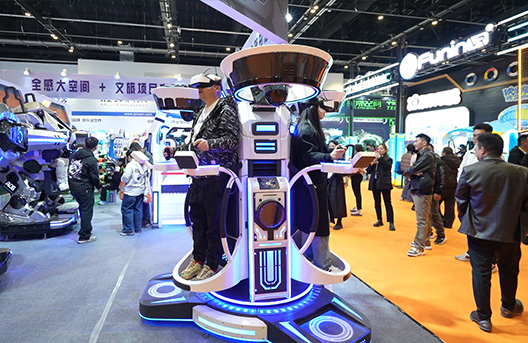
VR flying simulators combine motion, visual immersion, and environmental effects—learn how this works in a real machine with our 3-seat VR flying simulator. Into one powerful experience that keeps players coming back.
The Evolution of VR Entertainment: From Static to Fully Immersive
Phase 1 — Static VR (The Beginning)
Early VR arcades focused on:
- Headset-based experiences
- Minimal physical movement
- Single-player interaction
While innovative at the time, these setups had limitations:
- Low repeatability
- Weak physical engagement
- Easy to replace with home VR
Phase 2 — Motion-Based VR (The Upgrade)
Next came motion platforms:
- VR chairs
- Racing simulators
- Roller coaster experiences
This introduced:
- Physical feedback
- Stronger immersion
But still:
- Limited movement range
- Mostly single-user
Phase 3 — Multi-Sensory, Multi-Player VR (2026 Trend)
Today’s leading VR arcades are moving toward:
- Multiplayer experiences
- Full-motion platforms (360° rotation)
- Vertical movement (hard lift systems)
- Environmental effects (wind, vibration, etc.)
This is where VR flying simulators stand out.
Why VR Flying Machines Are Gaining Global Attention
The Power of “Weightlessness”
One of the most exciting sensations in VR is weightlessness.
It’s the feeling of:
- Free fall
- Sudden drops
- Floating in the air
This sensation is nearly impossible to achieve with traditional arcade machines.
But with vertical motion systems, it becomes real.
Players don’t just see flight—they feel the loss of gravity.
360° Rotation Changes Everything
Another breakthrough is 360° rotation.
Unlike traditional simulators:
- No fixed direction
- No limited angles
- No immersion breaks
This allows:
- Continuous aerial movement
- Realistic flight simulation
- Higher excitement levels
Together with vertical motion, it creates a true flight experience.
Key Technologies Driving the Trend
1. Full Motion Platforms
Modern VR flying simulators integrate:
- 360° rotation systems
- Vertical lift (hard lift)
- High-precision motion control
These create:
- Realistic movement
- Physical engagement
- Strong emotional response
2. Multi-Sensory Feedback Systems
Immersion is no longer visual only.
Advanced systems now include:
- Wind effects
- Vibration feedback
- Sound synchronization
These align the player’s senses and reduce motion sickness.
3. Multiplayer Interaction
Today’s arcades prioritize:
- Social experiences
- Group play
- Competitive gameplay
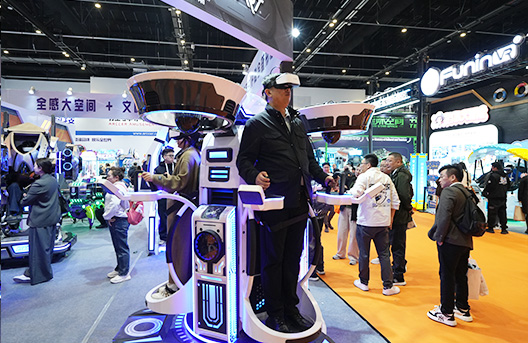
VR flying simulators support:
- Multiple players
- Shared experiences
This increases both engagement and revenue.
Traditional VR vs Next-Gen VR Flying Simulators
| Feature | Traditional VR Arcade | VR Flying Simulator |
|---|---|---|
| Player Mode | Single | Multiplayer |
| Movement | Limited | 360° + vertical |
| Immersion | Visual | Full-body |
| Sensation | Basic | Weightlessness |
| Attraction Power | Medium | Very High |
| Revenue Potential | Stable | High Growth |
Why Arcade Owners Are Switching to High-Impact Machines
Instead of filling spaces with many low-cost machines, operators are now focusing on:
Fewer machines, higher performance
Why?
- Higher ticket pricing
- Stronger visual attraction
- Better customer retention
- More social media exposure
VR flying simulators fit perfectly into this strategy.
The Role of Design in Customer Attraction
Modern VR machines are no longer just functional—they are visual experiences.
Key design trends include:
- Sci-fi aesthetics
- Mecha-inspired structures
- LED lighting systems
- Dynamic movement visibility
These elements turn machines into centerpieces of the venue.
Reducing Motion Sickness: A Critical Breakthrough
One major barrier in VR has always been motion sickness.
Next-gen simulators solve this through:
- Motion synchronization
- Wind effect systems
- Improved hardware stability
Result:
- Longer play sessions
- Better reviews
- Increased repeat customers
Why VR Flying Simulators Are a Smart Investment
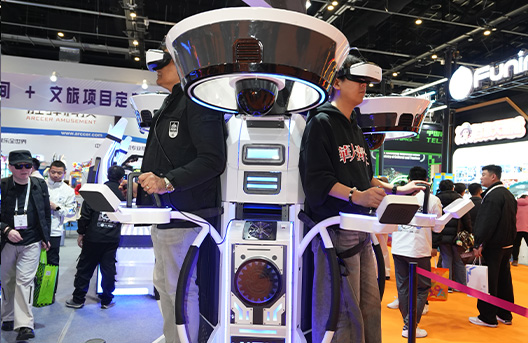
From a business perspective, these machines offer:
- High visibility
- High throughput
- Premium pricing potential
- Strong replay value
This makes them one of the most profitable categories in VR entertainment today.
Want to see how this technology works in a real machine? Explore the full technical breakdown of the 3-seat VR flying simulator.
FAQ
What is a VR flying simulator?
A VR flying simulator is a motion-based virtual reality system that simulates flight using rotation, vertical movement, and immersive visuals.
Why are VR flying machines popular in arcades?
Because they offer full-body immersion, multiplayer interaction, and strong visual attraction—making them ideal for commercial entertainment.
What is “weightlessness” in VR?
Weightlessness refers to the sensation of losing gravity, often simulated through vertical drops and motion systems.
How does 360° rotation improve immersion?
It allows continuous movement without direction limits, creating a more realistic and engaging experience.
Are VR flying simulators profitable?
Yes. Due to high attraction power and repeat play, they are considered high-ROI machines for VR arcades.
Post time: Apr-23-2026