
Introduction
Have you ever wished you could step inside a movie? A 5D cinema turns that idea into reality by transforming traditional film viewing into a fully immersive experience. By combining 3D visuals, synchronized motion seating, and multi-sensory effects, this cinema format allows audiences not only to watch a film but to physically feel it.
Unlike standard theaters, this advanced cinema system stimulates sight, sound, touch, and motion at the same time, making every scene more engaging, intense, and memorable.
Defining a 5D Cinema and the Immersive Experience
A 5D cinema is an upgraded cinematic format that builds on 3D and 4D technologies by adding dynamic motion and vibration simulation. While traditional cinemas rely on visual and audio storytelling, this system introduces physical interaction that places the audience directly inside the action.
The goal is to blur the boundary between the screen and the viewer. Instead of passively watching, audiences become active participants in a multi-sensory immersive experience that reacts in real time to the film’s content.
How 5D Cinema Evolved from 3D and 4D Technology?
The development of immersive cinema followed a clear technological path. 3D cinema introduced depth perception, allowing objects to appear closer and more realistic. 4D cinema expanded this concept by adding basic motion and environmental effects such as wind or water.
5D technology takes the next step by integrating advanced vibration simulators, precise motion platforms, and a wider range of synchronized effects. These upgrades result in smoother movement, more accurate feedback, and deeper audience immersion.
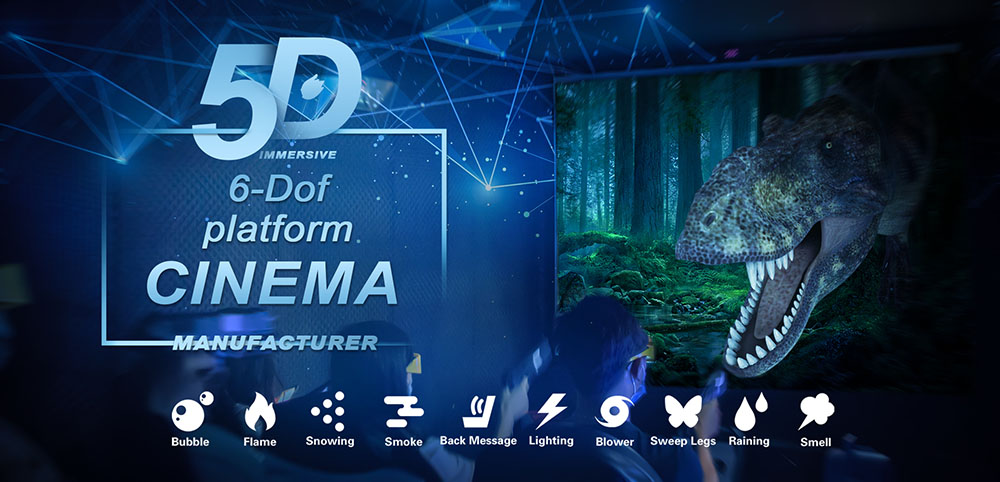
Core Technologies Behind a Modern 5D Cinema System
Vibration Simulator and Motion Seating Technology
At the core of the system are motion seats equipped with vibration simulators. These seats are mounted on electric or hydraulic platforms that can tilt, shake, lift, and drop in multiple directions.
Every movement is programmed to match the on-screen action. Whether simulating acceleration, turbulence, or impact, the vibration system provides realistic physical feedback that enhances the cinematic storytelling.
Multi-Sensory Effects for a Fully Immersive Cinema
Beyond motion, the immersive experience is strengthened through environmental effects controlled by a central system. These effects are activated at precise moments to match the visuals and sound.
Common effects include:
-
Wind, rain, snow, and water spray
-
Smoke, fog, bubbles, and lightning
-
Scent, air jets, and seat vibration
Together, these elements create a believable environment that surrounds the audience.
Visual Display and Surround Sound Integration
High-quality visuals remain essential. Most systems use curved or panoramic cinema screens combined with stereoscopic 3D projection to expand the field of view. This removes visual distractions and improves spatial realism.
The experience is completed with multi-channel surround sound, allowing audio effects to move dynamically around the theater and reinforce the sense of motion and direction.
Customization Options for Commercial 5D Cinema Projects
One major advantage of this cinema format is Customization. Systems can be tailored to different venue sizes, themes, and business models.
Customization options include:
-
Seat quantity and layout (from small setups to large theaters)
-
Exterior and interior design themes
-
Effect intensity levels
-
Localized content and language support
This flexibility makes the system suitable for theme parks, shopping malls, museums, and VR entertainment centers.
What Visitors Experience Inside a 5D Motion Cinema?
Audiences can expect a short, high-impact immersive experience, usually lasting between 5 and 15 minutes. Every movement, sound, and effect is synchronized to keep engagement high without causing fatigue.
The combination of motion, vibration, and environmental feedback makes the audience feel as if they are inside the story rather than watching it unfold.
Business Value and ROI for Entertainment Venues
From a commercial perspective, this cinema format offers strong ROI. Short film duration allows high visitor throughput, while minimal staffing keeps operational costs low.
Compared with individual VR setups, a cinema-based system supports group experiences, increasing ticket sales per session and improving overall revenue efficiency.
Safety, Accessibility, and Family Suitability
Safety systems such as seat belts, emergency stop functions, and infrared sensors are standard. While suitable for families, venues typically apply age and height guidelines to ensure comfort and safety.
Clear instructions and proper operation training ensure a safe and enjoyable experience for all guests.
Conclusion – Why 5D Cinema Continues to Attract Audiences?
By merging cinematic storytelling with physical interaction, 5D cinema delivers an immersive experience that traditional theaters cannot replicate. Advanced vibration simulators, motion systems, and customizable designs make it a powerful attraction for both audiences and operators.
For venues seeking engaging, high-impact entertainment with proven commercial value, this cinema format remains a compelling investment.
Frequently Asked Questions
How Is 5D Cinema Different from 4D or 7D?
The difference lies in effect complexity and interaction depth. 4D adds basic motion, while 5D introduces more refined vibration and environmental systems. Higher-number formats typically add interactive or gaming elements.
How Long Does a Typical Experience Last?
Most experiences last 5–15 minutes, balancing excitement with comfort.
Post time: Jan-02-2026