
Introduction
Before launching a 5D cinema project, one of the most common questions operators ask is what equipment is actually required. While the immersive experience may feel seamless to audiences, it is built on a carefully integrated system of hardware, software, and special effects working together in real time.
To fully understand the concept and experience behind this format, it is helpful to first explore what a 5D cinema is and how immersive motion systems function.
Overview of a Complete 5D Cinema System
A 5D cinema is not a single machine but a complete cinema system made up of several core components. Each part plays a specific role in delivering synchronized motion, vibration, visuals, and environmental effects.
At a high level, the system includes:
-
Motion seating and vibration simulators
-
Visual display and projection system
-
Surround sound audio system
-
Special effects equipment
-
Central control and synchronization software
Motion Seats and Vibration Simulator Equipment
Motion Seats as the Core Experience Hardware
Motion seats are the foundation of the immersive experience. These seats are mounted on dynamic platforms that can tilt, lift, vibrate, and move in multiple directions to match the on-screen action.
Depending on the configuration, motion seats may be arranged in:
-
2-seat or 3-seat modules
-
4-seat platforms for compact theaters
-
Larger multi-row layouts for high-capacity venues
Role of the Vibration Simulator in Immersion
A vibration simulator enhances realism by delivering precise physical feedback during key moments in the film. Instead of simple shaking, modern systems use programmable vibration patterns that simulate acceleration, impact, and environmental movement.
This technology significantly improves audience engagement while keeping motion smooth and controlled.
Visual Display and Projection Equipment
High-quality visuals are essential for immersive cinema. Most systems use one of the following display solutions:
-
Large-format flat screens for compact spaces
-
Curved or panoramic cinema screens for wider viewing angles
-
High-brightness projectors with 3D capability
Combined with stereoscopic projection, these displays create depth and realism that support motion and vibration effects.
Audio System for Immersive Cinema Experience
Sound plays a critical role in immersion. A professional multi-channel surround sound system ensures audio moves with the on-screen action, reinforcing motion cues and environmental effects.
Typical configurations include:
-
5.1 or 7.1 surround sound systems
-
Dedicated subwoofers for low-frequency impact
-
Audio processors synchronized with motion and effects
Special Effects Equipment in a 5D Cinema
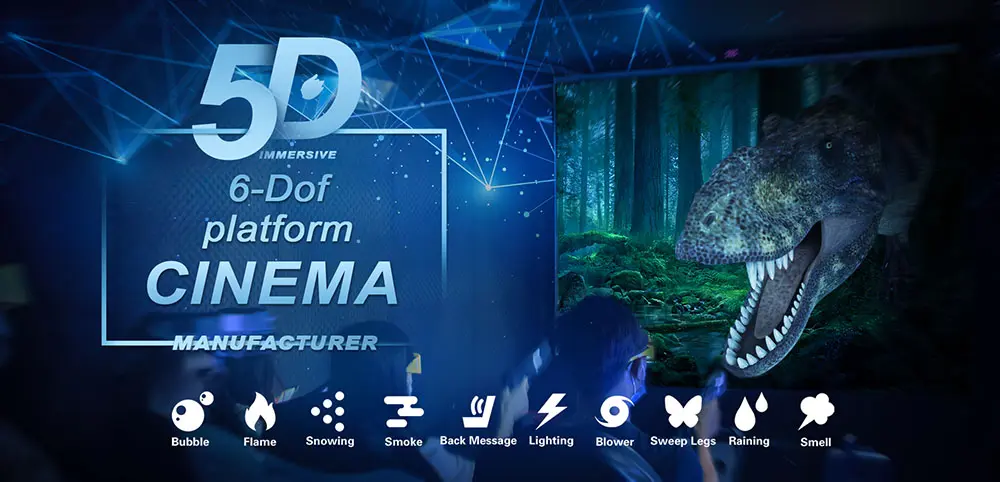
To complete the immersive experience, special effects devices are integrated into the system. These effects are triggered automatically by the control software and synchronized precisely with the film.
Common special effects include:
-
Wind and air jets
-
Water spray and mist
-
Smoke, fog, and bubbles
-
Snow and lightning effects
Effect intensity can usually be adjusted to suit different audiences and safety requirements.
Central Control System and Synchronization Software
All equipment within a 5D cinema is managed by a central control system. This software synchronizes motion seats, vibration simulators, visuals, sound, and effects down to precise timing.
The control system also allows operators to:
-
Switch films easily
-
Adjust effect levels
-
Monitor system status
-
Perform routine diagnostics
This automation keeps daily operation efficient and reliable.
Space Requirements and Installation Considerations
When planning equipment selection, venue space must be considered carefully. Factors include:
-
Ceiling height for motion clearance
-
Floor load capacity
-
Power supply and ventilation
-
Emergency exits and safety spacing
Compact systems can fit into smaller entertainment venues, while larger theaters require custom layout planning.
Customization Options for Different Venues
Equipment configurations can be customized to match specific business needs. Operators can adjust:
-
Seat quantity and layout
-
Visual display type
-
Special effects combination
-
Exterior and interior design themes
Customization allows the same core cinema system to be adapted for theme parks, shopping malls, or VR experience centers.
How Equipment Choice Affects ROI?
The selection of equipment directly impacts long-term performance. Durable motion systems, reliable vibration simulators, and efficient control software reduce downtime and maintenance costs.
For a deeper business analysis, operators may want to explore whether this format is a profitable business and how equipment decisions influence overall return on investment.
Conclusion – Building the Right 5D Cinema Setup
A successful 5D cinema relies on the seamless integration of motion seating, vibration simulation, visual display, audio, special effects, and control software. Choosing the right equipment ensures consistent performance, audience satisfaction, and long-term commercial value.
By understanding each system component, operators can make informed decisions and build an immersive cinema experience that stands out in competitive entertainment markets.
Frequently Asked Questions
Can a 5D cinema system be upgraded later?
Yes. Many systems are modular, allowing operators to upgrade motion platforms, add effects, or expand seating capacity over time.
Is this equipment suitable for indoor venues?
Absolutely. Compact configurations are designed specifically for indoor entertainment venues such as shopping malls and family entertainment centers.
Post time: Jan-07-2026