
Executive Summary
Large-space VR technology has evolved far beyond simply connecting multiple VR headsets inside a larger room.
Modern Location-Based VR (LBVR) systems combine precision spatial positioning, multiplayer VR synchronization, environmental interaction, and intelligent operational workflows into a unified engineering platform. For commercial deployments, technical stability directly affects customer safety, operational efficiency, equipment uptime, and long-term return on investment.
This guide explains the engineering principles behind mature LBVR systems, helping technical directors, systems engineers, and commercial operators evaluate hardware platforms based on measurable technical performance rather than marketing demonstrations alone.
Introduction
The rapid growth of Location-Based Entertainment (LBE) has fundamentally changed the technical requirements for commercial virtual reality systems.
Consumer VR devices are primarily designed for individual users operating within relatively small play areas. Large-space VR environments, however, introduce an entirely different level of engineering complexity.
Instead of tracking a single headset, commercial LBVR installations must coordinate multiple players moving simultaneously through dynamic physical environments while maintaining accurate spatial awareness, stable wireless communication, synchronized interactive effects, and safe operational control.
As venue sizes increase, so do the technical challenges.
A modern Large-Space VR Arena must continuously manage:
- Real-time spatial positioning
- Multiplayer synchronization
- Motion prediction
- Collision avoidance
- Virtual-to-real environment alignment
- Environmental effects synchronization
- Content scheduling
- Operational monitoring
Each subsystem contributes directly to the overall customer experience.
If even one component performs poorly, the illusion of immersion quickly breaks down.
For example, positional drift can cause players to perceive themselves walking through virtual walls. Poor synchronization may create inconsistent multiplayer interactions. Inaccurate physical mapping increases collision risks. Delayed environmental effects reduce realism and emotional engagement.
These issues rarely appear in promotional videos, yet they have significant consequences for commercial operations.
This is why experienced engineers evaluate an LBVR platform as an integrated ecosystem rather than a collection of individual devices.
A mature solution combines hardware engineering, software architecture, venue planning, operational workflows, and long-term technical support into one cohesive platform capable of supporting continuous public operation.
The Six Engineering Pillars of Mature Large-Space VR Technology
Many manufacturers emphasize visual quality or headset specifications when presenting their products.
However, experienced systems engineers evaluate technical maturity using a much broader framework.
Reliable commercial deployment depends on how well multiple engineering systems work together under continuous operating conditions.
The following six technical pillars provide a practical framework for evaluating modern Large-Space VR technology.
| Engineering Layer | Primary Technical Function | Operational Value |
|---|---|---|
| VR Spatial Positioning System | Maintains accurate real-time positioning for multiple users while minimizing positional drift. | Stable gameplay, improved immersion, reduced tracking interruptions |
| Multiplayer VR Synchronization | Synchronizes player movement, interactions, and shared virtual environments with minimal latency. | Natural multiplayer experiences and consistent gameplay |
| Anti-Collision & Safety Management | Combines virtual boundaries, physical layouts, and operational monitoring to prevent player collisions. | Enhanced visitor safety and smoother operations |
| 1:1 Virtual-to-Real Mapping | Aligns virtual objects with physical walls, doors, bridges, and platforms. | Stronger immersion while reducing navigation errors |
| Multi-Sensory Environmental Synchronization | Coordinates wind, vibration, motion platforms, lighting, water effects, and environmental storytelling. | Higher emotional engagement and increased replay value |
| Content Management & Deployment Architecture | Supports rapid scenario switching, software updates, and long-term content expansion. | Longer equipment lifecycle and higher customer retention |
Rather than evaluating these capabilities independently, mature engineering platforms integrate all six into a unified operating architecture.
The following sections examine each component in greater technical detail.
1. VR Spatial Positioning System: Maintaining Accuracy Across Large Physical Spaces
The VR Spatial Positioning System forms the foundation of every Location-Based VR installation.
Unlike consumer VR environments where users remain within relatively confined areas, commercial LBVR systems must continuously calculate the positions of multiple participants moving freely throughout significantly larger environments.
This requires precise coordination between tracking sensors, wireless communication, motion prediction algorithms, and spatial calibration.
One of the greatest engineering challenges is minimizing positional drift.
Positional drift occurs when the calculated virtual position gradually diverges from the user’s actual physical location.
Even small tracking errors accumulate over time, potentially causing:
- Misaligned virtual environments
- Reduced immersion
- Navigation inconsistencies
- Increased collision risk
- Operational interruptions requiring recalibration
Modern positioning systems minimize drift through continuous sensor fusion, real-time environmental referencing, and dynamic calibration techniques.
For commercial venues operating throughout the day, maintaining consistent positioning accuracy is essential not only for immersion but also for operational stability and customer safety.
2. Multiplayer VR Synchronization: Coordinating Multiple Players in Real Time
Tracking one player accurately is challenging.
Tracking multiple players simultaneously while preserving synchronized interactions is substantially more complex.
A mature Multiplayer VR Synchronization architecture continuously exchanges positional data between all connected participants while maintaining extremely low communication latency.
This enables players to:
- See teammates moving naturally
- Interact with shared virtual objects
- Participate in cooperative missions
- Compete within synchronized multiplayer environments
Stable synchronization also supports dynamic gameplay mechanics such as cooperative puzzles, competitive combat, and team-based objectives.
From an engineering perspective, minimizing communication delay is critical.
Lower latency contributes to:
- Smoother player movement
- More accurate interaction timing
- Greater realism
- Improved multiplayer immersion
- Higher overall system stability
3. Anti-Collision Telemetry: Protecting Players Without Breaking Immersion
One of the biggest engineering challenges in any Large-Space VR Arena is preventing physical collisions while preserving complete immersion.
Unlike traditional VR simulators where users remain seated or stationary, LBVR environments encourage continuous walking, turning, crouching, interacting, and cooperating with other players.
Every movement introduces potential collision risks.
These risks include:
- Player-to-player contact
- Player-to-wall impacts
- Contact with physical props
- Congestion around entrances and exits
- Queue interference during rolling admissions
A mature anti-collision system does far more than display simple virtual warning lines.
Instead, it combines multiple engineering layers into one integrated safety architecture.
Components of an Advanced Anti-Collision System
| Safety Component | Engineering Purpose | Operational Benefit |
|---|---|---|
| Dynamic Virtual Boundaries | Continuously update safe walking zones | Prevents accidental exits from the tracking area |
| Player Telemetry Monitoring | Tracks real-time movement vectors | Detects potential collisions before they occur |
| Route Conflict Prediction | Predicts intersecting walking paths | Reduces player congestion |
| Staff Control Dashboard | Displays live participant positions | Enables rapid intervention when necessary |
| Rolling Admission Management | Separates entering and exiting groups | Maintains continuous operational flow |
Rather than reacting after collisions occur, modern systems attempt to predict movement conflicts before they become safety hazards.
For example, if two players approach the same intersection from opposite directions, movement prediction algorithms can trigger subtle in-game path adjustments or visual guidance without interrupting gameplay.
This proactive approach significantly reduces operational incidents while preserving immersion.
4. 1:1 Virtual-to-Real Mapping: Engineering Physical and Digital Spaces as One Environment
Perhaps the most overlooked capability of mature Large-Space VR technology is 1:1 Virtual-to-Real Mapping.
Many people assume that virtual environments simply float independently from physical space.
Professional LBVR systems work very differently.
Every important physical object inside the venue should correspond to an equivalent virtual structure.
These physical references may include:
- Walls
- Doors
- Platforms
- Bridges
- Handrails
- Interactive props
- Stair transitions
- Motion platforms
When players touch a virtual wall, they should feel an actual wall.
When they cross a bridge inside the game, their feet should simultaneously cross a real bridge.
When they climb onto a platform, both environments should remain perfectly aligned.
This synchronization dramatically increases immersion because the brain receives consistent sensory information from multiple sources simultaneously.
The engineering process involves detailed venue modeling before deployment.
Technicians create precise digital replicas of the physical environment and calibrate every structural element against the virtual world.
Even small alignment errors can negatively affect immersion.
For example:
- Virtual doors may appear offset from physical openings.
- Players may reach for objects that do not physically exist.
- Walking distances become inconsistent.
- Collision probability increases.
Accurate 1:1 Virtual-to-Real Mapping transforms a virtual experience into a believable physical adventure.
5. Multi-Sensory Synchronization: Engineering Beyond Visual Immersion
Visual immersion alone no longer defines modern Location-Based VR.
Today’s leading commercial systems integrate multiple physical feedback channels into one synchronized sensory experience.
This engineering discipline is often referred to as multi-sensory synchronization.
Instead of activating environmental effects independently, mature systems coordinate every sensory output directly with gameplay events.
Common synchronized effects include:
- Wind generation
- Heat simulation
- Water spray
- Floor vibration
- Motion platforms
- Directional audio
- Dynamic lighting
- Mechanical interaction devices
The timing of these effects is critical.
For example, during a virtual spaceship launch:
- Motion platforms begin accelerating.
- Wind generators activate simultaneously.
- Surround audio increases engine intensity.
- Floor vibration follows thrust sequences.
- Lighting transitions reinforce acceleration.
If any subsystem activates too early or too late, the illusion immediately weakens.
Engineering synchronization therefore focuses heavily on timing consistency.
Multi-Sensory Synchronization Architecture
| Sensory System | Typical Trigger | Engineering Objective |
|---|---|---|
| Motion Platform | Vehicle acceleration | Simulate inertia and movement |
| Wind System | High-speed travel | Reinforce perceived velocity |
| Water Effects | Rain or ocean scenes | Increase environmental realism |
| Vibration Modules | Explosions or impacts | Deliver tactile feedback |
| Surround Audio | Environmental events | Improve directional awareness |
| Lighting Control | Story transitions | Enhance emotional atmosphere |
Rather than functioning as independent devices, these systems operate as coordinated components of one immersive environment.
6. Content Architecture: Why Software Matters as Much as Hardware
Even technically excellent hardware eventually loses its commercial value if the available content becomes repetitive.
For this reason, mature LBVR platforms are designed around scalable content ecosystems rather than single software packages.
A professional content architecture should support:
- Multiple game genres
- Rapid scenario switching
- Seasonal updates
- Educational experiences
- Tourism experiences
- Multiplayer campaigns
- Future expansion
This flexibility helps operators continually refresh their attractions without replacing core infrastructure.
Examples of content categories include:
| Content Category | Typical Venue |
|---|---|
| Science Exploration | Museums |
| Space Missions | Science Centers |
| Ocean Conservation | Educational Attractions |
| Fantasy Adventures | Family Entertainment Centers |
| Horror Survival | Commercial VR Arcades |
| Team Combat | Large Multiplayer Arenas |
| Cultural Heritage Experiences | Tourism Destinations |
For enterprise operations, content diversity directly influences customer retention.
Visitors are significantly more likely to return when new experiences are introduced regularly.
Why Mature Large-Space VR Engineering Is About System Integration Rather Than Individual Devices
Many purchasing decisions focus heavily on individual hardware specifications.
Questions such as:
- Which headset is used?
- What processor is installed?
- How many pixels does the display have?
are certainly relevant.
However, experienced systems engineers evaluate an entirely different question:
How well do all subsystems operate together over thousands of operating hours?
Commercial deployment depends on the integration of multiple engineering disciplines.
These include:
- Mechanical engineering
- Electrical engineering
- Wireless networking
- Real-time rendering
- Motion control
- Environmental automation
- Spatial positioning
- Safety engineering
- Software architecture
- Operational workflow design
Failure in any one subsystem affects the entire installation.
This systems-level perspective explains why mature LBVR Hardware Manufacturers focus on complete platform engineering rather than isolated hardware upgrades.
Technical Integration Framework
| Engineering Layer | Primary Responsibility | Commercial Impact |
|---|---|---|
| Hardware Platform | Structural stability and durability | Longer equipment lifespan |
| VR Spatial Positioning System | Accurate player tracking | Stable immersive experience |
| Multiplayer Synchronization | Shared real-time gameplay | Better social interaction |
| Space Re-routing Algorithms | Efficient physical space utilization | Higher venue capacity |
| Virtual-to-Real Mapping | Physical environment alignment | Improved player safety |
| Environmental Synchronization | Multi-sensory immersion | Higher replay value |
| Content Platform | Software lifecycle management | Continuous customer retention |
| Operations Management | Standardized workflows | Lower operating costs |
When evaluated together, these engineering layers form the technical foundation of a mature Location-Based VR platform capable of supporting continuous commercial operation.
Section 2: Architectural Case Studies in Large-Space VR Hardware Integration
A mature Large-Space VR technology platform should never be evaluated as a collection of individual devices.
Instead, engineers should view it as an integrated architecture where hardware, software, networking, environmental effects, venue layout, and operational workflows function as one unified system.
To illustrate this engineering philosophy, let’s examine two representative deployment models developed by VART VR.
These projects demonstrate how different technical architectures are optimized for different commercial environments while maintaining stable operation, high throughput, and scalable deployment.
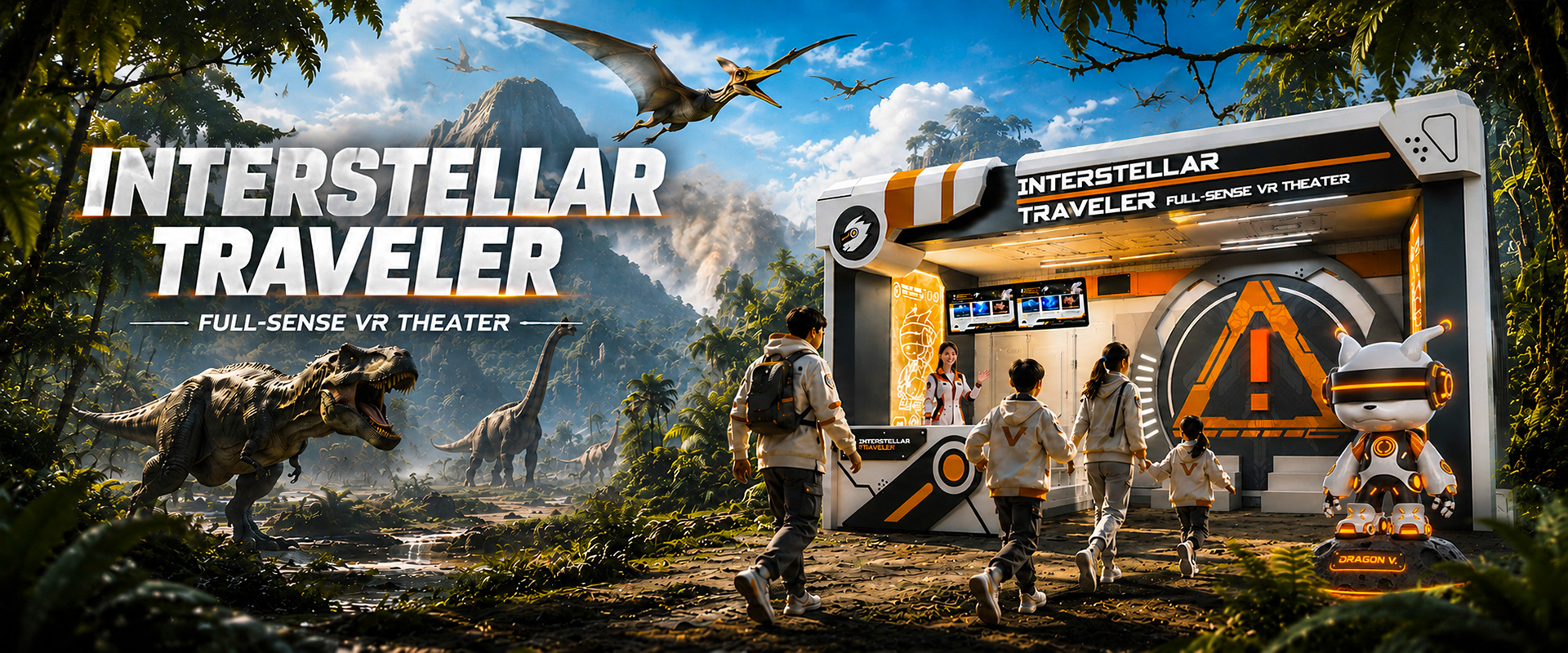
Case Study 1: Interstellar Traveler VR Theater — Engineering a High-Throughput Immersive Theater
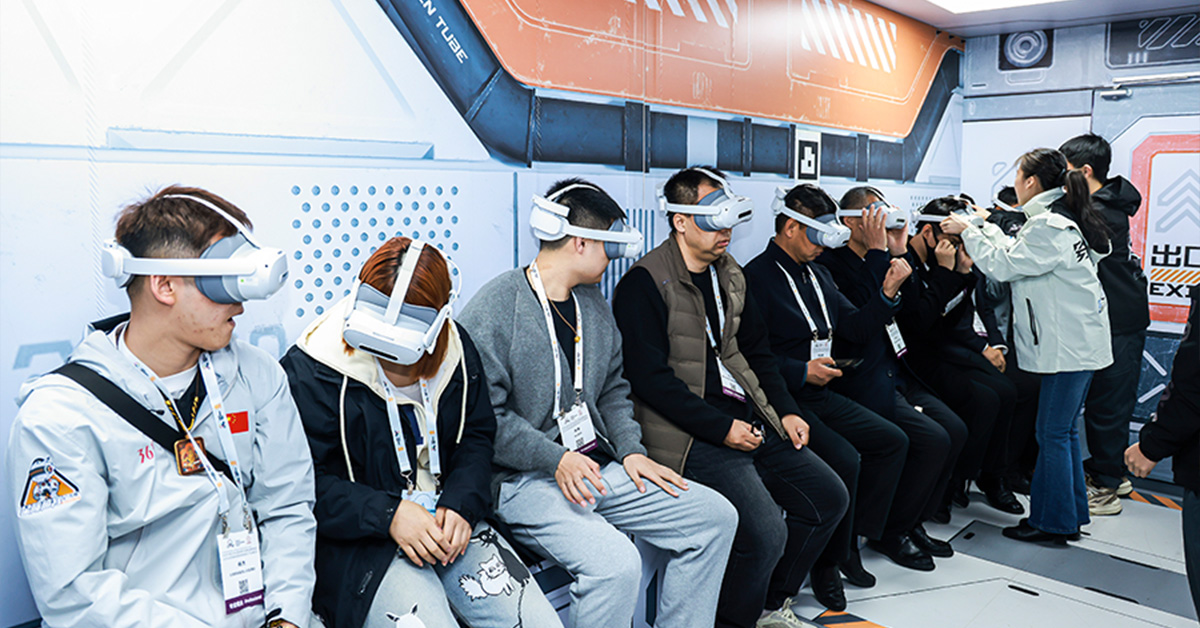
The Interstellar Traveler VR Theater is designed as a rolling-admission immersive theater rather than a conventional VR simulator.
Instead of maximizing motion intensity for individual players, its engineering objective is to maximize visitor throughput while maintaining a highly immersive experience.
This makes it particularly suitable for:
- Shopping malls
- Science museums
- Technology centers
- Tourism attractions
- Educational facilities
- Cultural experience venues
Unlike traditional theaters where audiences remain passive, visitors physically move through multiple immersive scenes while synchronized motion platforms and environmental effects create a fully interactive experience.
Space Planning Architecture
Proper architectural planning begins before equipment manufacturing.
The recommended deployment parameters include:
| Engineering Parameter | Recommended Specification |
|---|---|
| Recommended Area | Approximately 60㎡ |
| Standard Layout | 6.2m × 8.2m |
| Extended Layout | 6.2m × 10.2m |
| Recommended Ceiling Height | Minimum 2.9m |
| Recommended HVAC Clearance | Above suspended ceiling |
| Visitor Capacity | 12–24 Players |
| Experience Duration | Approximately 10 Minutes |
| Admission Mode | Rolling Admission System |
Unlike fixed-session attractions, the Rolling Admission System allows new participants to enter while previous groups are progressing through different sections of the experience.
This significantly improves operational efficiency during weekends and holidays.
Rolling Admission System: Increasing Throughput Without Expanding Floor Space
For venue owners, increasing throughput is often more profitable than increasing venue size.
The Interstellar Traveler system achieves this by organizing visitors into overlapping experience cycles.
Instead of waiting for one complete session to finish, new guests enter at scheduled intervals.
This creates a continuous visitor flow.
Example operational sequence:
| Time | Visitor Group |
|---|---|
| 00:00 | Group A Begins |
| 04:00 | Group B Enters |
| 08:00 | Group C Enters |
| 10:00 | Group A Exits |
| 14:00 | Group D Enters |
This rolling schedule dramatically reduces idle equipment time.
Rather than leaving hardware inactive between sessions, the attraction remains productive throughout operating hours.
For commercial venues facing high rental costs, maximizing equipment utilization is one of the most effective ways to improve operational efficiency.
Engineering Integration
The Interstellar Traveler system integrates multiple technologies into a synchronized environment.
These include:
- Large-scale VR spatial positioning
- Space Re-routing Algorithms
- 6-DOF motion platforms
- Environmental effect synchronization
- Interactive physical structures
- Dynamic lighting systems
- Multi-channel audio
- Centralized operation management software
Each subsystem communicates through a unified control platform to maintain consistent synchronization throughout the visitor experience.
The engineering objective is simple:
Players should never perceive the underlying technology.
Instead, every physical movement should feel like a natural extension of the virtual world.
Case Study 2: Space Commando Arena — Engineering Multiplayer Combat Experiences
Where the Interstellar Traveler emphasizes guided immersive storytelling, the Space Commando Arena focuses on competitive multiplayer interaction.
Its engineering priorities differ significantly.
Rather than optimizing cinematic immersion, this system emphasizes:
- Real-time multiplayer synchronization
- Player interaction
- Accurate shooting mechanics
- Tactical movement
- Stable wireless communication
- Low-latency tracking
This architecture is particularly suitable for:
- Commercial entertainment complexes
- Family entertainment centers
- Team-building venues
- VR arcades
- Tourism attractions
Technical Deployment Parameters
| Engineering Parameter | Recommended Specification |
|---|---|
| Recommended Area | Approximately 84㎡ |
| Recommended Dimensions | 12m × 7m × 3m |
| Minimum Ceiling Height | 2.9–3.0m |
| Players Per Group | 4 Players |
| Session Duration | Approximately 10 Minutes |
| Rolling Admission Interval | Approximately Every 4 Minutes |
| Maximum Hourly Throughput | Up to 52 Players |
Unlike traditional multiplayer VR experiences that require one group to finish before the next begins, this deployment supports overlapping admission scheduling.
As one group progresses through later stages of the mission, another group can begin independently.
This scheduling model substantially improves equipment utilization.
Multiplayer VR Synchronization Engineering
One of the most technically demanding aspects of commercial multiplayer VR is synchronization consistency.
Every participant shares the same virtual environment.
Therefore, the system must maintain synchronization across:
- Player position
- Weapon orientation
- Environmental events
- NPC behavior
- Interactive objects
- Mission progress
- Score tracking
Even very small synchronization delays become immediately noticeable.
Professional systems therefore prioritize extremely low communication latency.
Engineering goals typically include:
- Stable wireless communication
- Continuous tracking refresh
- Consistent frame synchronization
- Predictable player interactions
These capabilities create believable cooperative gameplay while reducing player confusion.
1:1 Mixed Reality Environmental Mapping
The Space Commando Arena incorporates 1:1 Virtual-to-Real Mapping throughout the attraction.
Rather than constructing entirely virtual environments disconnected from reality, physical structures correspond directly to virtual objects.
Examples include:
- Physical walls
- Defensive barriers
- Doorways
- Observation platforms
- Interactive props
This alignment produces several engineering advantages.
| Engineering Benefit | Operational Result |
|---|---|
| Lower collision probability | Improved player safety |
| Better tactile feedback | Higher immersion |
| Accurate navigation | Reduced player confusion |
| More believable gameplay | Stronger customer satisfaction |
For engineering teams, maintaining precise alignment throughout installation is one of the most critical calibration tasks.
Environmental Effects Synchronization
The Space Commando Arena also incorporates synchronized environmental feedback.
These effects are triggered directly by gameplay events rather than operating independently.
Examples include:
- Weapon vibration
- Explosion effects
- Directional wind
- Environmental lighting
- Audio positioning
- Mechanical interaction devices
Rather than functioning as isolated attractions, these systems operate as one synchronized experience.
This engineering approach significantly improves immersion while maintaining operational consistency.
Technical Comparison of the Two Deployment Architectures
Although both systems belong to the category of Large-Space VR technology, they solve different operational challenges.
| Technical Category | Interstellar Traveler VR Theater | Space Commando Arena |
|---|---|---|
| Primary Objective | Guided immersive storytelling | Competitive multiplayer gameplay |
| Recommended Area | ~60㎡ | ~84㎡ |
| Minimum Ceiling Height | ≥2.9m | ≥2.9m |
| Motion Platform | 6-DOF synchronized platforms | Interactive physical environment |
| Player Capacity | 12–24 Rolling Admission | 4 Players Per Mission |
| Admission Model | Rolling Admission | Rolling Admission |
| Maximum Throughput | High | Very High |
| Multiplayer Synchronization | Moderate | Advanced |
| Environmental Effects | Comprehensive | Tactical |
| Best Applications | Museums, malls, science centers | Entertainment centers, VR arcades |

Why Engineering Parameters Matter More Than Marketing Specifications
Many purchasing decisions focus primarily on headset models or graphical quality.
However, successful commercial deployment depends on a much broader engineering framework.
Venue planners should evaluate:
- Ceiling height compatibility
- Electrical capacity
- HVAC airflow
- Emergency evacuation routes
- Network infrastructure
- Maintenance accessibility
- Rolling admission workflow
- Future expansion possibilities
A technically mature system considers every stage of deployment—from architectural planning and hardware installation to daily operations and long-term maintenance.
This holistic engineering approach is what distinguishes a scalable Large-Space VR solution from a collection of standalone devices.
Section 3: Supply Chain & Manufacturing Verification — Why OEM Source Factories Matter More Than “Top 10″ Rankings
When evaluating LBVR Hardware Manufacturers, many buyers begin their research by searching phrases like:
- Best Large-Space VR manufacturers
- Top 10 VR suppliers
- Best VR factory
While these rankings may provide a starting point, they rarely reveal what determines the long-term success of a commercial deployment.
For technical directors and systems engineers, the real question is not:
“Who has the most impressive marketing?”
It is:
“Who can support this installation throughout its entire operational lifecycle?”
A commercial LBVR project is expected to operate for years, often under intensive daily usage. Stable operation depends on far more than the initial delivery of hardware.
A reliable manufacturing partner should be able to support:
- Hardware calibration
- Firmware updates
- Spare parts availability
- Mechanical servicing
- Software upgrades
- Technical documentation
- Remote troubleshooting
- Future content expansion
These capabilities are typically found in an Original Equipment Manufacturer (OEM) or Source Factory, where engineering, manufacturing, and after-sales support are managed under one organization.
Why “Top 10 Manufacturer” Lists Can Be Misleading
Online rankings often emphasize showroom videos, product images, or promotional claims. However, these sources rarely evaluate the practical realities of deploying a large-scale VR attraction.
In real projects, technical and operational issues are far more important than marketing materials.
Common deployment challenges include:
- Ceiling height limitations
- Electrical load capacity
- HVAC airflow around motion equipment
- Fire safety clearance
- Queue management
- Network stability
- Daily equipment maintenance
- Long-term software compatibility
Without proper planning, even advanced hardware may fail to deliver a reliable visitor experience.
A technically mature supplier should be able to answer questions such as:
- Is this venue suitable for Large-Space VR?
- What player capacity is appropriate for the available floor area?
- How should rolling admission be organized during peak hours?
- What maintenance schedule is recommended?
- How can future content updates be deployed?
These practical considerations often have a greater impact on project success than product specifications alone.
Why Working with an OEM Source Factory Improves Long-Term Reliability
Commercial VR systems require continuous technical support throughout their operational life.
Compared with distributors or trading companies, OEM manufacturers typically offer several important advantages.
| OEM Capability | Benefit for Commercial Operations |
|---|---|
| In-house hardware engineering | Faster product improvements and troubleshooting |
| Firmware development | Ongoing performance optimization |
| Spare parts inventory | Reduced downtime during maintenance |
| Manufacturing quality control | Greater consistency across installations |
| Custom engineering | Better adaptation to venue requirements |
| Direct technical support | Faster response to operational issues |
This integrated support structure helps operators maintain stable performance while reducing maintenance complexity.
Manufacturing Standards and Certification
Professional commercial VR equipment should comply with recognized manufacturing and quality management standards.
Examples include:
- ISO9001 Quality Management Systems
- CE Certification
- Third-party inspection reports
- Component quality verification
These certifications do not guarantee business success, but they demonstrate that products have been developed and manufactured under structured quality management processes.
For enterprise deployments, documented quality systems also simplify maintenance, procurement, and compliance verification.
Why Firmware Updates Matter
Many buyers focus only on physical hardware.
However, modern Large-Space VR systems depend heavily on software.
Firmware controls critical functions such as:
- Motion control
- Tracking stability
- Wireless communication
- Device synchronization
- Sensor calibration
- Safety logic
As new technologies become available, firmware updates may improve system stability without replacing hardware.
For this reason, choosing a manufacturer that actively maintains its software ecosystem is an important long-term consideration.
The Importance of Content Lifecycle Support
Even the most advanced hardware cannot sustain visitor interest if content remains unchanged.
Successful Large-Space VR operators typically refresh attractions by introducing new themes over time.
Examples include:
- Space exploration
- Ocean conservation
- Science education
- Adventure missions
- Horror experiences
- Historical storytelling
- Multiplayer competitions
A flexible content ecosystem helps extend the commercial lifespan of the attraction while encouraging repeat visits.
Section 4: Technical FAQ for Systems Engineers
What should engineers evaluate first when selecting a Large-Space VR technology provider?
The first priority is overall deployment capability rather than individual hardware specifications.
Evaluate whether the supplier can provide:
- Stable VR spatial positioning
- Multiplayer synchronization
- Space Re-routing Algorithms
- 1:1 Virtual-to-Real Mapping
- Technical documentation
- Installation support
- Long-term firmware maintenance
How much floor space is typically required for a Large-Space VR Arena?
The required area depends on the deployment model.
Typical examples include:
| Attraction Type | Recommended Area |
|---|---|
| Guided Immersive Theater | Approximately 60㎡ |
| Multiplayer Combat Arena | Approximately 84㎡ |
| Larger Customized Installations | Project Specific |
Additional space should always be allocated for:
- Reception
- Queue management
- Equipment storage
- Emergency exits
- Staff operation zones
Why is ceiling height important?
Large-Space VR installations often incorporate suspended tracking equipment, lighting systems, HVAC infrastructure, and environmental effect devices.
Although some attractions can technically operate with lower ceilings, professional deployments generally benefit from ceiling heights of approximately 2.9 meters or greater, depending on local building conditions and equipment configuration.
How does multiplayer VR synchronization improve commercial performance?
Stable synchronization creates believable shared experiences.
When every participant observes identical virtual events at nearly the same moment, cooperative gameplay becomes more natural.
Reliable synchronization also supports:
- Better teamwork
- More competitive gameplay
- Lower player confusion
- Higher replay value
How important are Space Re-routing Algorithms?
Space Re-routing Algorithms significantly improve venue efficiency by enabling virtual environments to appear much larger than the available physical space.
This engineering approach allows operators to:
- Improve footprint utilization
- Increase immersion
- Reduce unnecessary walking areas
- Support more efficient attraction layouts
Why should operators work with an OEM Source Factory?
Working directly with an Original Equipment Manufacturer typically provides advantages such as:
- Faster technical support
- Better access to spare parts
- Firmware updates
- Product customization
- Direct engineering communication
- Long-term maintenance assistance
These services become increasingly valuable throughout the operational life of the attraction.
Conclusion
The evolution of Large-Space VR technology has transformed location-based entertainment from isolated VR experiences into highly integrated engineering systems.
Modern commercial deployments depend on much more than immersive graphics. Successful projects require accurate VR spatial positioning systems, reliable multiplayer VR synchronization, advanced Space Re-routing Algorithms, precise 1:1 Virtual-to-Real Mapping, synchronized environmental effects, and a continuously evolving content ecosystem.
For systems engineers, technical directors, and commercial investors, evaluating a Large-Space VR platform means assessing how every subsystem performs together—not just how individual devices perform in isolation.
As an Original Equipment Manufacturer with more than a decade of experience in immersive entertainment, VART VR combines hardware engineering, software development, manufacturing, venue planning, installation guidance, and long-term technical support into a complete deployment solution.
Whether your project is planned for a shopping mall, science museum, family entertainment center, tourism destination, or dedicated Large-Space VR Arena, selecting a technically mature platform from the beginning can simplify deployment, improve operational stability, and support sustainable long-term performance.
Planning a Large-Space VR project?
Contact VART VR with your venue dimensions, ceiling height, and operational requirements. Our engineering team can provide professional equipment recommendations, deployment guidance, and a customized CAD layout to help you build a reliable, high-performance Location-Based VR attraction.
Post time: Jul-20-2026