
Introduction: The Shifting Economics of Location-Based Entertainment
For commercial developers, resort owners, and entertainment entrepreneurs, investing in virtual reality is no longer a question of technological novelty. It is a strict calculation of financial performance. In the location-based entertainment (LBE) market, the true metric of success is not merely how impressive the graphics look, but how efficiently the physical site generates revenue per square meter. When evaluating a potential venue, a common mistake made by inexperienced investors is treating space as a fixed, static cost. They look at a machine’s physical dimensions and try to lease a commercial room that matches those boundaries exactly to save on monthly rent.
However, experienced commercial operators understand that in a live B2B environment, inadequate space is the ultimate killer of profitability. To build a highly lucrative VR business, your physical footprint must be strategically engineered to support high guest capacity, eliminate logistical friction, and accelerate your venue’s core metric: the hourly player turnover rate.
Deconstructing the Turnover Rate: The Engine of VR Profitability
In high-traffic destinations like tourist amusement parks, cultural centers, and metropolitan shopping malls, customer traffic does not arrive evenly across a twelve-hour operating window. Instead, revenue is heavily concentrated during specific peak periods—such as weekend afternoons, national holidays, corporate evening events, and summer vacation months. During these high-value windows, your venue’s earning potential is entirely capped by its maximum hourly throughput. If your system can only process 10 players per hour due to physical layout restrictions, it does not matter if there are 500 eager customers standing outside your door; your revenue is locked in a bottleneck.
VART’s engineering philosophy bridges the gap between hardware power and commercial reality. Let us examine how spatial layout directly governs your operational throughput, utilizing two real-world project models from the VART commercial library:
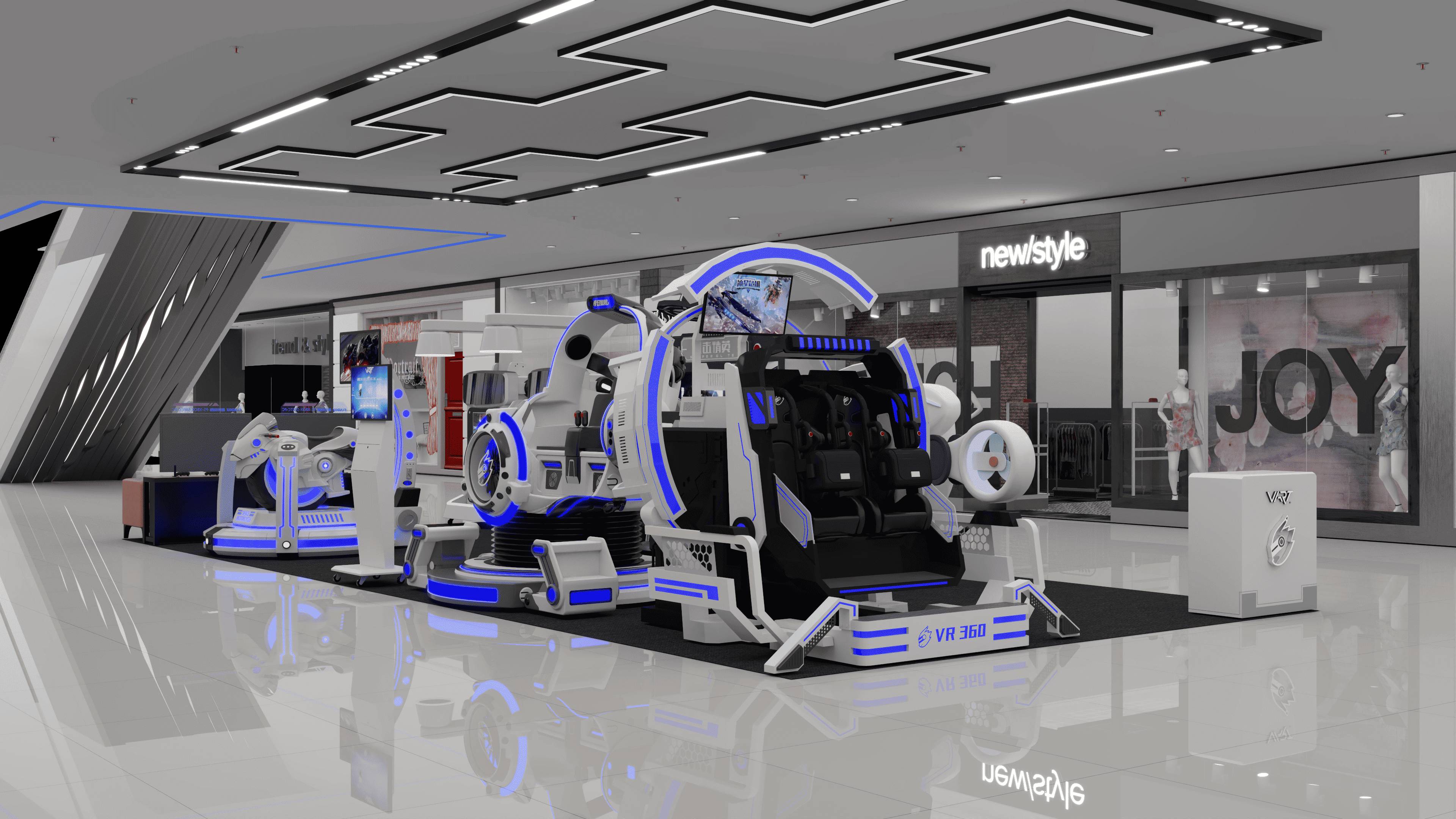
First, consider the Starry Traveler VR Immersive All-Sensing Theater series. The rolling, continuous-flow version of this project requires a core system footprint of approximately 6.2 meters by 10.2 meters, which translates to roughly 60 square meters of pure simulation space. Because the software and physical entrance pathways are designed for overlapping group management, this 60-square-meter system can process up to 24 players every 10 minutes. If an operator restricts the outer waiting area, the staff cannot safely queue up the next 24 players while the current group finishes. The system sits idle, and thousands of dollars in potential holiday revenue are lost.
Second, look at the Time Commandos Full-Sensation Tactical Battleground series. This competitive action game utilizes a core tracking boundary of 12 meters by 7 meters, creating an 84-square-meter arena. It operates in simultaneous batches of 4 players per group. Thanks to VART’s high-efficiency tracking backend, the system allows the next batch of players to enter the preparation stage just 4 minutes after the first group begins their match. This rapid-cycling methodology enables a massive actual throughput of up to 52 players per hour. However, this mathematical throughput only translates into real-world bank deposits if the physical venue has enough auxiliary space to handle the moving crowds.
The Golden Spatial Formula for High-Yield Venue Design
To safeguard your investment against operational friction, VART’s deployment team utilizes a strict mathematical formula during the property evaluation stage:
Recommended Total Space = Main Simulation Arena Footprint + Auxiliary Operational Space + Queue & Visual Display Area
Let us apply this formula to practical investment scenarios to see how it alters your real estate acquisition strategy:
If your primary attraction is a 60-square-meter immersive rolling theater like the Starry Traveler, you should never lease a 60-square-meter commercial room. Instead, you should aim for a total venue size of 90 to 120 square meters. The additional 30 to 60 square meters represent your operational leverage—the buffer zone where profit is stabilized.
Similarly, if your anchor game is an 84-square-meter tactical arena like Time Commandos, the ideal commercial facility size scales up to 120 to 150 square meters. If your business plan expands to include secondary attractions—such as dynamic VR flight simulators, motion-platform racing pods, unstaffed self-service arcade kiosks, or educational exhibition zones—you must shift away from single-project metrics and design a comprehensive VR theme hub spanning 200, 375, or even 600 square meters.
Why Cramped Spaces Destabilize Commercial Revenue
To understand why allocating extra square footage increases your return on investment, we must look closely at the daily realities of running a live venue. A cramped layout destroys your profitability through two distinct mechanisms:
The Dressing and Gear-Up Bottleneck Unlike a standard mobile phone game, a commercial-grade LBE VR attraction requires physical interaction. Players must put on high-fidelity head-mounted displays, adjust tracking straps for comfort, sanitize their hands, put on disposable hygiene eye masks, and receive specialized haptic equipment like vibration rifle controllers. This process takes time, and it requires careful staff supervision. If your venue’s briefing and gear-up zone is restricted to a tiny corner, a major traffic jam occurs. The current group of players walks out of the arena trying to take off their headsets at the exact same physical spot where the incoming group is struggling to put theirs on. This operational collision forces your high-cost tracking system to sit completely empty while your staff wastes valuable minutes clearing the floor. By expanding the dressing zone, you separate these two groups, allowing your gear-up cycle to run parallel to the active gameplay cycle.
The Holiday Crowd Spillover Crisis In the tourism sector, massive surges of foot traffic can arrive with zero warning. A sudden afternoon rainstorm at an outdoor amusement park can instantly drive hundreds of damp, frustrated tourists inside your indoor entertainment facility looking for shelter. Alternatively, a single corporate team-building event or school field trip can drop 50 people at your door simultaneously. If your venue features a spacious, climate-controlled queuing area of 15 to 40 square meters, you can successfully contain this crowd surge. They stay inside your facility, browse your menu, buy refreshments, and wait patiently for their turn. If your venue lacks this space, the crowd spills out into the public hallways, blocking fire escapes and drawing immediate penalties from property management. More importantly, seeing a disorganized, chaotic line drives away high-value walk-in customers who would gladly pay for a premium ticket if the venue looked premium and organized.
Maximizing Profitability via Secondary Monetization Zones
A highly optimized spatial layout does more than just lower your operational friction—it actively unlocks new streams of high-margin revenue. When you expand your layout to the VART-recommended flagship standard of 120 to 200 square meters, you create dedicated space for secondary consumption.
For example, a modern, beautifully designed theme gateway acts as a passive marketing engine. When tourists see their friends or children wearing futuristic gear, laughing, and moving inside a bright, clean arena, they naturally want to document the moment. By creating a dedicated photo-op and social media zone featuring your venue’s branding and popular game characters, you encourage guests to record short videos and share photos on platforms like Instagram, TikTok, or YouTube. This user-generated content acts as free localized advertising that drives immediate foot traffic to your door. Furthermore, this extra space can be utilized to sell branded toys, IP merchandise, specialized gaming gear, or premium snacks and beverages, allowing you to significantly increase the average transaction value per customer.
Partnering with VART for Long-Term Success
Commercial space planning is a complex balance between minimizing real estate rental expenses and maximizing operational revenue capacity. Established in 2011, VART has spent over a decade perfecting the integration of high-performance amusement machinery into profitable commercial venues worldwide. Operating under a globally recognized ISO9001 quality management framework, every system we manufacture carries official third-party certified testing reports and European CE marks, ensuring your business complies with strict commercial building audits. Do not leave your venue layout to guesswork. Partner with VART’s engineering and spatial design team today to receive a custom CAD layout blueprint tailored directly to your local market demographics and financial goals.
Post time: Jul-03-2026