
Introduction
A 9D virtual reality experience represents the advanced stage of immersive entertainment, combining virtual reality visuals with motion simulation, interactive content, and synchronized physical effects.
For commercial entertainment venues, 9D VR systems are no longer experimental attractions—they are proven, scalable solutions widely used in shopping malls, VR arcades, theme parks, and family entertainment centers.
This guide explains how 9D virtual reality works, what equipment is involved, and why motion-based VR simulators have become a profitable choice for commercial operators.
What Is a 9D Virtual Reality Experience?
A 9D virtual reality experience is an immersive system that integrates VR headsets with dynamic motion simulators and multi-sensory effects. Users are fully immersed in a virtual environment while physical motion and effects respond in real time to the content.
Unlike traditional 4D movies, where audiences passively watch a screen, 9D VR allows users to actively participate in the experience. The combination of motion, interaction, and environmental feedback significantly enhances realism and engagement.
How Does a 9D VR System Work?
A commercial 9D VR system typically consists of several integrated components:
-
VR Headsets
Provide stereoscopic visuals and head tracking for immersive viewing. -
Motion-Based VR Simulators
Simulate movement such as rotation, acceleration, vibration, and tilt, synchronized with the VR content. -
Control System & Software
Coordinates motion, visuals, audio, and effects to ensure smooth and safe operation. -
Environmental Effects
Including vibration, wind, sound, lighting, and other sensory feedback.
Together, these components create a realistic and repeatable immersive experience suitable for high-frequency commercial operation.
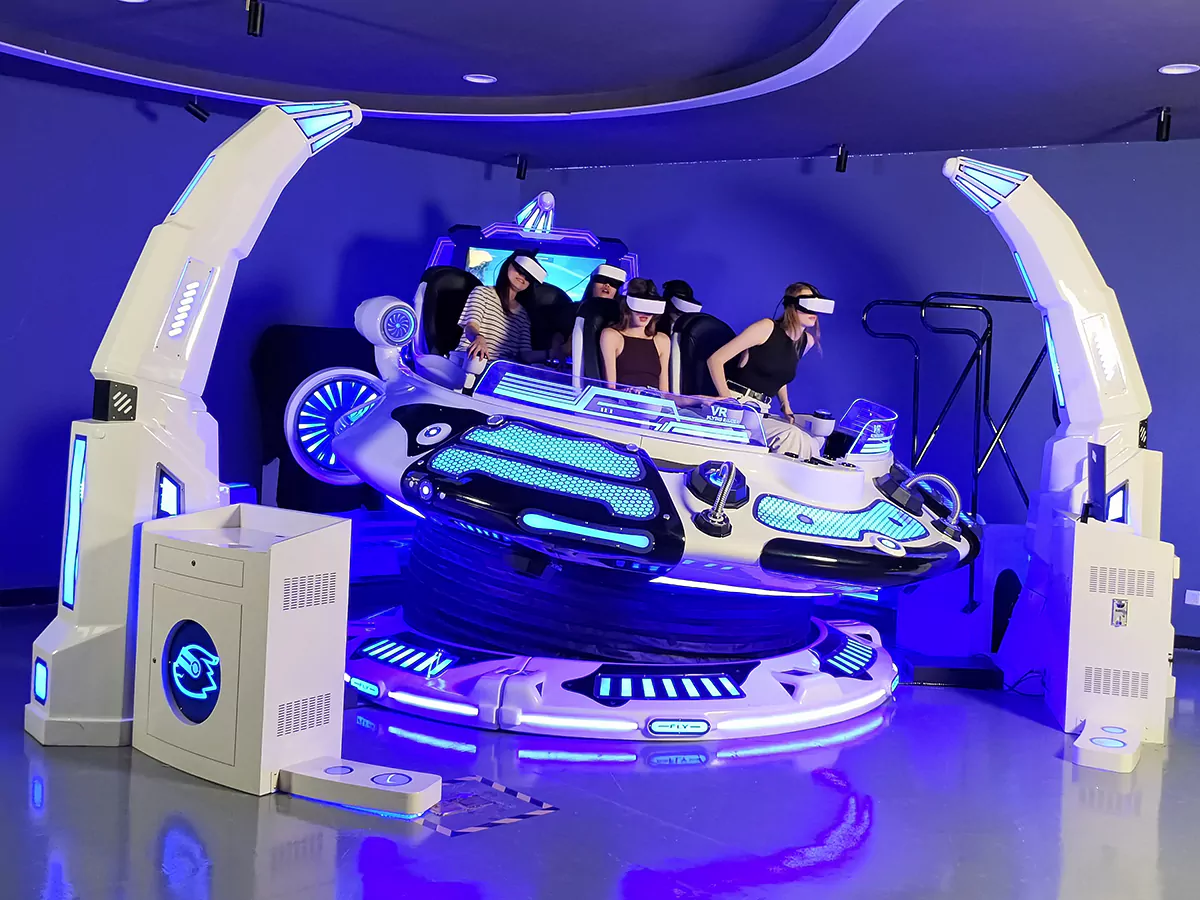
Key Types of 9D VR Simulators
The motion simulator is the core of any 9D VR experience. Different simulator formats are designed to meet different business needs.
Common types include:
-
VR Egg Simulators – Compact, enclosed design with strong visual appeal
-
VR Chairs – Flexible configurations for arcades and small venues
-
Multi-Seat Motion Platforms – Designed for group experiences and higher throughput
Each simulator type offers different advantages in terms of space requirements, capacity, and investment level.
For a detailed breakdown, see our equipment guide: VR Egg Simulator
9D VR vs 4D Movies: What’s the Difference?
While both 4D movies and 9D VR aim to enhance immersion, they differ fundamentally in design and commercial application.
4D movies are pre-recorded films with synchronized effects in fixed theaters. In contrast, 9D VR experiences are interactive, modular, and content-flexible.
For operators, 9D VR systems offer:
-
Higher replay value
-
Flexible content updates
-
Lower space requirements
-
Easier scalability across locations
These advantages make 9D VR more suitable for modern commercial entertainment environments.
Learn more about the evolution from 4D to VR:From 4D Movies to 9D Virtual Reality
Commercial Applications of 9D Virtual Reality
9D VR simulators are widely used across multiple commercial scenarios, including:
-
Shopping malls
-
VR arcades
-
Theme parks
-
Family entertainment centers
-
Indoor amusement venues
Their modular design allows operators to start with a single unit and expand gradually as demand grows.
Is a 9D Virtual Reality Experience Profitable?
Yes. Compared to traditional cinema-based attractions, 9D VR systems generally offer faster return on investment due to:
-
Lower installation and space costs
-
Pay-per-play revenue models
-
High customer turnover
-
Minimal staffing requirements
These factors make 9D VR an attractive option for both new investors and experienced venue operators.
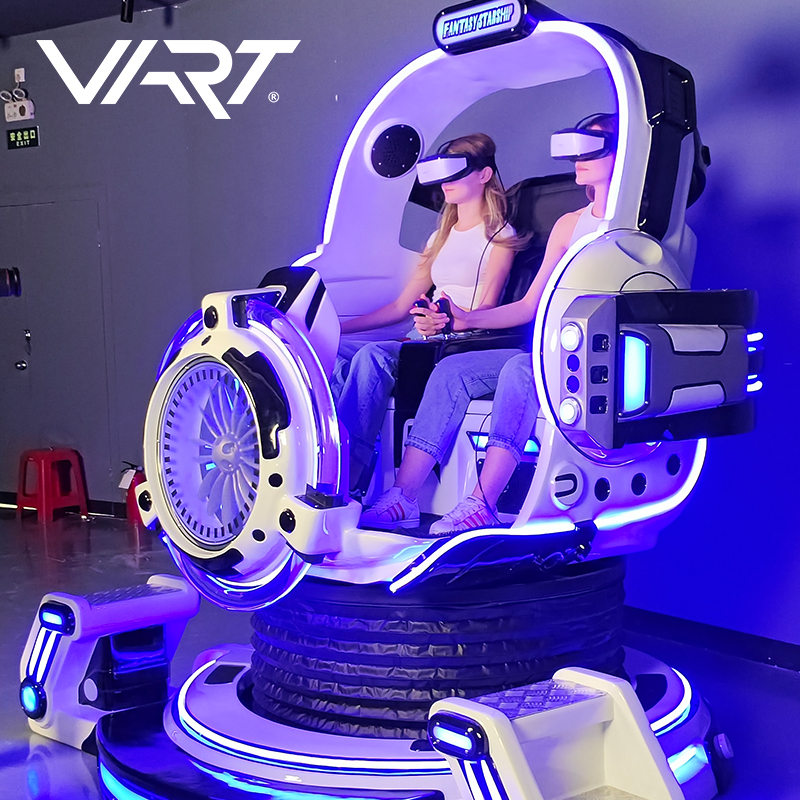
Why Choose a Professional VR Simulator Manufacturer?
The performance and reliability of a 9D VR system depend heavily on hardware quality and system integration. Working directly with a professional VR simulator manufacturer ensures:
-
Stable hardware supply
-
Customizable simulator configurations
-
Technical support and long-term maintenance
-
Better cost control compared to resellers
VART specializes in manufacturing commercial-grade VR simulators designed for continuous operation in demanding entertainment environments.
Conclusion
A 9D virtual reality experience represents the future of immersive commercial entertainment. By combining interactive VR content with motion-based simulators, 9D VR systems deliver engaging experiences while meeting the operational and financial needs of modern venues.
For businesses seeking flexible, scalable, and profitable immersive attractions, 9D VR simulators offer a proven solution.
FAQ:
What is a 9D virtual reality experience?
A 9D virtual reality experience is a commercial immersive system that combines VR headsets, motion-based simulators, interactive content, and synchronized physical effects. Users actively participate in the experience while motion platforms and environmental feedback respond in real time to the virtual content.
How does a 9D VR system work?
A 9D VR system works by synchronizing VR visuals with a motion simulator and control software. The system processes user actions and content data in real time, coordinating motion, sound, and effects to deliver a realistic and immersive experience suitable for high-frequency commercial operation.
What equipment is used in a 9D virtual reality system?
A typical 9D VR system includes VR headsets, motion-based VR simulators, control software, audio systems, and environmental effects. Common simulator formats include VR Egg simulators, VR chairs, and multi-seat motion platforms designed for different venue sizes and business models.
What is the difference between 4D movies and 9D VR?
4D movies are pre-recorded films enhanced with physical effects in a fixed theater environment, while 9D VR experiences are interactive and motion-based. 9D VR systems allow users to engage with content in real time, offering higher replay value and greater flexibility for commercial venues.
Is a 9D virtual reality experience profitable?
Yes. 9D virtual reality experiences are widely used in commercial entertainment venues because they require less space than traditional theaters, support flexible content updates, and operate on pay-per-play models. These factors often result in faster return on investment for operators.
What types of venues use 9D VR systems?
9D VR systems are commonly installed in shopping malls, VR arcades, theme parks, family entertainment centers, and indoor amusement venues. Their modular design allows operators to deploy single units or scale to multi-simulator setups.
Why choose a VR simulator manufacturer instead of a reseller?
Choosing a VR simulator manufacturer provides better control over product quality, customization, and technical support. Manufacturer-direct solutions also reduce long-term operational risks and ensure stable supply, maintenance, and system upgrades.
Can 9D VR systems be customized for different markets?
Yes. Commercial 9D VR systems can be customized in terms of simulator type, motion range, content selection, branding, and layout to meet the requirements of different regions, venue sizes, and target audiences.
Post time: Jan-14-2026