
Introduction
Roller coasters have always been one of the most popular attractions in theme parks. However, with the rise of immersive technology, VR roller coaster simulators are becoming a powerful alternative to traditional rides.
Many investors and entertainment venue owners are now asking:Should I invest in a real roller coaster or a VR roller coaster system?
In this guide, we compare both options in terms of cost, safety, space, and profitability to help you make the right decision.
What Is a VR Roller Coaster?
A VR roller coaster is a motion-based simulator that combines virtual reality visuals with dynamic movement.
Users wear a VR headset and experience realistic drops, turns, and speed without the need for large physical tracks.
Key Features
- 360° immersive VR environment
- Motion platform synchronization
- Multiple game scenarios
- Compact installation
Advanced systems can even be integrated into virtual reality arcade machine to expand gameplay options.
What Is a Real Roller Coaster?
A real roller coaster is a large-scale mechanical ride built with steel or wooden tracks.
It delivers physical thrills through speed, gravity, and height, typically installed in theme parks.
Key Characteristics
- Large outdoor installation
- High construction cost
- Fixed track design
- Long maintenance cycle
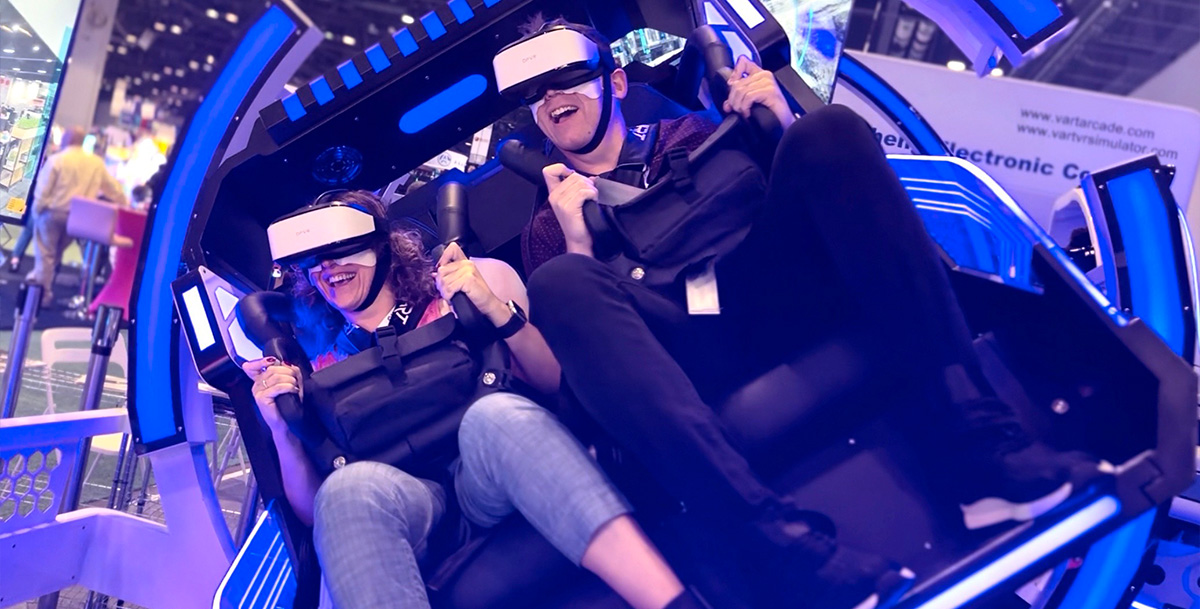
VR Roller Coaster vs Real Roller Coaster (Key Differences)
| Feature | VR Roller Coaster | Real Roller Coaster |
|---|---|---|
| Investment Cost | Low to medium | Extremely high |
| Space Requirement | Small (indoor) | Very large (outdoor) |
| Safety | High (controlled system) | Moderate |
| Content Flexibility | Multiple scenarios | Fixed track |
| Installation Time | Short | Long |
| ROI Cycle | Fast | Slow |
For immersive cinema comparisons, see: 5d vs 7d cinema
Why VR Roller Coasters Are Safer
Safety is a major concern for any entertainment investment.
VR roller coasters offer:
- No physical height risk
- Controlled motion systems
- Lower accident probability
- Suitable for wider audiences
Unlike traditional rides, the experience is simulated rather than physically extreme.
Which Option Is More Profitable?
From a business perspective, VR roller coasters often outperform traditional rides.
VR Roller Coaster Advantages
- Lower initial investment
- Faster installation
- Higher flexibility (multiple games)
- Suitable for malls and indoor venues
Real Roller Coaster Challenges
- High construction cost
- Large land requirement
- Long payback period
For deeper ROI insights, check: 7d cinema cost
Space & Installation Comparison
A key limitation of traditional roller coasters is space.
- Real roller coaster → requires large outdoor areas
- VR roller coaster → can fit into 20–100㎡ indoor spaces
For layout planning, see:7d cinema installation
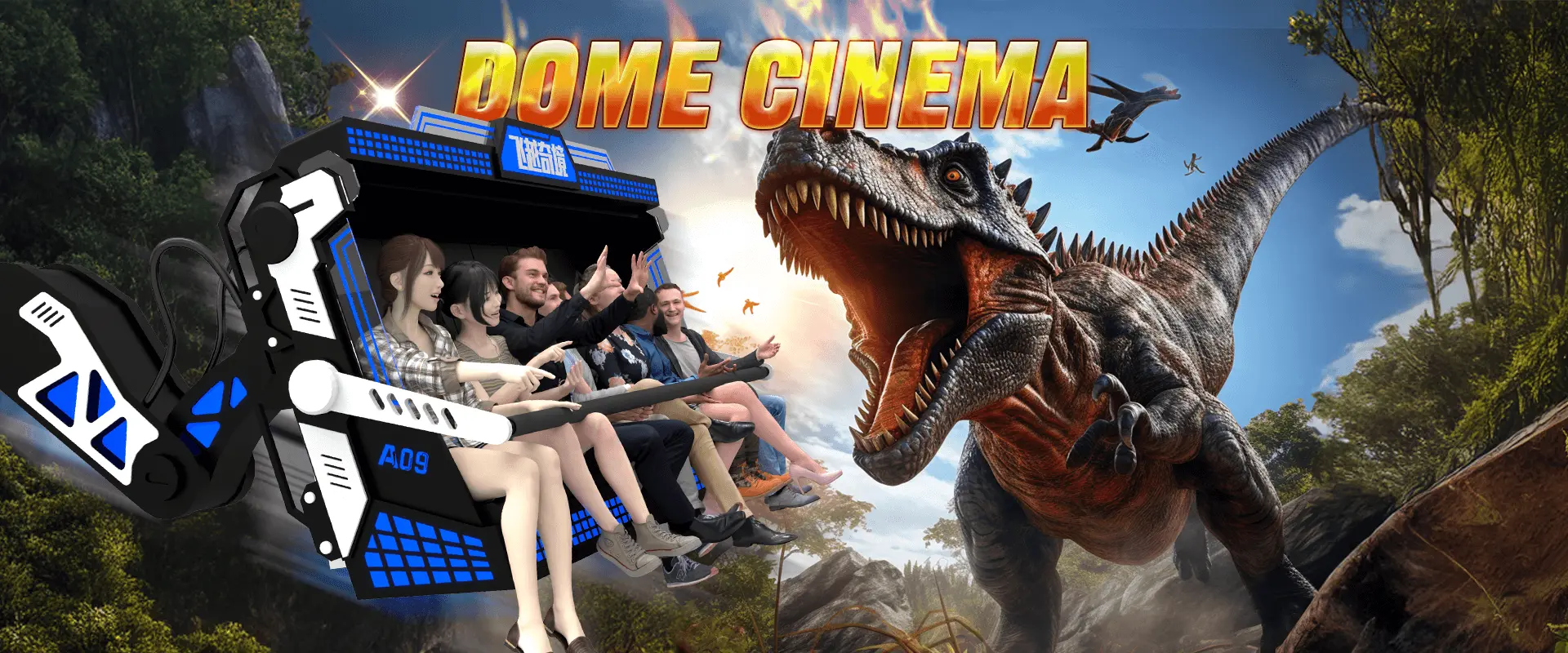
VR Roller Coaster vs 5D / 7D / 9D Systems
Modern entertainment venues often combine multiple immersive systems.
- 5D cinema → passive motion experience
- 7D cinema → interactive shooting gameplay
- 9D VR experience → full immersive + interaction
Learn more: what is a 9d vr experience
Why Businesses Are Choosing VR Instead
More operators are shifting to VR-based attractions because:
1. Lower Risk Investment
No large-scale construction required
2. Flexible Content
Games can be updated without hardware changes
3. Faster ROI
Shorter payback cycles
4. Indoor Compatibility
Perfect for malls and entertainment centers
Future of Roller Coaster Experiences
The future of entertainment is moving toward:
- VR-based simulation
- Interactive experiences
- Mixed reality environments
VR roller coasters are becoming a core attraction in modern VR arcades.
Conclusion
Both VR roller coasters and real roller coasters offer exciting experiences, but they serve different purposes.
- Real roller coasters → large-scale theme park attractions
- VR roller coasters → flexible, cost-effective business solutions
For most investors, VR systems provide a more practical and profitable choice.
FAQ
What is a VR roller coaster?
A simulator that combines VR visuals with motion to create a roller coaster experience.
Is VR roller coaster safe?
Yes, it uses controlled motion systems and avoids physical risks.
How much does a VR roller coaster cost?
Costs vary depending on system configuration and features.
Is VR roller coaster profitable?
Yes, due to lower investment and faster ROI.
Where can VR roller coasters be installed?
Shopping malls, arcades, theme parks, and entertainment centers.
Post time: Apr-06-2026