
When planning a VR experience store, one common question quickly comes up:Should I invest in motion-based VR machines or traditional VR setups?
Both options exist widely in the market, but they serve very different business goals. Understanding the difference between Motion VR and Traditional VR machines is essential for choosing equipment that actually performs well in a commercial environment.
This article breaks down how each type works, where each fits best, and which option delivers better results for most VR experience stores.
What Are Traditional VR Machines?
Traditional VR machines typically focus on visual immersion. They often include:
-
VR headsets
-
Static or lightly interactive platforms
-
Hand controllers or basic input devices
These machines are usually easier to install and have lower upfront costs. They are commonly used for:
-
Introductory VR experiences
-
Short demos
-
Educational or exhibition purposes
However, in experience stores, traditional VR machines often face limitations.
Limitations of Traditional VR in Experience Stores
While traditional VR setups can be useful, they often struggle in commercial environments because:
-
Experiences feel similar to home VR systems
-
Lack of physical motion reduces excitement
-
Lower replay value after the first try
-
Difficult to stand out in competitive locations
As customers become more familiar with VR, purely visual experiences are less likely to justify repeat visits or premium pricing.
What Is Motion VR?
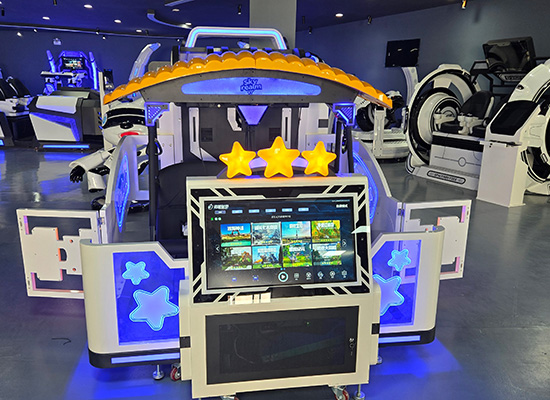
Motion VR combines virtual visuals with physical movement and sensory feedback. In addition to VR headsets or screens, motion-based systems include:
-
Dynamic motion platforms
-
Rotation, tilt, vibration, or lifting mechanisms
-
Environmental effects such as wind or sound
The goal is to synchronize physical motion with virtual content, creating a more immersive and memorable experience.
Why Motion VR Performs Better in Experience Stores
In most commercial VR experience stores, Motion VR machines consistently outperform traditional VR setups. Here’s why:
Stronger Immersion
Physical movement makes experiences feel real, not simulated.
Higher Perceived Value
Customers are more willing to pay for experiences they cannot replicate at home.
Better Replay Rate
Motion-based experiences feel different each time, increasing repeat play.
Strong Visual Attraction
Moving platforms and ride-style designs attract walk-in traffic.
Space and Efficiency Comparison
Contrary to common assumptions, motion VR does not always require more space.
| Factor | Traditional VR | Motion VR |
|---|---|---|
| Space Usage | Low | Optimized for commercial layouts |
| Visual Impact | Limited | High |
| Replay Value | Medium | High |
| Price Justification | Low–Medium | Medium–High |
| Crowd Attraction | Low | Strong |
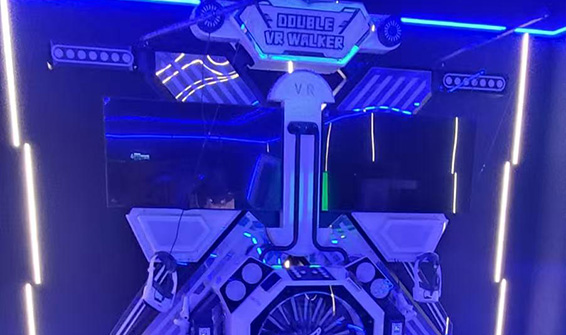
Many modern motion VR machines are specifically designed for small to medium-sized experience stores, offering strong performance within a compact footprint.
Cost vs Return: What Really Matters?
Traditional VR machines often look cheaper at first glance. However, operators should consider:
-
Lower ticket prices
-
Faster customer fatigue
-
Limited differentiation
Motion VR machines may have higher initial costs, but they typically deliver:
-
Higher per-play pricing
-
Better customer retention
-
Stronger word-of-mouth marketing
For most experience stores, return on investment matters more than initial cost.
Which Option Should You Choose?
The right choice depends on your business goals:
-
If you’re running a temporary demo or exhibition, traditional VR may be sufficient.
-
If you’re building a commercial VR experience store, motion VR is usually the better long-term investment.
Many successful venues combine both, but use motion VR machines as the main revenue drivers.
If you’re looking for machines that have already proven effective in real experience stores, this overview may help:4 Profitable VR Machines for VR Experience Stores
Final Thoughts
Choosing between motion VR and traditional VR is not just a technical decision—it’s a business decision. For experience stores that rely on repeat customers, visual attraction, and premium experiences, motion VR offers a clear advantage.
By understanding how each type performs in real-world conditions, operators can avoid costly mistakes and build VR venues that grow sustainably.
Frequently Asked Questions About Motion VR and Traditional VR Machines
What is the main difference between motion VR and traditional VR machines?
The main difference is physical movement. Motion VR machines combine virtual visuals with synchronized motion and sensory effects, while traditional VR machines mainly rely on visual immersion without significant physical movement.
Are motion VR machines better for VR experience stores?
In most commercial VR experience stores, motion VR machines perform better because they offer stronger immersion, higher replay value, and experiences that customers cannot easily replicate at home.
Do motion VR machines require more space than traditional VR machines?
Not necessarily. Many modern motion VR machines are designed with space efficiency in mind and can fit into small or medium-sized venues while delivering high-impact experiences.
Can a VR experience store use both motion VR and traditional VR machines?
Yes. Some stores use a combination of both, but motion VR machines are often used as the main attraction, while traditional VR machines serve as entry-level or supplementary experiences.
Post time: Dec-31-2025