
When investing in a VR motion simulator for commercial use, one of the most common questions operators ask is whether to choose a hydraulic or electric motion platform. Both technologies are widely used in immersive entertainment, yet their suitability often depends less on technical superiority and more on business context.
This article explores hydraulic vs electric VR motion simulators from a commercial decision-making perspective, helping shopping malls, family entertainment centers (FECs), and theme parks understand how each option fits different operational scenarios.
Why Motion Platform Choice Matters in Commercial Environments?
For commercial venues, a VR motion simulator is not just a piece of technology—it is a revenue-generating asset. The motion platform directly affects:
-
Operating stability
-
Maintenance planning
-
Installation requirements
-
Long-term operating costs
-
Overall customer experience
Choosing the right motion solution helps operators align performance expectations with business realities.
What Is a Hydraulic VR Motion Simulator?
Hydraulic motion platforms use fluid pressure to generate movement. This technology has been used in amusement rides and simulators for many years and is commonly associated with large-scale motion systems.
From a business perspective, hydraulic platforms are often characterized by:
-
Strong motion output
-
Suitability for high-intensity experiences
-
Use in larger installations
-
Higher infrastructure considerations
Hydraulic systems are typically selected for venues where space, power supply, and maintenance resources are less restrictive.
What Is an Electric VR Motion Simulator?
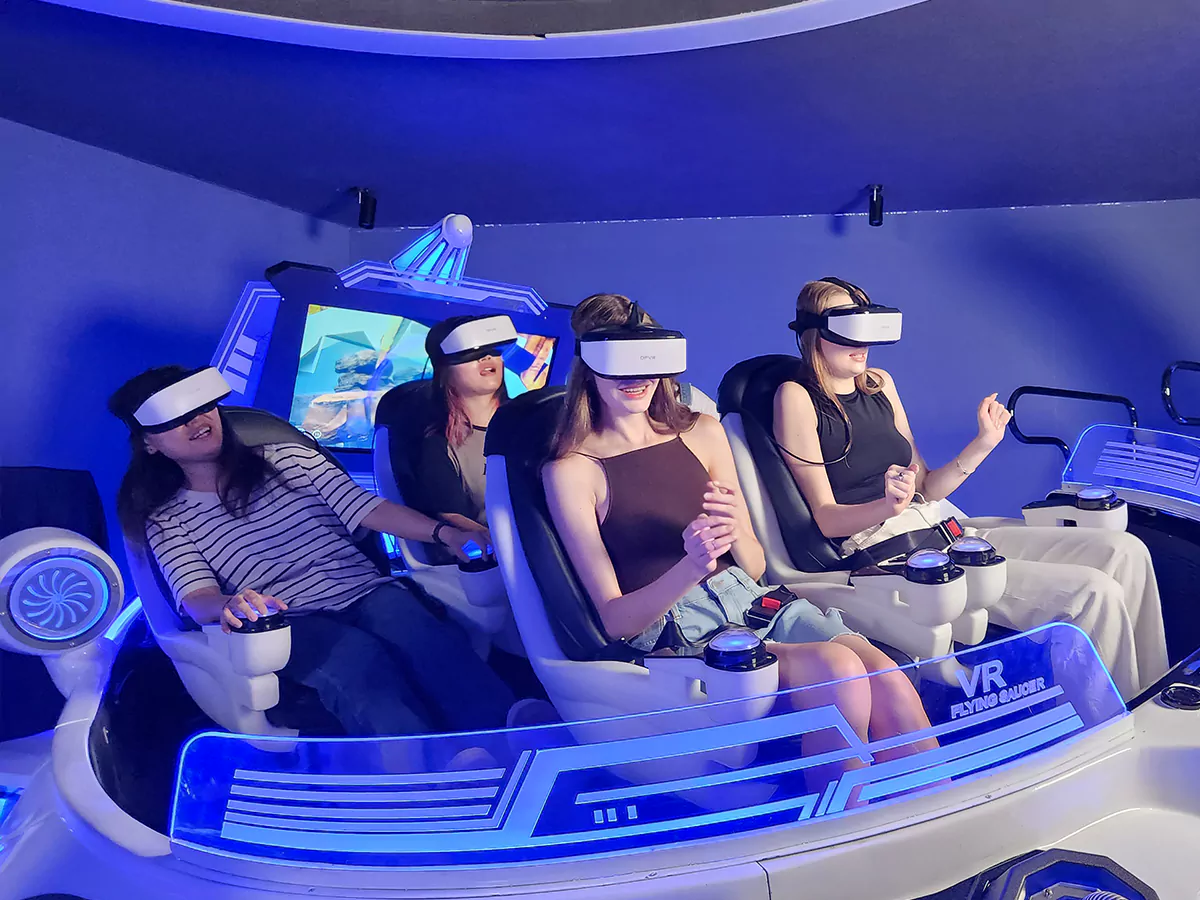
Electric motion platforms rely on motor-driven actuators to produce motion. These systems are widely adopted in modern commercial VR simulators due to their compact design and operational efficiency.
In commercial settings, electric platforms are often associated with:
-
Compact installation footprint
-
Lower noise levels
-
Simplified maintenance routines
-
Faster setup and relocation
Electric systems are frequently chosen by indoor venues that prioritize flexibility and operational efficiency.
Key Differences That Affect Business Operations
Rather than focusing on technical specifications, commercial operators should consider how each platform impacts daily operations.
| Business Factor | Hydraulic Platform | Electric Platform |
|---|---|---|
| Installation complexity | Higher | Lower |
| Space requirements | Larger | More compact |
| Maintenance planning | More intensive | Simplified |
| Operational noise | Higher | Lower |
| Energy efficiency | Moderate | Higher |
These differences influence not only upfront decisions but also long-term operating costs and management effort.
Which Option Fits Different Commercial Scenarios?
Shopping Malls
Malls often prioritize compact installations, low noise, and minimal disruption. Motion platforms that integrate easily into existing indoor environments are generally preferred.
In shopping mall environments, immersive attractions are not only evaluated by visual impact, but also by how long they keep visitors engaged within the venue. Understanding how VR motion simulators increase mall dwell time helps operators design entertainment zones that encourage longer stays and higher overall spending.
Family Entertainment Centers (FECs)
FECs require attractions that operate continuously with minimal downtime. Flexibility, ease of operation, and fast session turnover are key considerations.
For family entertainment centers, selecting the right simulator configuration plays a major role in long-term performance and customer satisfaction. Exploring the best VR motion simulators for FECs helps operators align space usage, investment level, and operational efficiency with their venue goals.
Theme Parks & Large Venues
Theme parks may prioritize motion intensity and large-scale visual impact, especially for flagship attractions. Infrastructure capacity and maintenance teams often influence platform selection.
Cost, Maintenance & Long-Term Planning Considerations
Beyond initial investment, long-term operating costs play a critical role in profitability. Maintenance schedules, spare parts availability, and downtime risks should all be factored into the decision-making process.
Operators are encouraged to evaluate motion platforms based on:
-
Expected daily operating hours
-
Local technical support availability
-
Long-term maintenance planning
-
Scalability and upgrade potential
Beyond upfront investment, long-term profitability depends on predictable operating expenses and system reliability. Understanding VR motion simulator maintenance and operating costs helps operators plan sustainable operations and avoid unexpected downtime.
How to Make the Right Choice for Your Business?
Rather than asking which technology is “better,” commercial operators should focus on which option best supports their specific venue goals.
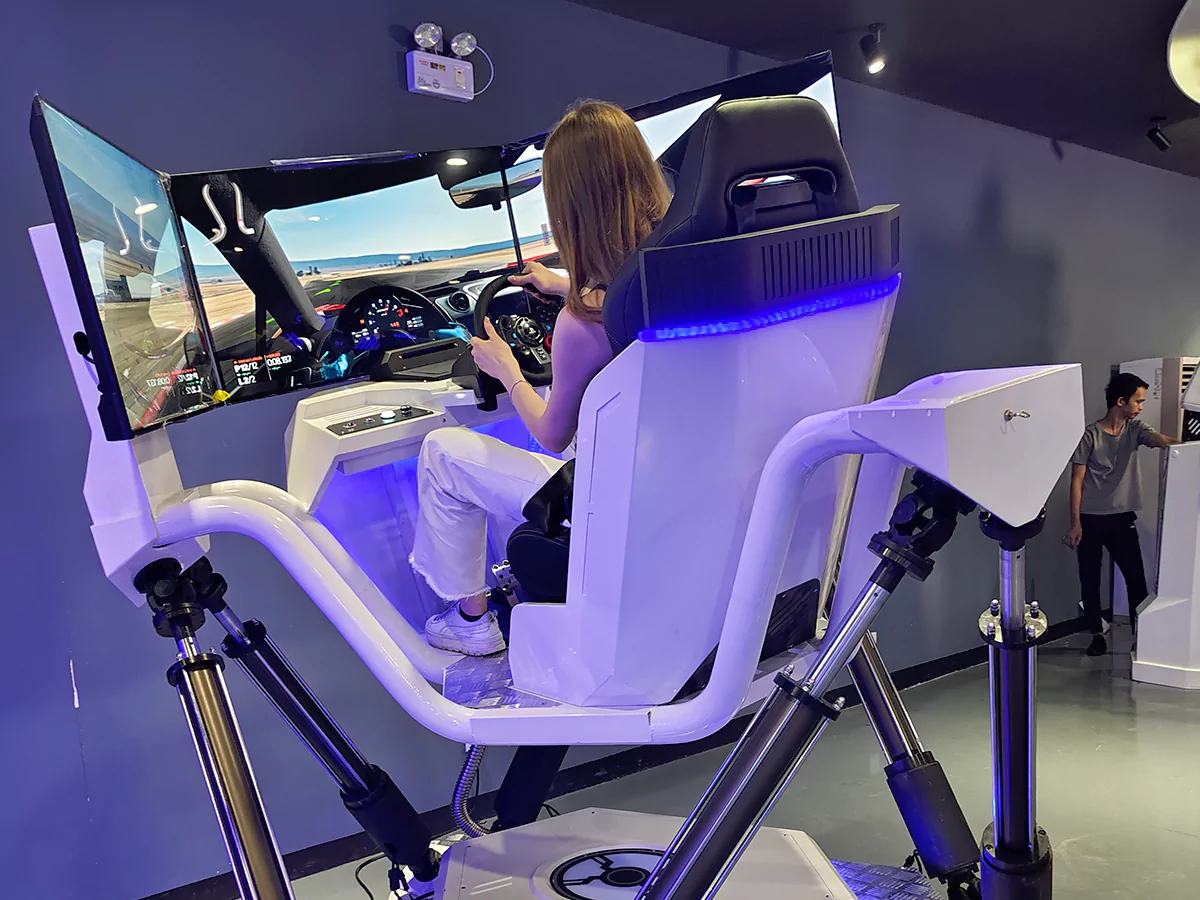
The best choice depends on venue size, budget, operating hours, and long-term maintenance expectations.
FAQ
Q: Is hydraulic motion always more powerful than electric motion?
A: Both technologies can deliver immersive motion. The perceived experience depends on system design rather than motion type alone.
Q: Are electric VR motion simulators suitable for commercial use?
A: Yes. Many commercial venues prefer electric platforms due to their efficiency and flexibility.
Q: Should motion platform choice affect content selection?
A: Content compatibility depends on system integration rather than motion technology alone.
Post time: Feb-02-2026