
Introduction: The VR Boom That’s Changing Entertainment
Virtual Reality (VR) has transformed from a niche hobby into one of the most exciting business opportunities of the decade. With immersive experiences becoming mainstream, opening a VR arcade is now one of the best ways to enter the entertainment industry in 2025.
But starting a VR arcade takes more than just buying a headset — it requires planning, quality equipment, and a great customer experience. In this guide, we’ll walk you through how to start your own VR arcade business, from concept to grand opening.
1. Understand the Market
Before investing, research your local market.
-
Who are your potential customers? (Families, teens, gamers, tourists)
-
Where are existing entertainment centers located?
-
What kind of VR experiences are trending?
In 2025, customers are looking for immersive group experiences, not just solo games. Multiplayer VR simulators, motion chairs, and full-motion racing setups attract consistent crowds.
2. Plan Your Business Model
There are several types of VR arcade models:
-
Pay-per-play: Customers buy tickets or tokens per session.
-
Memberships or packages: Offer recurring revenue.
-
Event-based: Host birthdays, team-building events, or eSports tournaments.
You can even combine VR with food, drinks, and social zones for a “mixed reality café” concept.
3. Choose the Right Location
Visibility and accessibility matter. Malls, tourist areas, and entertainment complexes generate strong foot traffic.
Your space should allow easy installation for large vr simulators (e.g., VR motion chairs, VR racing systems).
4. Select Reliable VR Arcade Manufacturers
Your equipment is the backbone of your business.
When choosing VR Arcade Manufacturers, focus on:
-
Hardware durability
-
After-sales support
-
Game content variety
-
Global reputation
VART VR stands out for offering complete one-stop solutions — from simulator design and shipping to setup and staff training. With a range of vr simulators like racing, flying, and shooting platforms, VART helps you create a unique experience for your customers.
5. Estimate Your Costs and ROI
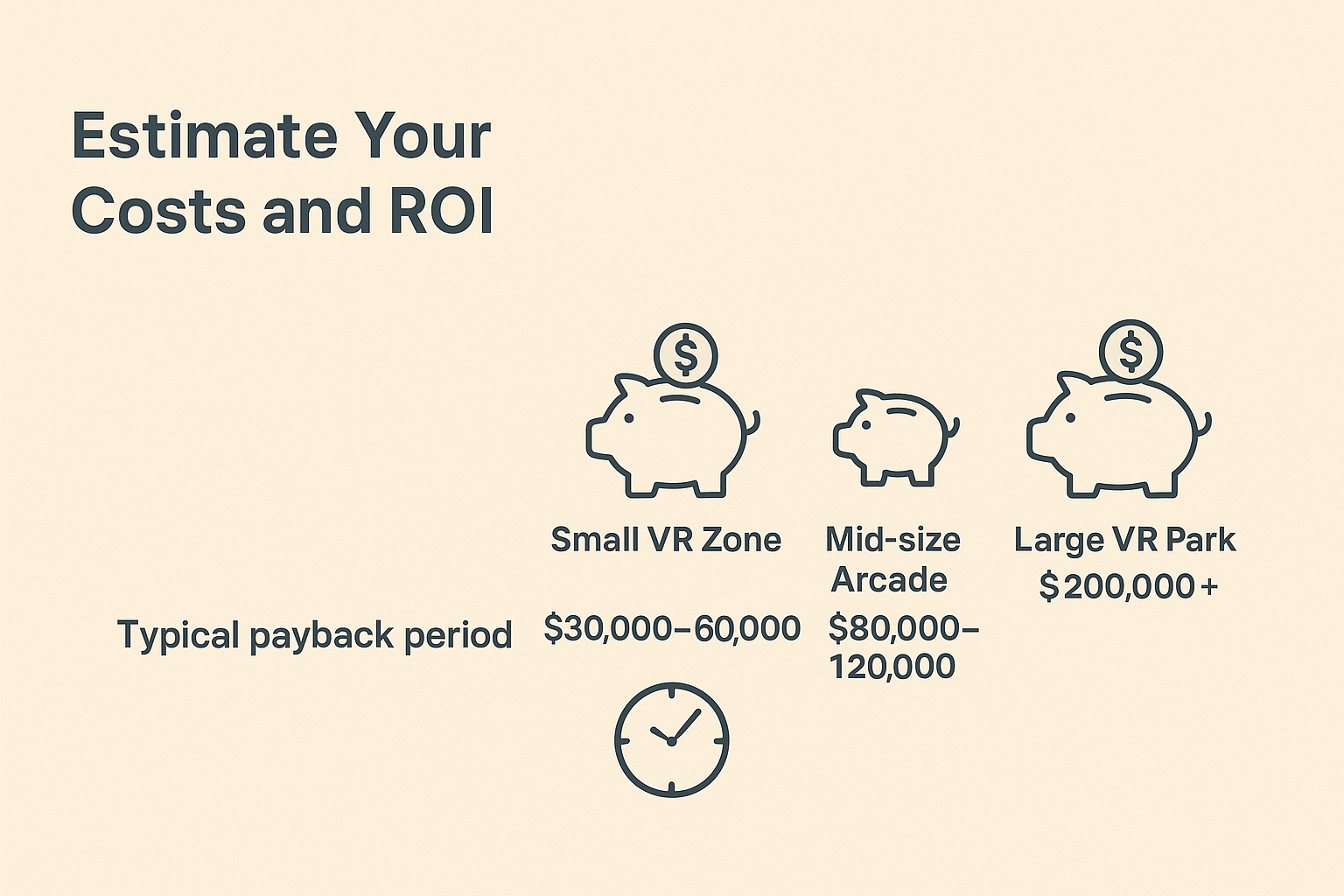
Startup costs vary by size:
-
Small VR zone: $30,000–$60,000
-
Mid-size arcade: $80,000–$120,000
-
Large VR park: $200,000+
Typical payback periods range between 8–16 months, depending on your pricing and customer flow.
VART VR provides ROI consultation to help you plan your investment wisely.
6. Design the Customer Experience
Create an atmosphere of excitement:
-
LED lighting and futuristic decor
-
Staff trained to guide first-time users
-
Leaderboards or scoring systems for competition
Add snacks, photo booths, or branded merchandise to increase revenue per visitor.
7. Promote Your VR Arcade
Use social media, local influencers, and short-form video platforms (like TikTok and Instagram Reels).
Offer “First Ride Free” days or launch events.
Conclusion: Turn Dreams into Immersive Reality
Starting a VR arcade business in 2025 is an exciting and rewarding venture. With reliable partners like VART VR, success becomes much easier — from choosing the right VR simulators to creating memorable customer experiences.
Learn more about top manufacturers in our main article: Top VR Arcade Manufacturers and VR Simulators You Should Know in 2025
FAQ
1. How much does it cost to start a VR arcade?
The cost to start a VR arcade business varies depending on location, equipment, and size.
-
A small VR zone (2–3 simulators) may start around $30,000–$50,000.
-
A medium-sized arcade can reach $80,000–$120,000.
-
A large VR park may exceed $200,000.
Partnering with reliable VR arcade manufacturers like VART VR ensures accurate budgeting, installation planning, and after-sales support.
2. How long does it take to recover the investment?
Most operators report ROI within 6–12 months, depending on pricing, visitor flow, and marketing.
Consistent promotion, game updates, and choosing high-quality vr simulators with minimal maintenance downtime all speed up recovery.
VART VR’s team provides financial projections and operational tips for faster profitability.
3. What are the best locations for a VR arcade?
High-traffic areas like shopping malls, entertainment centers, theme parks, or tourist attractions perform best.
Spaces near movie theaters or bowling alleys attract visitors looking for group fun.
Visibility, accessibility, and stable power are essential for large motion simulators.
4. Can I operate a VR arcade without technical experience?
Yes. Most VR arcade systems are plug-and-play.
Manufacturers like VART VR offer installation, training, and remote assistance, so even first-time operators can manage their arcades easily.
Post time: Nov-05-2025