
Choosing the right VR motion simulator for commercial use is a critical decision for shopping malls, family entertainment centers (FECs), and indoor attractions. Unlike consumer VR products, commercial simulators must operate reliably for long hours, deliver consistent experiences, and generate sustainable revenue.
This guide walks through how to choose a VR motion simulator from a business perspective, helping operators evaluate cost, configuration, operational requirements, and long-term performance before making an investment.
1. Understand Your Business Goals First
Before comparing specifications or features, operators should clarify their primary objectives. Different venues prioritize different outcomes:
-
Shopping malls may focus on dwell time and visual attraction
-
FECs often prioritize replay value and throughput
-
Theme parks may emphasize immersive intensity and branding
Understanding your goals helps narrow down the most suitable simulator category.
2. Evaluate Total Cost & ROI — Not Just Purchase Price
The upfront price of a simulator is only one part of the investment. Operators should evaluate long-term value, payback period, and revenue potential.
Considering cost together with ROI provides a more accurate picture of commercial viability.
To make an informed investment decision, operators should evaluate not only the upfront price but also long-term returns. A clear understanding of VR motion simulator cost and ROI helps determine whether the investment is financially sustainable.
3. Match the Simulator to Your Venue Scenario
Different commercial environments require different configurations. Factors such as available space, audience type, and daily foot traffic all influence the best choice.
Selecting a simulator that aligns with your venue scenario improves both operational efficiency and customer satisfaction.
Different commercial environments require different simulator configurations. Exploring how VR motion simulators for shopping malls and FECs are applied helps operators select solutions that fit their venue layout and audience type
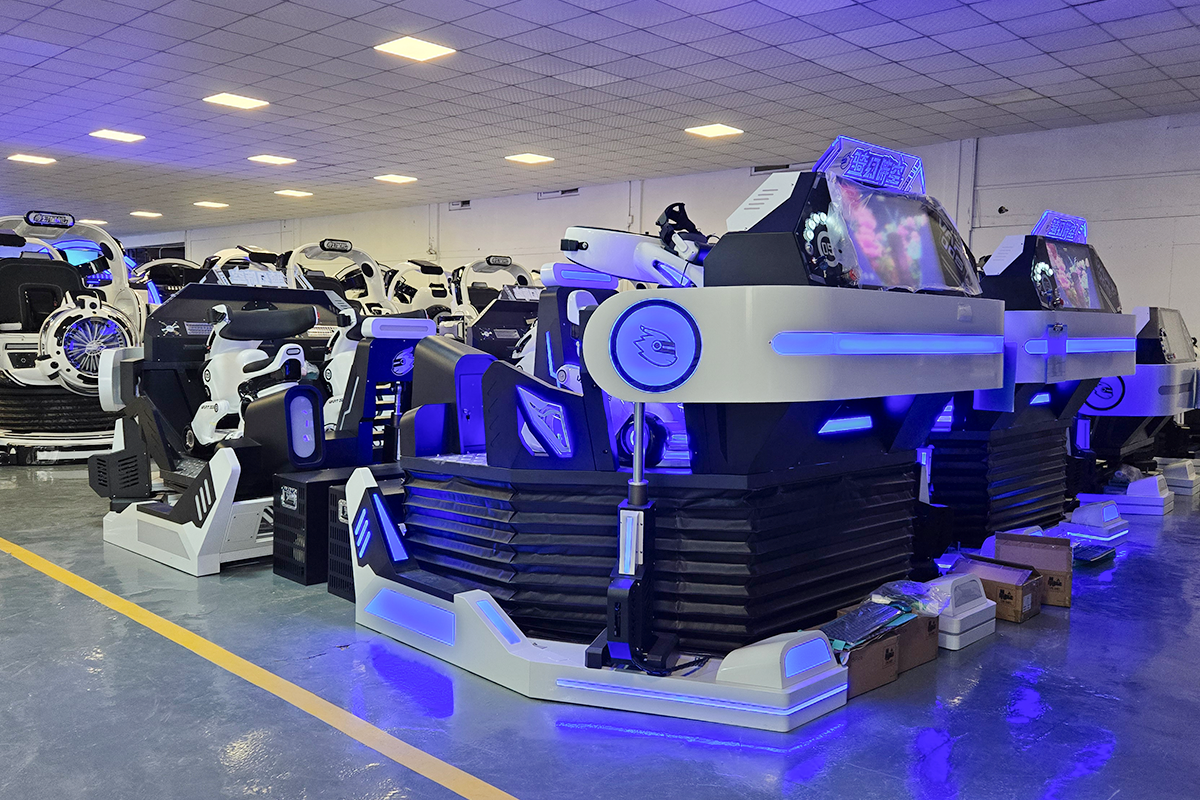
4. Choose the Right Configuration & Capacity
Capacity decisions directly affect throughput and revenue. Operators should consider whether single-seat, two-seat, or multi-seat configurations best suit their expected traffic patterns.
The right configuration balances space usage with revenue efficiency.
Capacity decisions directly affect throughput and revenue efficiency. Understanding the differences between single-seat vs multi-seat VR motion simulators helps operators align configuration choices with expected visitor flow.
5. Consider Maintenance & Daily Operating Requirements
Long-term success depends on predictable operation. Maintenance complexity, staffing needs, and downtime risks should all be evaluated in advance.
Understanding operational requirements helps avoid unexpected expenses after installation.
Long-term profitability depends on predictable daily operation and system reliability. Reviewing VR motion simulator maintenance and operating costs allows operators to avoid unexpected expenses after installation.
6. Think Long-Term: Scalability & Upgrade Potential
Commercial entertainment evolves quickly. Choosing a simulator with scalable options and content update capability ensures the attraction remains relevant over time.
A flexible system allows venues to adapt to new trends without replacing the entire installation.
Final Thoughts: Making the Right Choice
There is no single “best” VR motion simulator for every venue. The best choice depends on business goals, available space, budget, operating hours, and long-term maintenance expectations.
By approaching the decision from a commercial perspective rather than a purely technical one, operators can make informed choices that support sustainable growth.
FAQ
Q: Is a VR motion simulator suitable for small venues?
A: Yes. Many systems are designed for compact spaces and scalable expansion.
Q: How long does it take to recover the investment?
A: ROI varies by venue but is typically achieved within 6–12 months.
Q: Should content be updated regularly?
A: Regular content updates help maintain replay value and long-term performance.
Post time: Feb-09-2026