
One of the most common misconceptions about VR motion simulators is that they require large, dedicated spaces. Many venue operators immediately rule them out, assuming they are only suitable for big entertainment centers or theme parks.
So let’s address the real question directly:
How much space does a VR motion simulator actually need in commercial use?
This article breaks down space requirements in a practical, business-oriented way—helping operators understand what is truly required and what is often misunderstood.
Why Space Is Often Overestimated?
VR motion simulators combine movement, screens, and immersive content, which naturally leads many people to assume they need a large footprint. In reality, most commercial systems are designed to maximize engagement within limited space.
Overestimation often comes from:
-
Confusing VR simulators with large mechanical rides
-
Assuming excessive clearance is required
-
Not distinguishing between different simulator configurations
Understanding these differences helps operators make more accurate space plans.
Typical Space Requirements for Commercial VR Motion Simulators
Most commercial VR motion simulators are designed for indoor venues and compact layouts. Depending on configuration, space requirements typically include:
-
Equipment footprint
-
Safe clearance zone
-
User entry and exit space
A realistic view of VR motion simulator space requirements helps operators plan layouts without unnecessary space reservations.
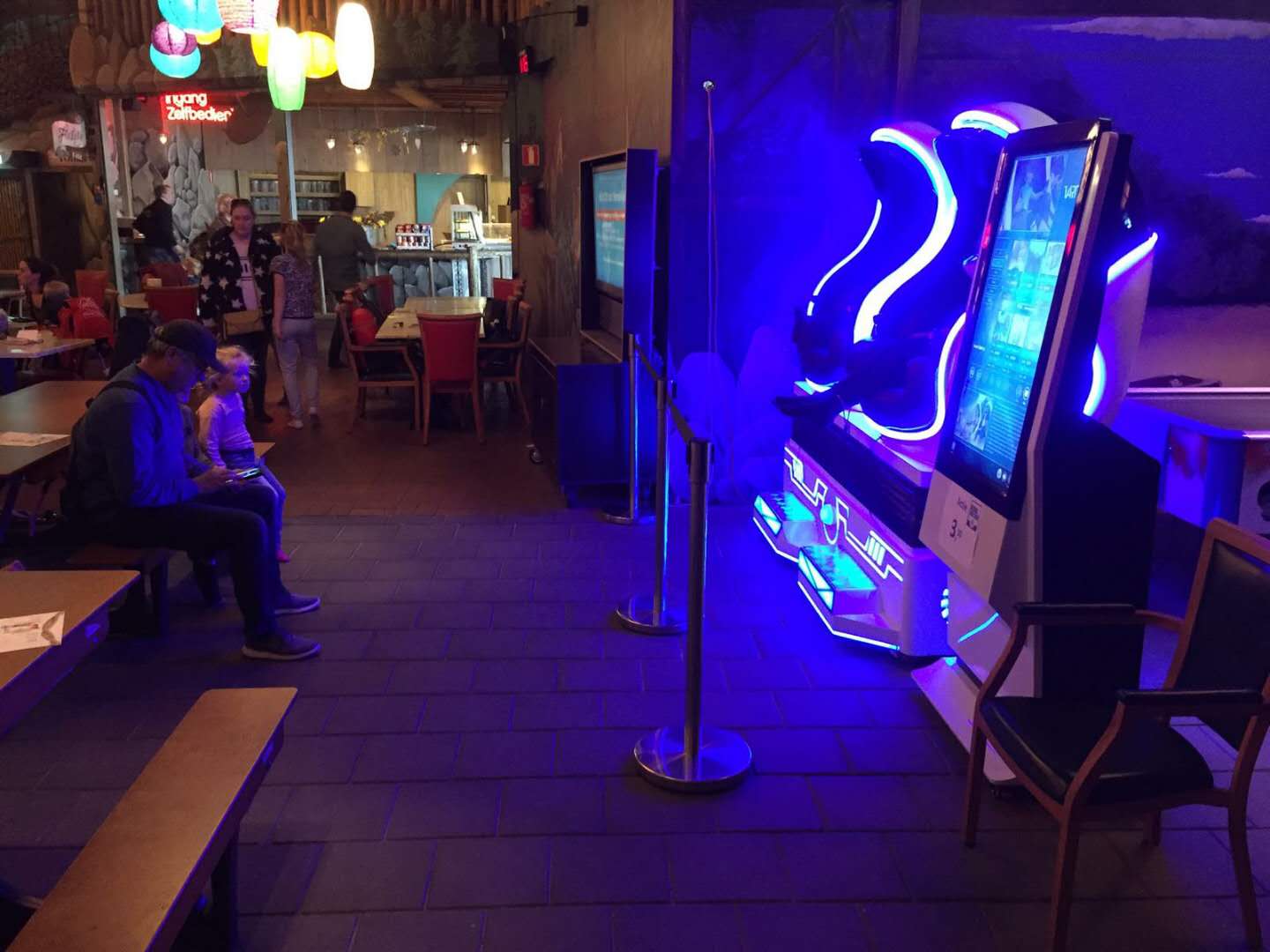
Single-Seat vs Multi-Seat: How Configuration Affects Space
Configuration choice has a direct impact on space usage. Single-seat systems focus on compact installation, while multi-seat setups trade space for higher throughput.
Comparing single-seat vs multi-seat VR motion simulators makes it easier to match space availability with expected capacity.
Space Efficiency Compared to Traditional Attractions
When evaluated per square meter, VR motion simulators often outperform traditional arcade rides and mechanical attractions. Their compact design allows venues to:
-
Replace underperforming equipment
-
Add immersive experiences without major layout changes
-
Improve revenue density
This efficiency is a key reason they are widely adopted in malls and indoor venues.
Common Space Planning Mistakes to Avoid
Even with compact systems, mistakes can reduce performance. Common issues include:
-
Placing the simulator in low-visibility areas
-
Ignoring audience flow around the attraction
-
Leaving too much unused clearance
Effective space planning focuses on visibility and accessibility rather than maximum open area.
Is a Small Space a Limitation?
For most commercial venues, limited space is not a barrier—it is a design parameter. When properly configured, VR motion simulators can operate effectively in:
-
Mall corners
-
Compact FEC zones
-
Indoor leisure areas
For small venues, understanding whether a simulator fits the layout helps clarify is a VR motion simulator worth it for small venues.
Final Thoughts: How Much Space Is Really Needed?
In most cases, a VR motion simulator requires far less space than operators initially expect. The real requirement is not size, but smart layout planning that balances safety, visibility, and user flow.
When these factors are aligned, even compact spaces can support immersive and profitable VR attractions.
FAQ
Q: Do VR motion simulators require dedicated rooms?
A: No. Many systems are designed for open or semi-open commercial layouts.
Q: Is ceiling height a major limitation?
A: Standard indoor ceiling heights are usually sufficient for commercial systems.
Q: Can VR simulators be relocated if layout changes?
A: Yes. Many systems support relocation and flexible placement.
Post time: Feb-25-2026