
Introduction
As the global demand for immersive arcade attractions grows, the VR Motorcycle Simulator—also called a VR Motorcycle, vr motorbike, motorcycle vr simulator, or virtual reality motorcycle simulator—has emerged as one of the most advanced and technically impressive virtual reality rides in today’s entertainment market.
Unlike traditional VR games, a motorcycle VR racing simulator must simulate high-speed motion, lean-angle control, road vibration, body balance, and wind effects, creating a true-to-life riding experience inside compact entertainment venues.
This article breaks down the engineering behind a professional VR racing moto simulator, explaining how its motion system, physics engine, handle interface, vibration feedback, and immersive VR content work together. We will also incorporate the eight major advantages of the VART VR Motorcycle Simulator, one of the top commercial models worldwide.
1. Engineering Fundamentals of a VR Motorcycle Simulator
To replicate realistic motorcycle riding, the simulator must combine mechanical engineering, physics modeling, VR rendering, and sensor-driven input.
A commercial-grade motorcycle VR simulator integrates:
-
XY-axis motion platform
-
Lean-angle detection system
-
Servo motor or dynamic actuator
-
Vibration units for road feel
-
Intelligent racing handle
-
Speed-variable wind effects
-
VR headset tracking
-
Multi-sensory immersion elements
Together, these components reproduce the physics of real motorcycle racing—leaning into corners, accelerating, braking, and absorbing vibration.
2. Lean-Angle Physics: Core of the Motorcycle VR Experience
In motorcycle racing, riders lean their body to turn. This experience is central to real riding—and essential for a VR simulator.
How lean-angle simulation works:
-
The rider leans left or right
-
Lean sensors detect the exact angle
-
XY-axis platform tilts accordingly
-
VR motorcycle racing visuals respond in real time
-
Engine vibration and wind speed adjust based on angle
This delivers an authentic racing experience similar to real MotoGP or superbike riding.
The VART VR Motorcycle Simulator includes a precision XY-axis dynamic platform, which forms the foundation of this realism.
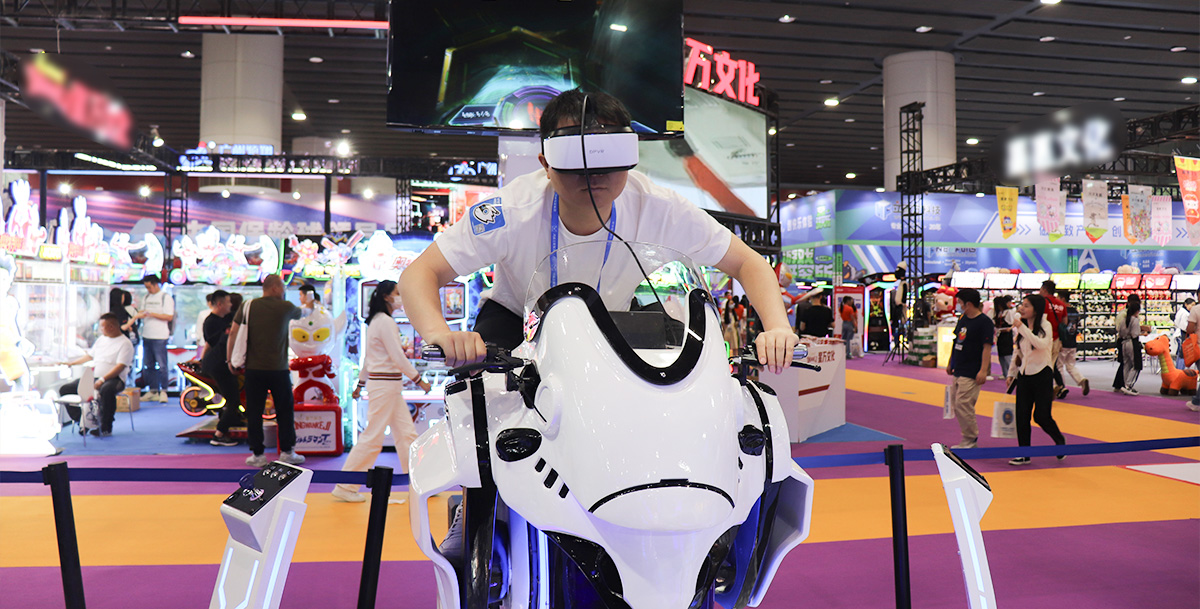
3. Motion Platform System: XY-Axis Dynamic Technology
A VR motorcycle must reproduce:
-
Left & right lean
-
Forward tilt (acceleration)
-
Backward tilt (braking)
-
Micro-vibrations simulating road texture
-
Push-back force for high-speed motion
The VART system supports this via:
3.1 XY-axis Dynamic Platform
This professional motion system accurately mimics the G-force changes of motorcycle racing.
Benefits:
-
Strong push-back sensation
-
Smooth lean transitions
-
Realistic slope simulation
-
Greater immersion for VR racing moto games
This is far more advanced than static VR rides or 1DOF tilt-only machines.
4. Intelligent Control & Back-End Management System
4.1 Humanized Background Management
The VART VR Motorcycle Simulator includes a sophisticated operator backend:
-
Game control interface
-
Gameplay analytics
-
Diagnostic testing
-
Motion sensor calibration
-
Self-check system
-
Ride status monitoring
-
Payment system integration
This system ensures stable and safe operation, ideal for commercial venues such as malls, arcades, and FECs.
5. High-Speed Wind Effects: Frequency Conversion Technology
5.1 Frequency Conversion Wind Effect
The simulator includes smart airflow that changes based on:
-
Speed
-
Acceleration
-
Environmental effects
-
Player movement
Real-world motorcycle riding involves constant wind pressure.
This feature dramatically heightens immersion, especially during:
-
Straight-line speed runs
-
Downhill racing
-
High-speed overtaking
This is one of the most important sensory elements in virtual reality motorcycle racing.
6. Intelligent Racing Handle & Control Interaction
6.1 High-Quality Intelligent Game Handle
A VR motorcycle simulator is only as good as its control system.
VART uses:
-
Precision steering rotation
-
Responsive throttle control
-
Integrated vibration feedback
-
High-sensitivity braking systems
-
Comfortable ergonomic design
This adds extreme realism, especially in games involving:
-
Urban street racing
-
Highway chases
-
Off-road adventures
-
Drift-style cornering
The handle must deliver both physical control and tactile feedback for competitive VR riding.
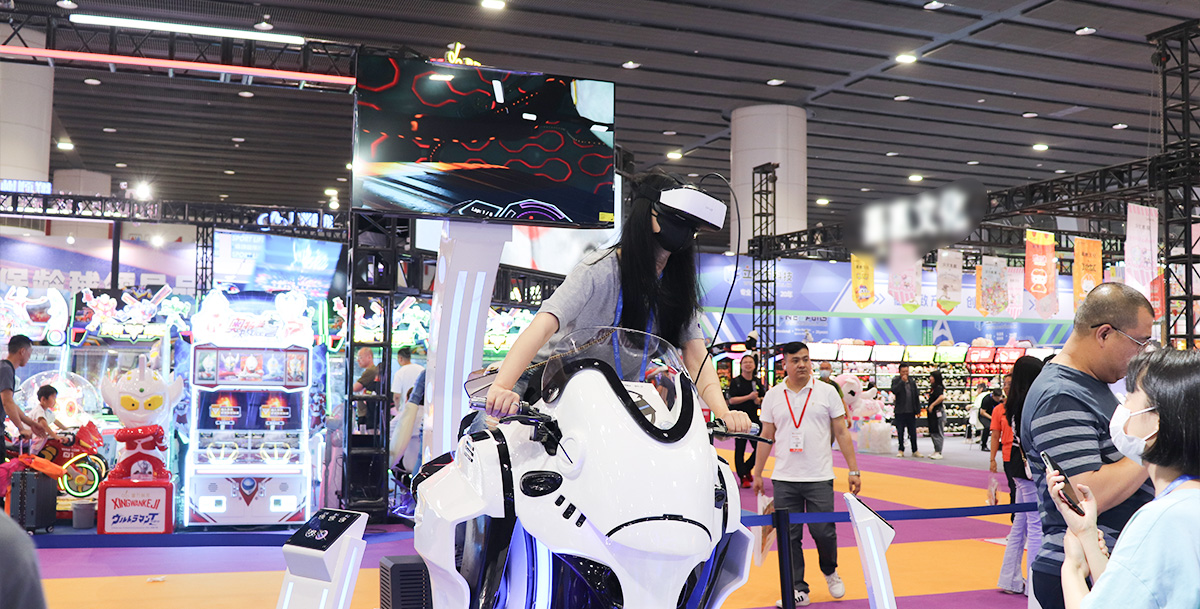
7. External 42-Inch Display for Spectator Engagement
7.1 42-Inch LCD Display (Advantage #5)
A major selling point in commercial environments:
-
Passersby can see gameplay
-
Creates visual attraction
-
Encourages competitive challenges
-
Increases repeat rides
Spectator visibility can increase play volume by 15–35% in busy arcades.
This is why the VART simulator includes a large external HD screen as standard.
8. Customizable Seats & Lighting Effects
8.1 Leather Seat and LED Lighting Customization
Customization options allow operators to match venue themes or brand colors.
This enhances:
-
Aesthetic appeal
-
Customer attraction
-
Premium product positioning
This is especially useful in malls, casinos, branded zones, or tourism venues.
9. Multi-Payment Support for Global Market Adaptability
9.1 Coin + Credit Card Payment Support
This is essential for commercial VR operators:
-
Coin payment
-
Swipe card
-
RFID cards
-
QR code
-
Optional cashless system
This flexibility increases operational convenience and reduces staff workload.
10. High-Torque Single-Wheel Motor System
10.1 Latest Single-Wheel Motor Design
This design provides:
-
Stronger torque output
-
Smooth tilt transitions
-
Higher durability
-
Improved power efficiency
-
Better performance under heavy use
A must-have for reliable daily operation in high-traffic venues.
11. VR Content Delivery System
A VR Motorcycle Simulator must include racing experiences with:
-
Realistic moto physics
-
High-speed circuits
-
Off-road adventure
-
Urban street racing
-
Time trial challenges
-
Endless highway modes
The VART system supports a wide library of racing content optimized for the handle, vibration, lean system, and wind effects.
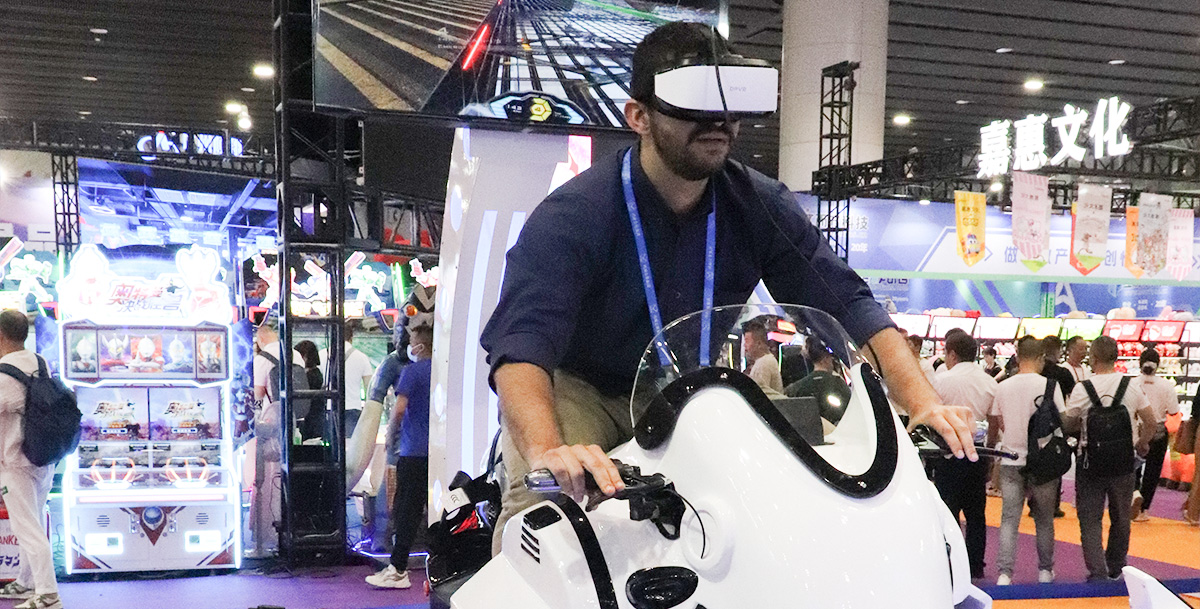
12. Safety Systems & Operational Stability
To ensure commercial reliability, the simulator incorporates:
-
Metal-reinforced frame
-
High-load motion joints
-
Heat protection sensors
-
Electrical safety standards
-
Emergency stop options
-
Secure seating structure
Safety is essential for high-speed VR motion rides.
13. Why Understanding These Technologies Matters?
Business operators choosing VR equipment must evaluate:
-
Motion accuracy
-
Sensor reliability
-
Long-term durability
-
Low maintenance requirements
-
Commercial-grade engineering
These factors directly affect:
-
ROI
-
Daily uptime
-
Customer satisfaction
-
Repeat rides
-
Venue reputation
The VART VR Motorcycle Simulator excels in all these areas.
Conclusion
A VR Motorcycle Simulator combines motion platform engineering, lean-angle physics, vibration feedback, high-speed wind simulation, and VR racing visuals to deliver one of the most immersive virtual riding experiences available today.
With advanced features such as an XY-axis motion system, smart backend management, intelligent handle control, customizable design, and high-torque single-wheel motor technology, the VART VR Motorcycle Simulator sets a new benchmark for commercial VR racing attractions.
For operators seeking high-profit, high-impact, and technically advanced VR equipment, this motorcycle VR simulator is an ideal choice for arcades, malls, and entertainment venues worldwide.
Post time: Dec-10-2025