
Introduction
As virtual reality continues to expand across shopping malls, arcades, family entertainment centers (FECs), cinemas, and tourism attractions, operators face a strategic question: what type of VR simulator delivers the best profit, flexibility, and long-term value?
Today’s VR market mainly offers 1-seat VR Chairs, 2-seat VR 360 Chairs, and 4-seat VR simulators. While all three have their own advantages, they serve very different operational needs. Choosing the wrong model can lead to wasted space, slower ROI, or low customer engagement.
This guide offers a complete, professional comparison between these three VR machine types. Whether you are opening a new VR arcade or upgrading an existing entertainment venue, this article will help you determine which configuration—1-seat, 2-seat, or 4-seat—will generate the best performance and revenue for your business.
Throughout the article, we will reference commercial machines such as the VART 2-Seat VR 360 Chair, which is widely used due to its strong ROI, compact size, and powerful motion platform.
1. Overview of the Three VR Chair Configurations
1.1 1-Seat VR Chair
A single-seat VR simulator is ideal for:
-
Limited spaces
-
Small arcades
-
Low foot traffic areas
-
Operators targeting lower-cost entry
Pros: compact size, low purchase price
Cons: lowest ticket output, restricted shared experiences
1.2 2-Seat VR 360 Chair
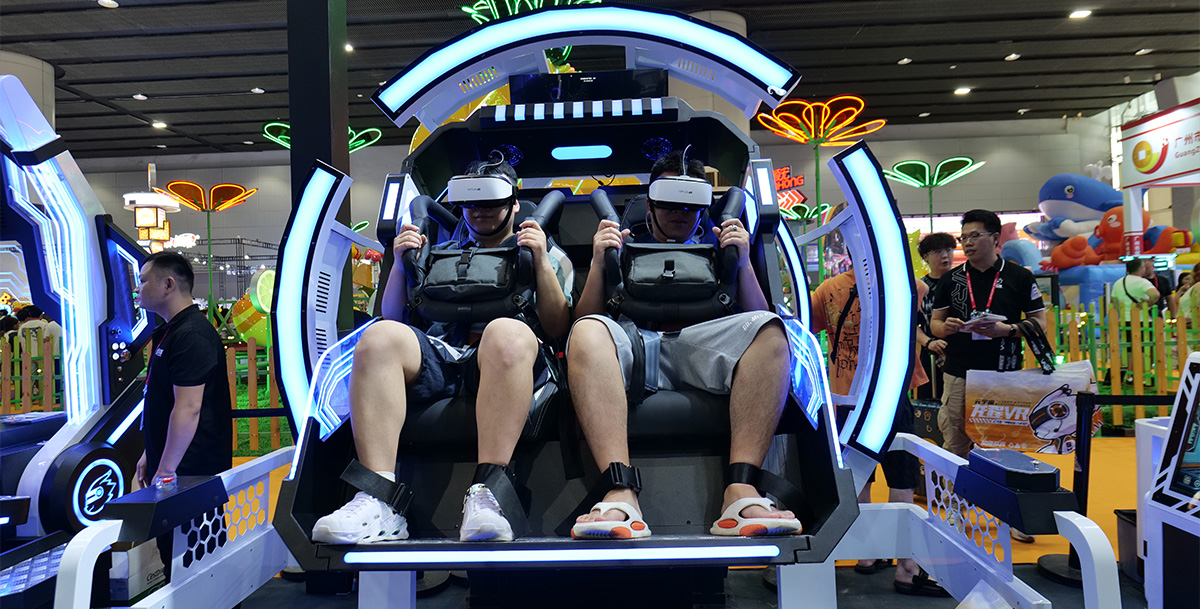
The dual-seat VR 360 Chair is today’s most popular VR machine format. This 2-seater VR simulator offers the strongest combination of:
-
High throughput
-
High visibility
-
Emotional engagement (friends/couples)
-
Compact footprint
-
Fast ROI (usually 2–6 months)
This is why the 2-seat VR 360 Chair is now the standard choice for malls and FECs worldwide.
1.3 4-Seat VR Chair (Large Multi-Seat VR Simulator)
A 4-seat VR motion platform is the closest equivalent to a mini VR theater.
Pros: higher capacity per cycle
Cons:
-
Much larger footprint
-
Higher purchase cost
-
More maintenance
-
Requires more staff supervision
While impressive, it is most suitable for large entertainment venues—not small or mid-sized operators.
Space Requirements Comparison
| VR Machine Type | Average Footprint | Suitable Locations |
|---|---|---|
| 1-seat VR Chair | 1.5m × 1.5m | small arcades, small shops |
| 2-seat VR 360 Chair | 2.4m × 2.4m | malls, FECs, cinemas, arcades |
| 4-seat VR Chair | 3.5m × 3.5m | theme parks, large game centers |
Why space matters?
Many operators underestimate how important floor efficiency is.
The 2-seat VR 360 Chair offers the best income per square meter, making it ideal even for small and medium venues.
Revenue & ROI Comparison
3.1 1-Seat VR Chair Revenue
-
$5–$8 per ride
-
1 rider per session
-
Lower pass-by attraction
-
ROI usually 6–12 months
3.2 2-Seat VR 360 Chair Revenue
-
$6–$12 per person
-
2 riders per session
-
Short ride time = high daily turnover
-
The chair moves dramatically → strong visibility
-
ROI typically 2–6 months
This is why the 2-seat VR Chair is considered the highest-ROI model in the VR market.
3.3 4-Seat VR Chair Revenue
-
$6–$10 per person
-
4 riders per session
BUT: -
Larger electricity cost
-
Larger space → higher rent or fewer machines
-
Higher maintenance
-
Slower turnover
ROI usually 6–10 months, unless traffic is extremely high (e.g., theme parks).
Motion System Performance Comparison
4.1 Motion Experience
| Seats | Motion Power | Customer Feedback | Technical Complexity |
|---|---|---|---|
| 1-seat | moderate | good | low |
| 2-seat | very strong (360° rotation) | excellent | medium |
| 4-seat | strong but synchronized | excellent | high |
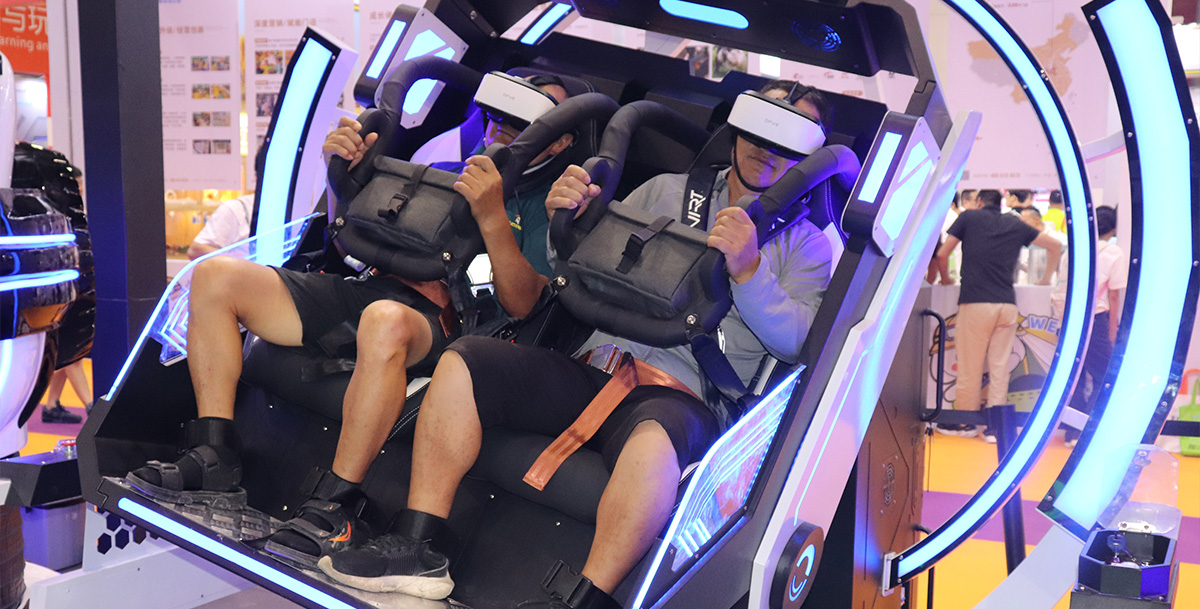
The 2-seat VR 360 Chair offers the most intense rotational movement, making it the closest to a 360 flight simulator experience.
Customer Psychology & Engagement
Why 2-Seat Wins Social Engagement?
Human behavior research shows that customers are more likely to try a VR ride if they can:
-
Share the experience
-
Ride with a friend
-
Feel emotionally safer
-
Experience reactions together
This is why the 2-seat VR machine has far higher participation rates compared to single-seat models.
Why 4-Seat Doesn’t Always Win?
4-seat simulators look impressive, but:
-
Not all visitors enter in groups of 4
-
Families with only 2–3 members may feel “incomplete”
-
Large groups slow down ticketing and cycle time
Thus, 2 seats are the most psychologically natural and operationally efficient group size.
Maintenance & Operational Complexity
6.1 1-Seat VR Chair
-
Very easy
-
Few mechanical parts
-
Stable operation
6.2 2-Seat VR 360 Chair
-
Strong motors → easy maintenance
-
Dual-seat synchronization
-
Daily safety checks
-
Low long-term cost
6.3 4-Seat VR Simulator
-
More actuators
-
More weight load
-
More points of failure
-
Higher part replacement cost
The VART 2-seat VR 360 Chair is known for low maintenance cost, making it ideal for high-traffic locations.
Best Use Cases for Each Type
1-Seat VR Chair – Best For
-
Small shops
-
VR rental booths
-
Mini arcades
-
Event marketing setups
2-Seat VR 360 Chair – Best For
✔ Shopping malls
✔ Arcades
✔ FECs
✔ Cinemas
✔ Resorts
✔ Tourist centers
✔ Airports waiting areas
Operators choose the 2-seat model because it balances:
-
Revenue
-
Space
-
Excitement
-
Ticket price
-
Low staff requirement
4-Seat VR Simulator – Best For
-
Theme parks
-
Attractions with large foot traffic
-
Corporate entertainment zones
-
Museums or science centers
Why Most Operators Choose the 2-Seat VR 360 Chair?
Summarizing all data:
✔ Best ROI
✔ Best visibility
✔ Best emotional engagement
✔ Best space efficiency
✔ Best customer acceptance
✔ Best operational simplicity
This is why the 2-seat VR 360 Chair has become the global best-selling VR simulator format.
To see a high-performance example, visit: VART 2-Seat VR 360 Chair
Conclusion
Choosing between a 1-seat, 2-seat, and 4-seat VR simulator depends on space, budget, and operator goals. However, for 90% of entertainment venues—including arcades, malls, cinemas, and FECs—the 2-seat VR 360 Chair provides unmatched value, superior ROI, and powerful customer engagement.
If you want a VR machine that delivers strong profits, easy maintenance, and universal user appeal, the dual-seat VR 360 Chair is the clear winner.
Post time: Nov-17-2025