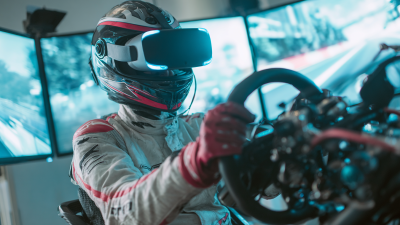
As industries keep evolving, more and more businesses are jumping on the bandwagon with cool solutions like VR Flight Simulators to handle their training. Dr. Emily Carter, who’s an expert in immersive tech at FlightTech Innovations, really stresses how valuable these simulations are. I remember her saying, “VR Flight Simulators totally change the way we prepare pilots for the real thing.” Honestly, this kind of tech creates a safe space where trainees can learn essential skills without the dangers of actual flying—super important, right?
Across different sectors, companies are realizing that VR Flight Simulators make the learning process much more engaging. Trainees get to jump into realistic scenarios, which helps sharpen their decision-making and reaction times. It’s a practical approach that works great whether you’re just starting out or already have some experience under your belt. But, of course, it’s not all smooth sailing. The upfront costs can be pretty hefty, and not every organization is totally ready to make the leap.
So, if a business is thinking about adopting a VR Flight Simulator, they really need to weigh the pros and cons. Implementing it smoothly isn’t just plug-and-play; it takes good planning and finding the right tech partner. As more companies get on board with this innovative approach, having support and guidance becomes super important. Sure, there’s a bit of a learning curve, but honestly, the benefits and new opportunities it opens up make it worth at least considering.
Virtual Reality (VR) flight simulators are revolutionizing training in various sectors. They offer immersive environments for pilots and operators, allowing them to practice complex scenarios safely. Trainees can encounter real-world challenges without the risks associated with actual flights. This realism enhances learning outcomes significantly.
Moreover, VR flight simulators provide instant feedback. Trainees can review their performance and identify areas for improvement. The grasp of technical skills becomes stronger through repeated practice. This immersive training method appeals to both new and experienced personnel, enabling them to refine their skills more effectively. However, it's important to recognize that not all learners adapt to VR equally. Some may find the transition from traditional methods challenging.
Incorporating VR technology requires investment and planning. Organizations must ensure that VR tools align with their training goals. While the benefits are clear, execution can present challenges. Regular evaluation of training programs is essential to measure effectiveness. Continuous improvement will ensure that VR simulations meet ongoing business needs and employee development.
Virtual reality (VR) flight simulators are changing the landscape of training in numerous industries. Compared to traditional methods, VR offers an immersive experience that simulates real-life scenarios in a safe environment. This allows trainees to engage in realistic flight operations without the risks associated with actual flying. With VR, the learner can make mistakes and learn from them without any real-world consequences.
In contrast, traditional training often relies on theoretical knowledge and limited hands-on experience. It can be more expensive and time-consuming, given the need for aircraft, fuel, and other resources. While these methods offer some value, they lack the interactivity that VR provides. Trainees may find it harder to retain information without realistic practice. VR technology brings the aircraft cockpit to them, providing an intuitive way to grasp complex systems and maneuvers.
Despite its advantages, VR is not without challenges. The technology can be costly to implement and maintain. Additionally, some learners may experience discomfort using VR headsets. Trainers must actively monitor and address these issues. Technology alone won't replace the human element essential for effective training. Recognizing these drawbacks is vital for businesses considering a shift to VR solutions.
| Criteria | VR Flight Simulators | Traditional Training Methods |
|---|---|---|
| Cost-Effectiveness | Lower long-term costs after initial investment | Higher ongoing costs (fuel, maintenance) |
| Flexibility | Trains anytime, anywhere | Dependent on physical location and equipment |
| Risk Mitigation | No safety risks during training | Possible safety hazards in real aircraft |
| Skill Retention | Enhanced retention through immersive experience | Limited engagement may reduce retention |
| Scalability | Easily scalable for multiple trainees | Limited by instructor availability |
| Data Analytics | Real-time performance tracking | Limited feedback and tracking |
The cost-effectiveness of implementing VR flight simulators in businesses is becoming increasingly clear. According to a report by MarketsandMarkets, the global VR training market is projected to reach $6.3 billion by 2025, reflecting a growing recognition of its value. Traditional flight training can be expensive, requiring aircraft maintenance and fuel. In contrast, VR simulators reduce operational costs significantly. They offer a safe environment for pilots to practice without the associated expenses of physical flight.
Additionally, VR flight simulators can enhance training efficiency. Research suggests that engaging visuals and realistic scenarios improve retention and learning speed. In a study by the National Training and Simulation Association, trainees using VR systems retained 25% more information compared to traditional methods. However, businesses must also consider the initial investment for technology and software adaptations. This could be daunting, especially for smaller organizations. Yet, the long-term savings and effectiveness might outweigh these initial hurdles.
Employers should also be aware of the potential shortcomings. VR technology may not replicate every aspect of real flight. Participants may experience discomfort or fatigue during extended sessions. Addressing these concerns requires continuous evaluations and adjustments in training protocols. Companies must invest in quality hardware and update software frequently to stay relevant. Remember, cost-effectiveness is not only about saving money but also about maximizing training outcomes over time.
Virtual reality (VR) flight simulators are transforming customer experiences across various industries. According to a report by PwC, VR can enhance experiential learning by up to 75%. This statistic showcases the significant impact of immersive technology on training and engagement. Businesses can leverage VR flight simulations for training purposes or entertainment, fostering a more interactive environment.
For instance, in pilot training programs, VR simulations facilitate realistic scenarios that improve decision-making skills. A study by the International Air Transport Association indicates that 80% of airlines believe VR will play a key role in pilot development. This method not only saves costs associated with physical training but also systematically enhances learning retention.
However, the implementation of VR is not without challenges. Some users report motion sickness or discomfort during simulations. Also, the initial cost of VR technology can deter smaller businesses. Despite these hurdles, the overall trend points toward a greater demand for innovative solutions that meet customer expectations. Adapting VR technology effectively can lead to increased satisfaction and loyalty.
Enhancing Customer Experience through VR Flight Simulations
When selecting a VR flight simulator for business, customization remains crucial. Every organization has unique training needs. A one-size-fits-all approach often falls short. Adapting these simulators to fit specific aviation protocols or safety requirements enhances their effectiveness. Custom scenarios can also help prepare trainees for various in-flight situations, elevating their readiness.
Scalability is another vital feature. Businesses grow, and training needs will evolve. VR flight simulators can expand with your needs. A small organization may start with basic training. As it grows, they can integrate advanced modules. This flexibility ensures continued relevance and efficiency in training programs.
However, businesses must reflect on the challenges of customization. It requires time and resources to develop tailored content. The initial investment can be significant. Often, companies may need multiple iterations to refine their programs. This process can be frustrating but necessary for maximizing training outcomes. Balancing flexibility and cost is essential as organizations choose their simulator solutions.
Virtual reality (VR) flight simulation technology is rapidly evolving. Businesses now have the opportunity to leverage these advancements. Enhanced realism and immersive experiences are reshaping pilot training methods. Users can engage in realistic scenarios without the high costs of real flights. These simulators help in developing critical skills in a controlled environment.
Future trends indicate a greater focus on artificial intelligence integration. AI can adapt simulations to the user's skill level. This personalized training approach is essential for effective learning. Furthermore, innovations like haptic feedback are becoming more widespread. This technology allows users to feel forces and sensations as they would in a real cockpit. Real-time data integration also plays a role. It can provide real-life weather conditions, enhancing the training experience.
However, the transition to VR may not be seamless for all businesses. Some users may struggle with VR technology. There is a learning curve involved, and not all employees may adapt quickly. Companies need to invest in thorough training for their staff. As the technology matures, these challenges may lessen, but patience and persistence will be vital for success.
Virtual reality (VR) flight simulators have changed how businesses approach pilot training and aviation management. Some companies reported improvements in training efficiency after adopting VR technology. For example, a regional airline integrated a VR simulator into its curriculum. This decision reduced training costs by a significant margin. Trainees enjoyed the immersive experience, which made learning faster and more engaging. When faced with technical difficulties, instructors had to adapt their teaching methods. This flexibility proved valuable.
In another case, a military organization utilized VR flight simulators for mission training. Participants learned to execute complex maneuvers under pressure. The training sessions uncovered unexpected challenges, revealing areas for improvement. Sometimes, the simulations did not account for real-world variables. Instructors noted that this gap highlighted the importance of combining simulators with actual flight experience. Users commented on the realism but wondered if it fully prepared them for every scenario.
These instances illustrate both the potential and the limitations of VR flight simulators. The advantages often come with unique challenges that require careful consideration. Businesses must evaluate how to best implement these tools for effective outcomes.
The commercial VR flight simulator industry is rapidly evolving, driven by the increasing demand for immersive experiences in entertainment and training sectors. Among the standout offerings is the 3 seats 360° rotating VR flight simulator, which represents a leap forward in simulation technology. This system combines advanced motion technology with high-quality virtual reality content to create an engaging and lifelike flying experience. The 360-degree rotating platform adds an extra layer of realism, enabling users to experience flight dynamics that closely mimic real-world aviation scenarios.
With its potential applications spanning from amusement centers to educational institutions, the 3 seats VR flight simulator serves various markets. Users can explore breathtaking virtual worlds, simulate complex aerial maneuvers, and partake in interactive flight adventures that captivate both novice and experienced users. This simulator not only promises entertainment but also offers valuable training opportunities, making it an appealing choice for flight schools and training facilities looking to enhance their curriculum with cutting-edge technology. As the demand for VR experiences grows, the commercial VR flight simulator industry is poised for significant expansion, particularly with innovative models that focus on user engagement and immersive realism.
: VR provides an immersive and safe training environment. Trainees can practice realistic scenarios without real-world risks.
VR uses engaging visuals and scenarios. Studies show trainees retain 25% more information compared to traditional methods.
Yes, businesses face initial costs for technology and software. This can be daunting for smaller organizations starting out.
Some users may experience discomfort or fatigue. Ongoing monitoring is essential to address these issues.
No, VR won't replace the human element essential for effective training. A balance between both approaches is needed.
VR significantly reduces costs related to aircraft maintenance and fuel. This leads to overall savings for businesses over time.
Yes, VR technology can face failures. Regular updates and maintenance are crucial to ensure reliability and effectiveness.
Yes, the immersive experience in VR often leads to higher engagement levels. This can enhance overall learning experiences.
By recognizing VR's limitations, businesses can make better decisions. It's crucial to adjust training protocols accordingly.
Continuous evaluations and updates are needed. This ensures that training remains relevant and effective for all participants.
VR flight simulators are becoming increasingly popular in various business sectors due to their numerous advantages for training and customer engagement. One of the primary benefits is the effective training capabilities they provide, offering an immersive experience that enhances learning compared to traditional methods. Additionally, VR flight simulators are cost-effective, reducing the need for physical aircraft and resources, while also offering customization and scalability to meet specific business requirements.
As businesses look to enhance their customer experience, VR flight simulations can create engaging and memorable interactions that set them apart from competitors. With future trends pointing towards advancements in VR technology, companies can expect even more innovative applications of VR flight simulators. Case studies of successful implementations highlight how these tools have revolutionized training processes and customer engagement strategies, making a strong case for their adoption in various industries.